culturebriefs
Beat

The arts

What people make and what it says: art, writing, image, dress and food, each traced back to where it came from.
437
briefs
9:23
average
4100 min
in total
44
figures
Beats under The arts5
All briefs437
9:47

Baba ghanoush

A dish defined by smoke, not sesame — and misnamed wherever tahini is assumed.
video still
9:05

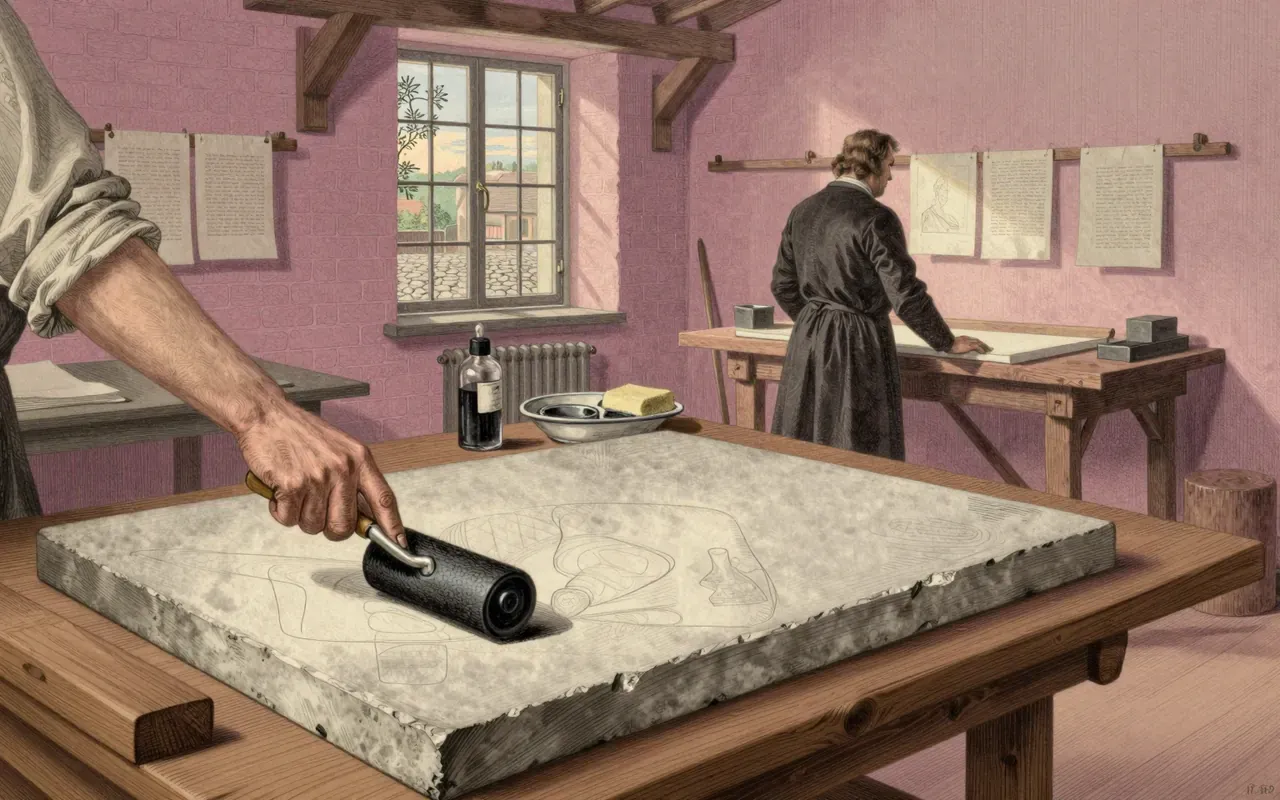
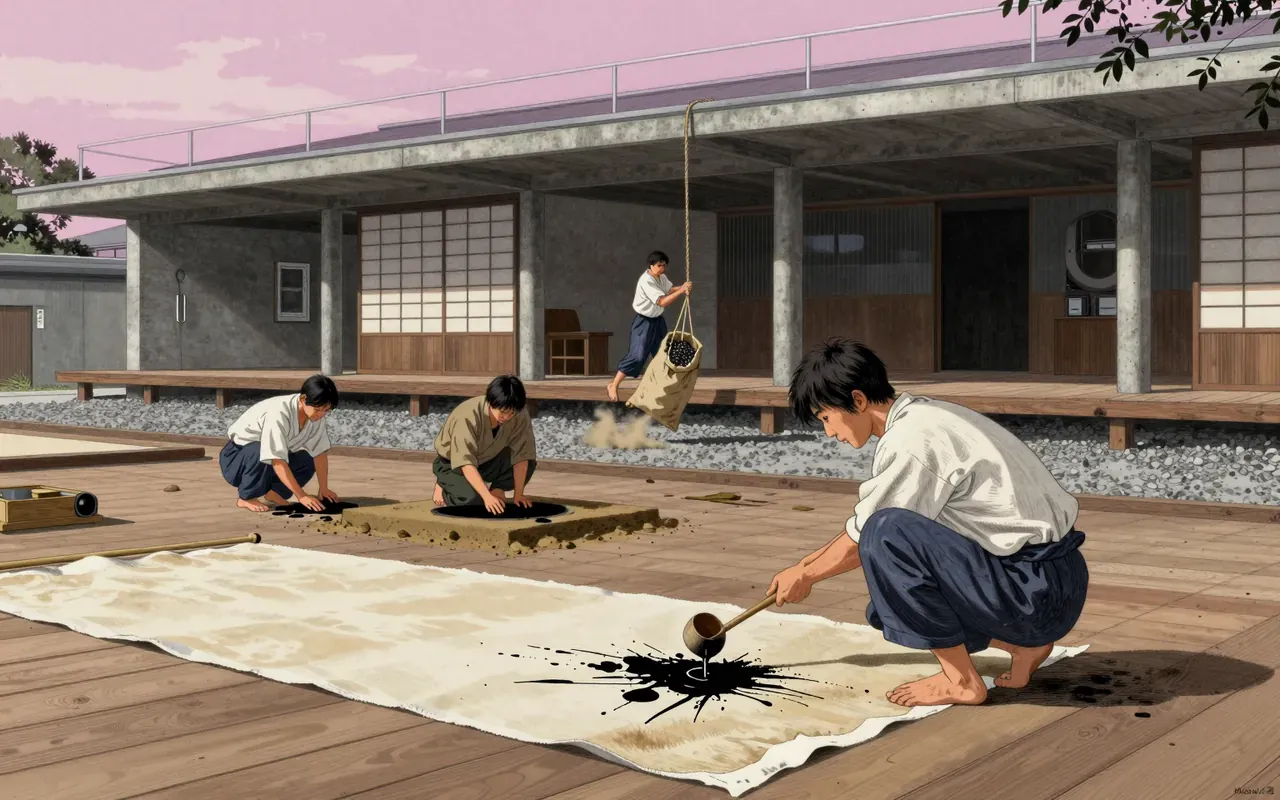
Monoprinting

Monoprinting isn’t about making prints—it’s about making *one* print that can’t be copied, even by its maker.
8:42

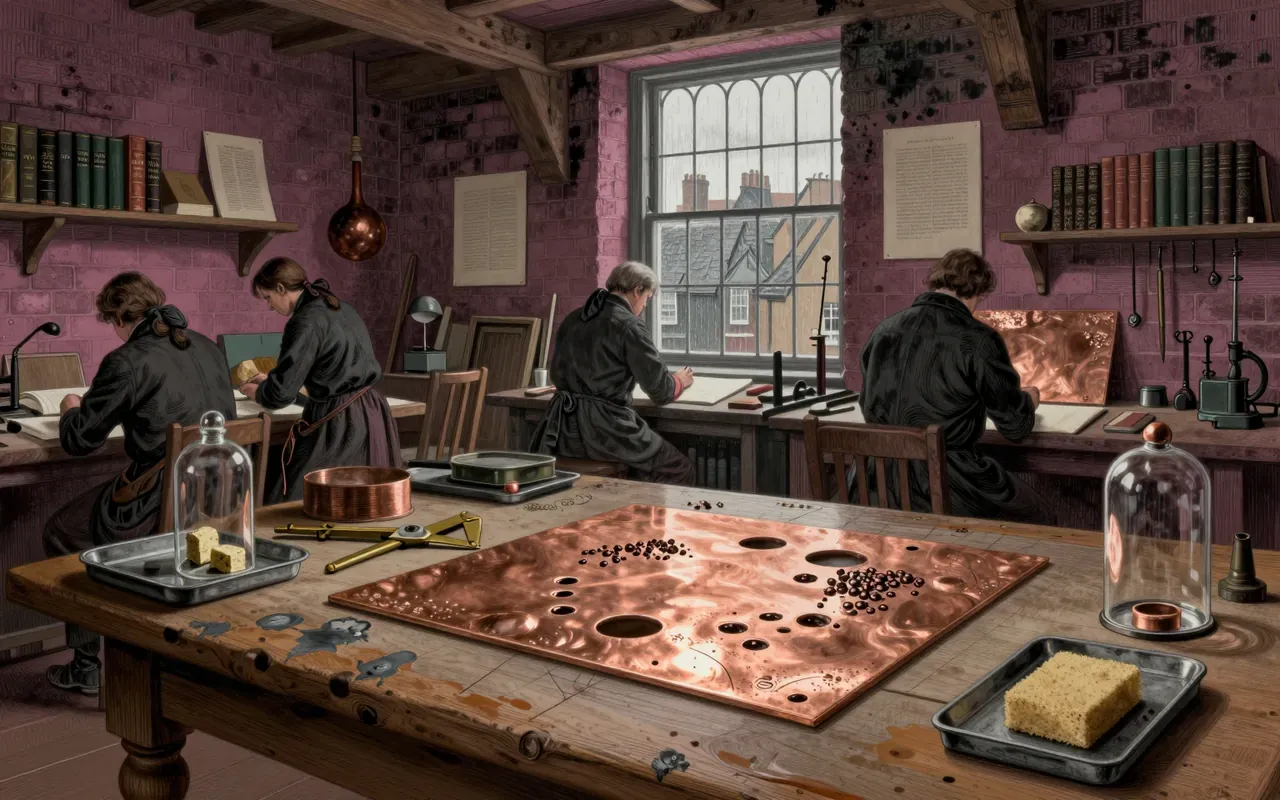
Aquatint

Aquatint didn’t imitate painting—it invented a new grammar of printed tone.
8:03

Art Deco

Art Deco was not an art movement—it was a department store aesthetic that went global.
10:37

Art Nouveau

Art Nouveau didn’t reinvent beauty—it relocated it from the frame to the door handle.
10:50

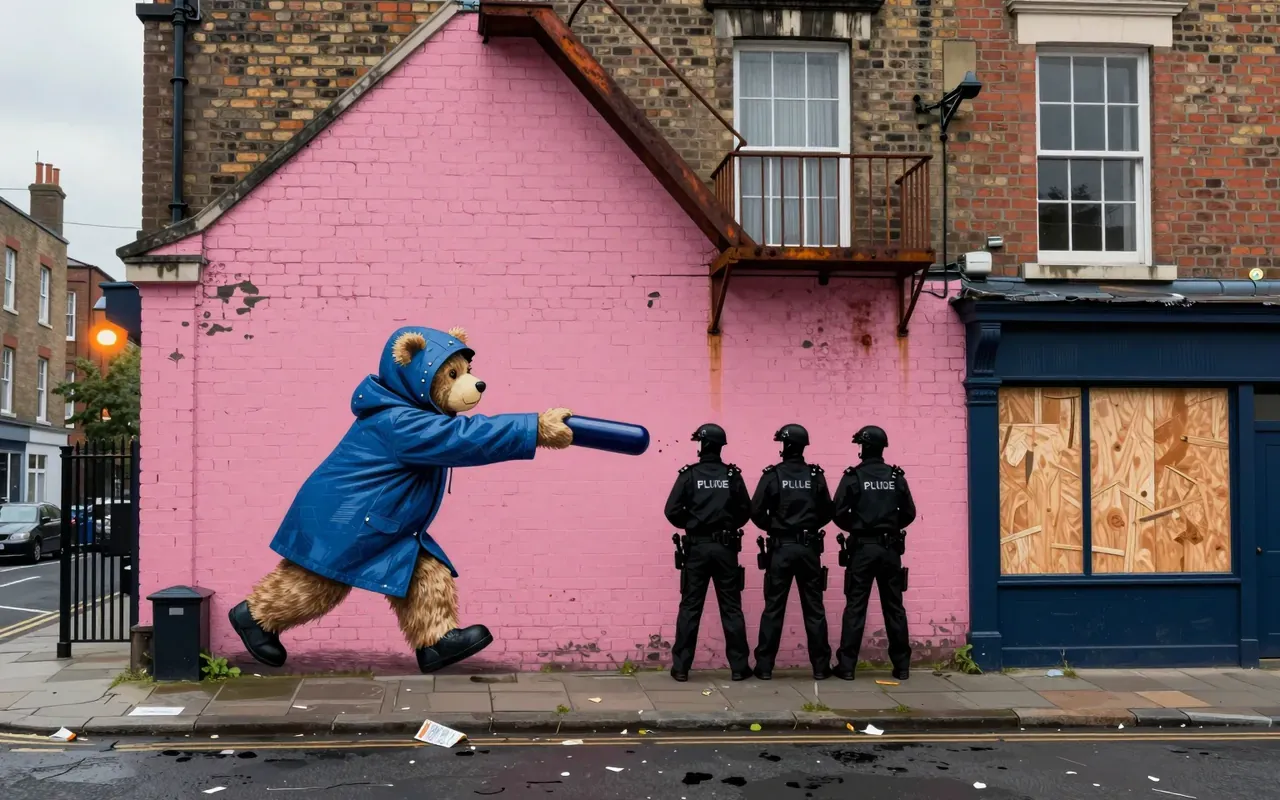
Banksy

Banksy isn’t an artist—it’s a set of constraints that made dissent visible without making it safe.
8:22

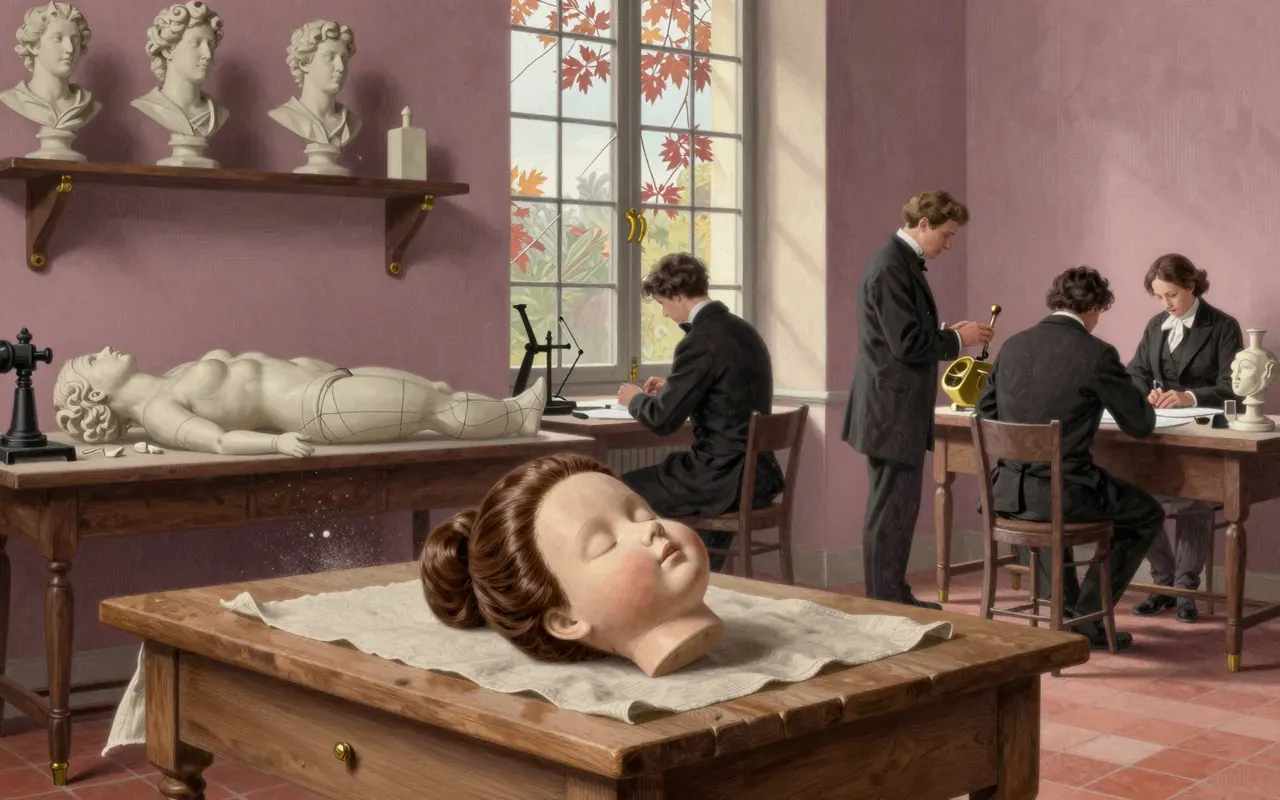
Bisque doll

Bisque dolls aren’t delicate—they’re compromised: realistic heads bolted onto pragmatic bodies.
9:04

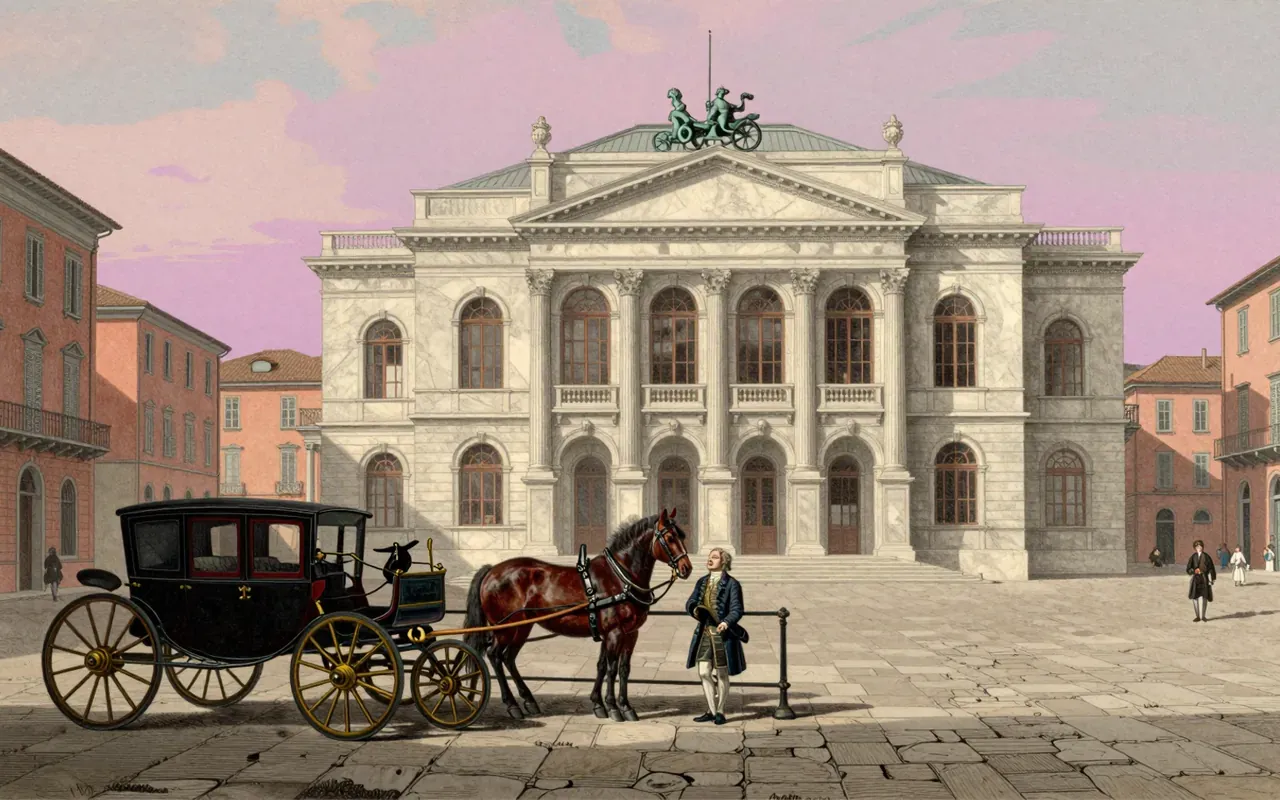
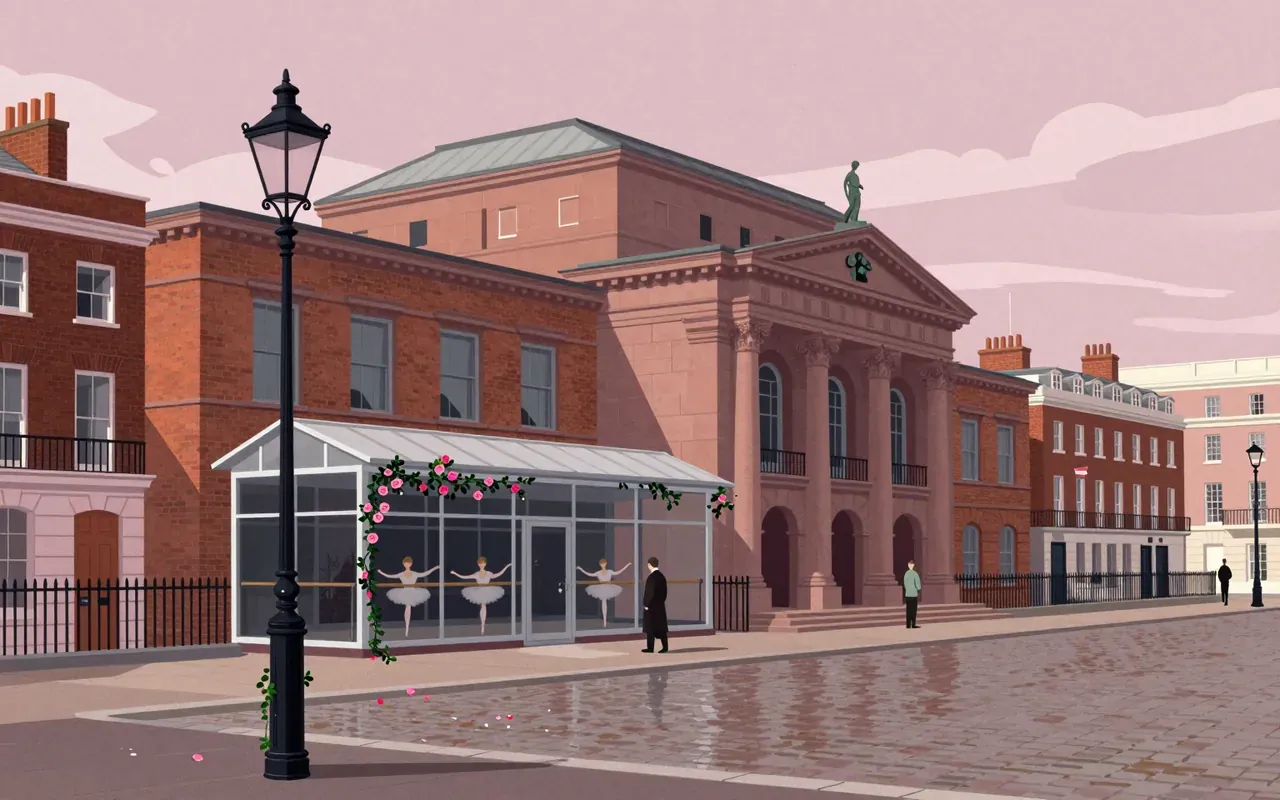
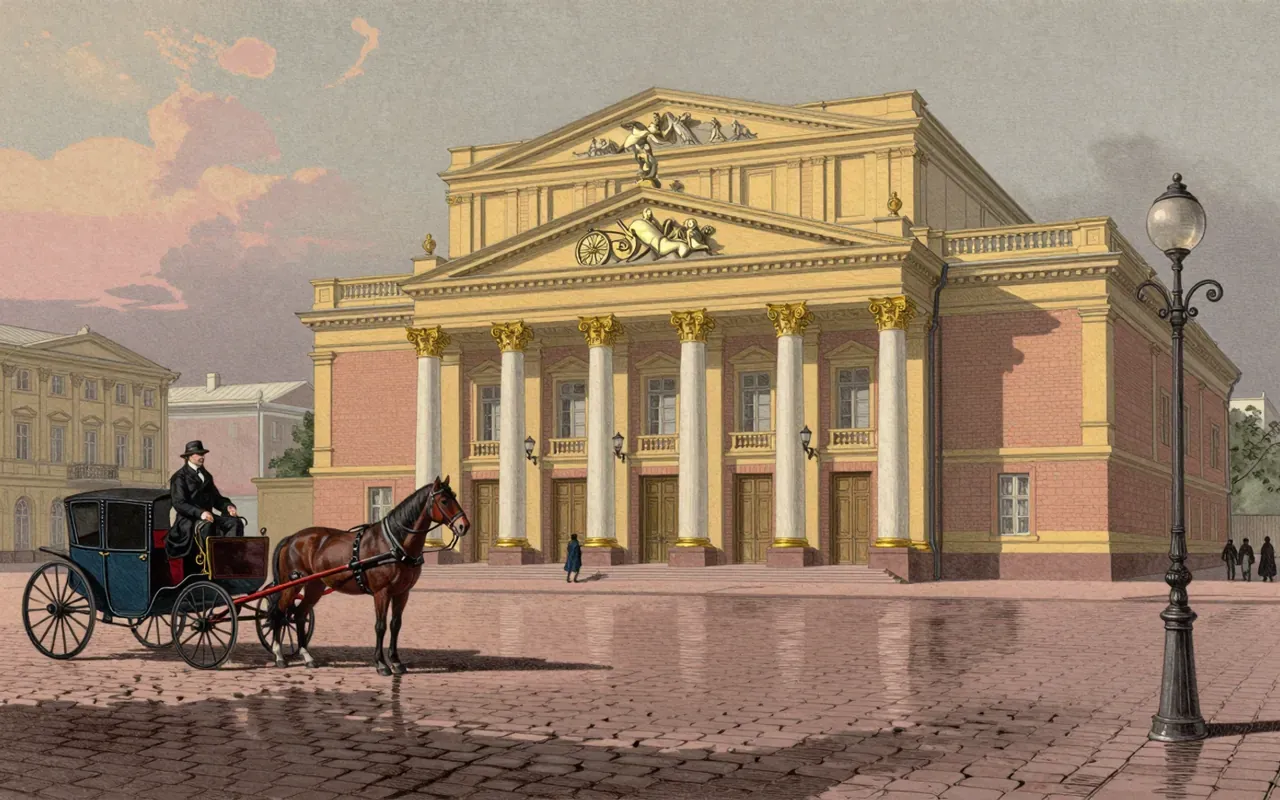
Bolshoi Theatre

A theatre built by imperial licence, rebuilt by imperial architect, renovated to erase Soviet sound—this is state culture as infrastructure, not expression.
10:28

Cannes Film Festival

Cannes wasn’t born in 1946 — it was resurrected, and its prestige rests on gatekeeping, not spontaneity.
8:50

Carnegie Hall

A philanthropist’s name on a hall does not make it public infrastructure.
video still
8:15

De Stijl

Piet Mondrian & Theo van Doesburg · 1917

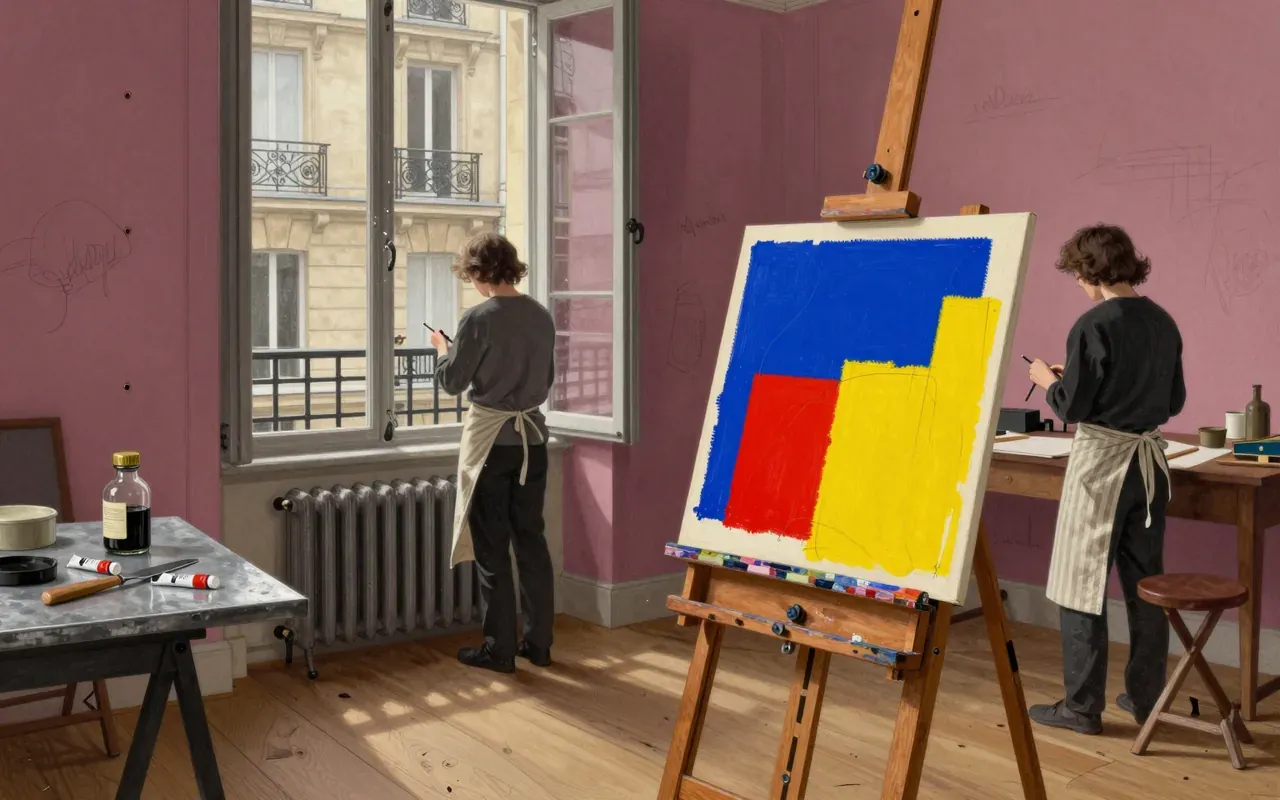
De Stijl was a Dutch art movement founded in 1917 by artists and architects based in Leiden, Voorburg, and Laren. It propagated its theories through a journal edited by Theo van Doesburg. Its founding principle—neoplasticism—used only straight horizontal and vertical lines, rectangles, and primary colours plus black, white, and grey to access a spiritual reality beyond appearance. Around 1924, it abandoned those constraints for Elementarism: diagonals, energetic colour, and rejection of harmony. It avoided symmetry, achieving balance through opposition—embodying 'stijl' as structural support, like a crossing joint. It ended in 1931 with van Doesburg’s death.

video still
8:40

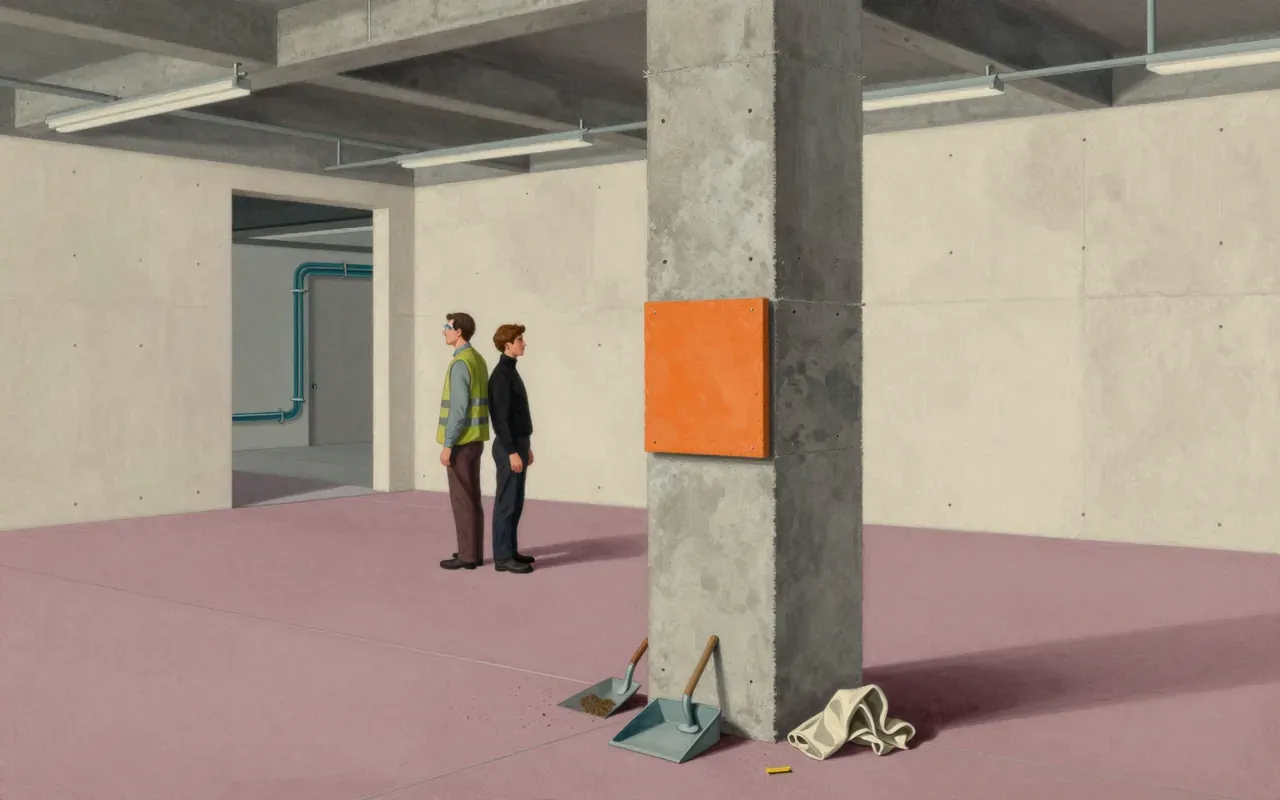
Engraving

Engraving is not art history’s origin story—it’s deep-time proof that humans have always carved meaning into matter by force.
video still
8:14

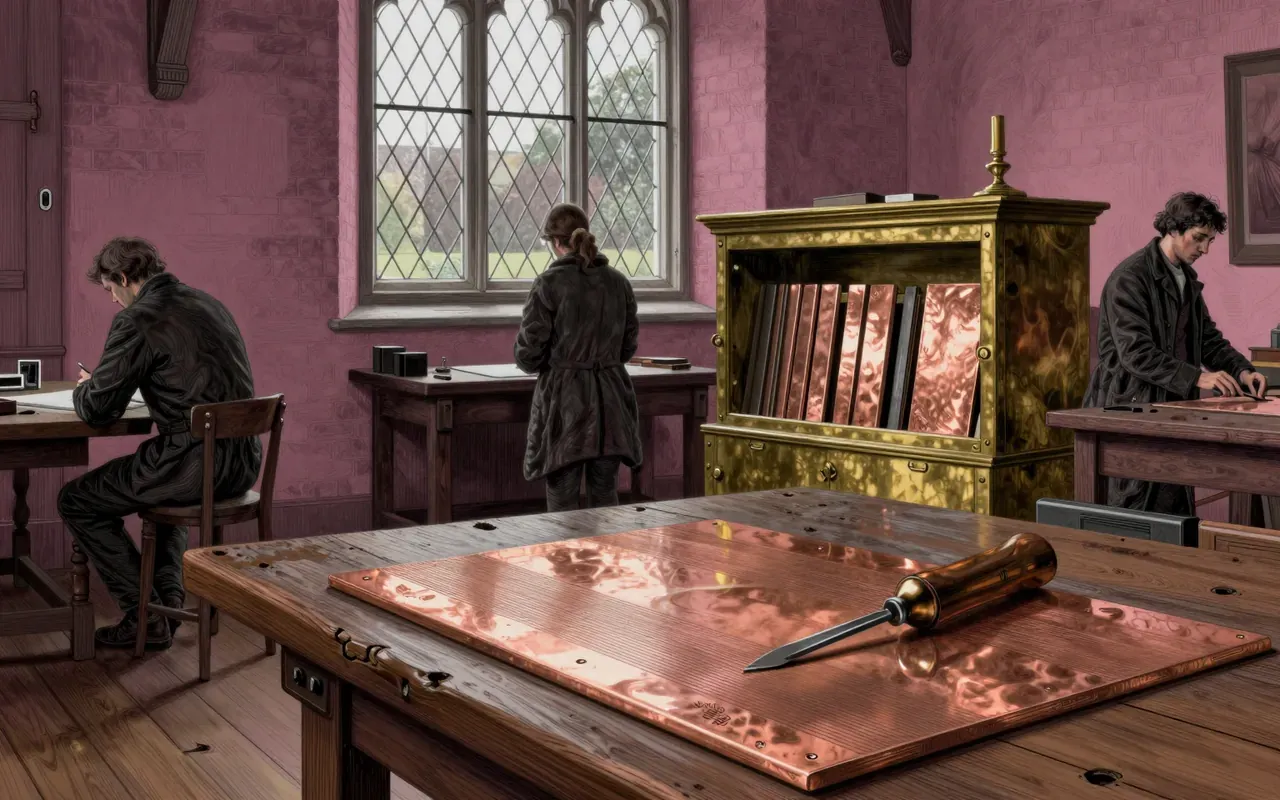
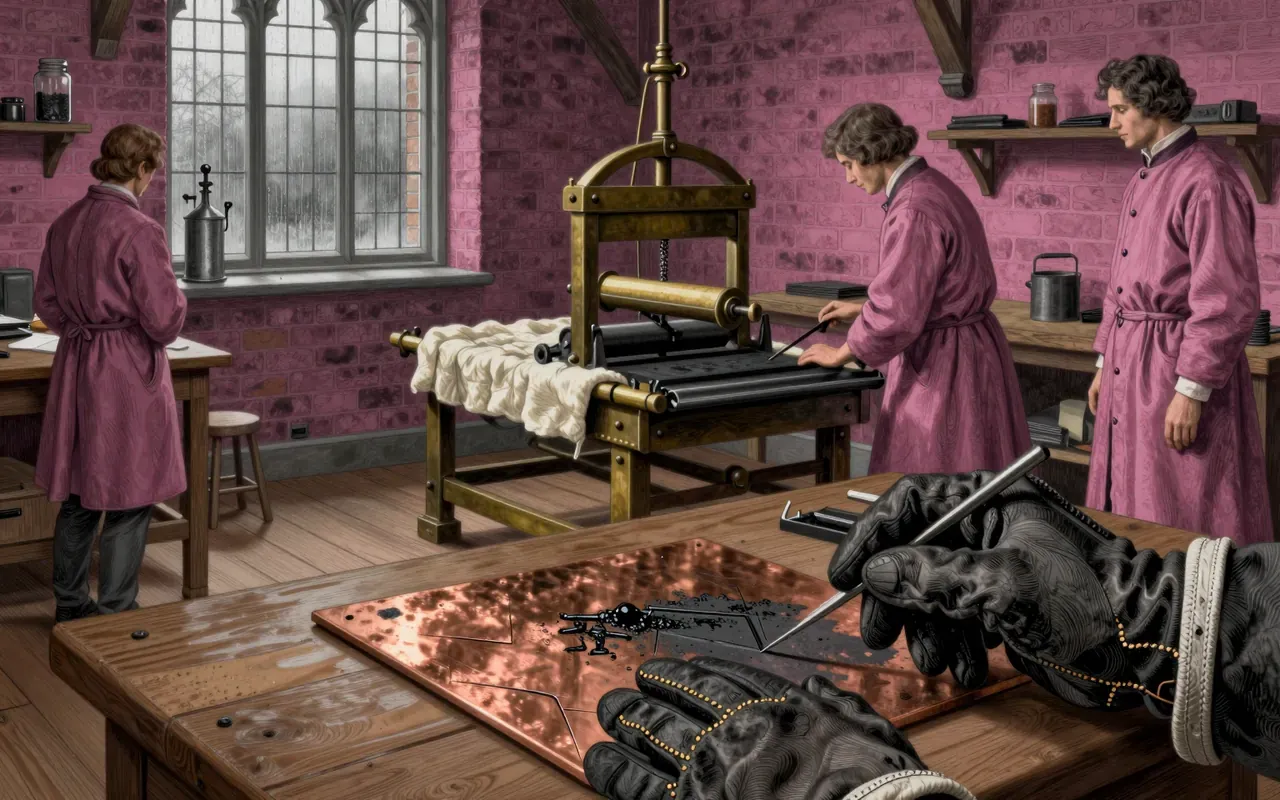
Etching

Etching isn’t about precision—it’s about surrendering control to acid, metal, and time.
video still
8:40

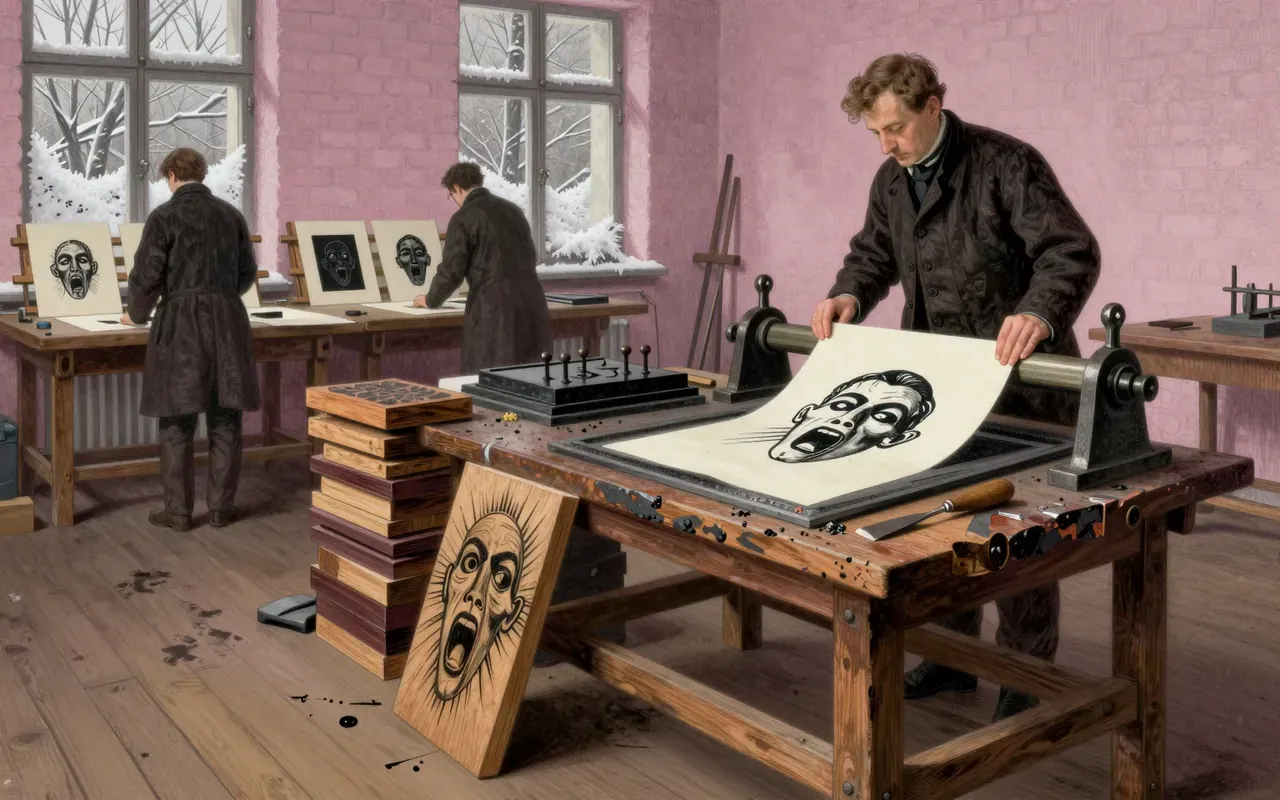
Expressionism

Expressionism isn’t a style—it’s the moment art stopped copying the world and started reporting on the nervous system.
video still
8:52

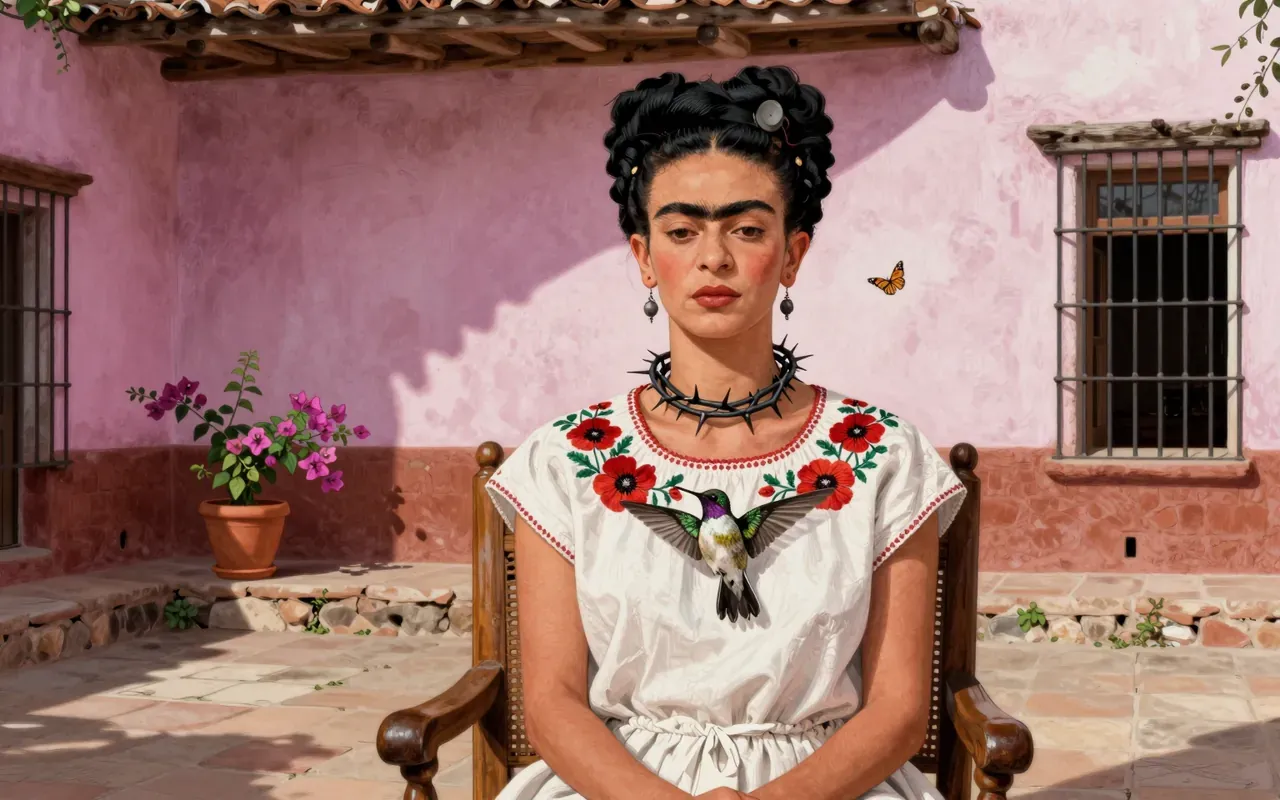
Frida Kahlo

Kahlo didn’t paint dreams—she painted wounds, walls, and the weight of being Mexican after revolution.
video still
7:34

Ikebana

Ikebana isn’t about beauty—it’s about vertical authority, seasonal arithmetic, and the quiet violence of codifying worship.
video still
8:36

Kabuki

Kabuki didn’t begin as tradition—it began as disobedience, then got banned, then rebuilt itself without the women who made it.
video still
8:58

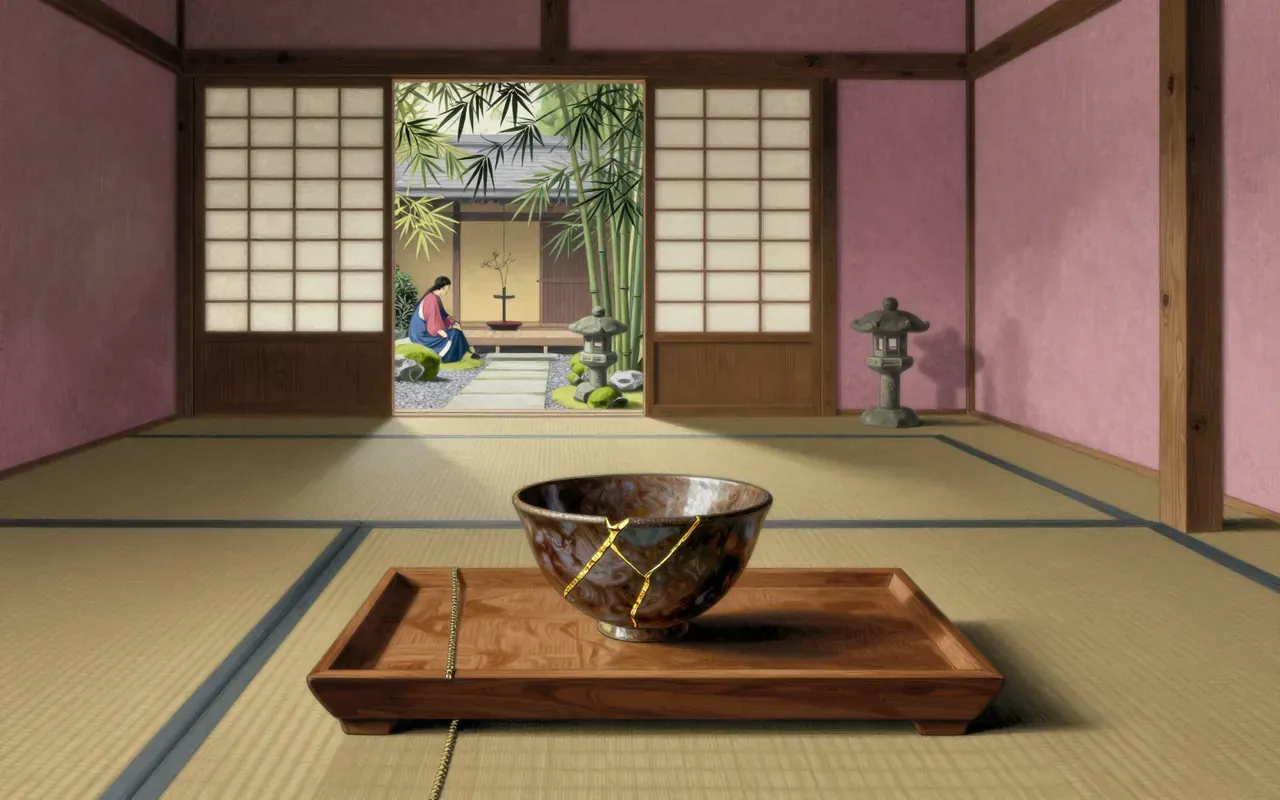
Kintsugi

Kintsugi was never about healing—it was about making brokenness visible, precious, and ceremonial.
video still
9:33

Marimekko

Armi Ratia · 1951

Marimekko is a Finnish textile and apparel company founded in Helsinki in 1951 by Viljo and Armi Ratia. It commissions artists to design bold graphic prints, then uses those prints in simple garments and home furnishings. Its early recognition at the 1957 Milan Triennale affirmed fashion as industrial art. Key outputs include the 1956 Jokapoika shirt and the 1964 Unikko pattern. It made important contributions to 1960s fashion through brightly coloured, simply styled products.

video still
10:05

Nam June Paik

He didn’t predict the internet—he built its conscience, then watched it get outsourced to engineers and advertisers.
video still
8:28

Pointillism

Pointillism isn’t about light—it’s about forcing your eye to do the work the palette refuses to do.
video still
9:19

Sydney Opera House

Jørn Utzon · 1973

The Sydney Opera House is a multi-venue performing arts centre on Bennelong Point, Sydney Harbour. Designed by Jørn Utzon and completed by Peter Hall’s team after Utzon’s 1966 departure, it opened in 1973. Its spherical-shell roofs are a feat of modern expressionist engineering. It hosts over 1,800 performances yearly for more than 1.4 million people—and attracts over ten million visitors annually. It became a UNESCO World Heritage Site in 2007. Its legacy is split: iconic form, fractured authorship.

video still
9:29

Saints Row

Mary-Kate and Ashley Olsen

Saints Row is a video game series. Mary-Kate and Ashley Olsen are fashion designers. No source links them. The brief mistakenly merges two independent cultural outputs.

9:50

Aquascutum

John Emary · 1851

Aquascutum was a London tailoring house founded in 1851 by John Emary. It patented waterproof wool in 1853 and supplied coats to British military officers from the Crimean War onward. Its garments supported suffragettes in 1900 and Edmund Hillary on Everest in 1953. It staged its first London Fashion Week runway in 2005. It entered bankruptcy administration in 2012 and again in 2020, following multiple ownership changes.

8:38

Betty Jackson

Betty Jackson

Betty Jackson is a British fashion designer whose practice sits outside fashion’s usual metrics: no signature logo, no seasonal spectacle, no celebrity client list. She worked inside institutions—designing for judges, advising on model health, equipping unemployed women—not to make statements, but to solve problems with cloth, cut and context. Her influence is procedural, not aesthetic.

10:29

Cowboy boot

A boot built to stop cowboys from being dragged became a uniform for people who’ve never mounted a horse.
video still
8:29

Gap Inc.

Don Fisher and Doris Fisher · 1969

Gap Inc. was a logistics play disguised as youth culture — and its early success came from solving stockouts, not selling identity.

video still
11:07

Hanae Mori

Hanae Mori

Hanae Mori’s fashion house operated from 1951 to its closure (date unspecified), grew to $500 million by the 1990s, and achieved rare institutional recognition: official haute couture accreditation in Paris, runway presence in New York and Paris, and commissions for national representation including JAL, the Olympics, and the Japanese Crown. Her work was functional, ceremonial, and geopolitically legible — not merely aesthetic.

video still
8:46

Kenzō

Kenzo Takada

Kenzō Takada’s Kenzō label began in 1970 as a resource-constrained experiment in Paris—using flea-market space, Saint Pierre market fabrics, and Rousseau-inspired interiors. It re-energised ready-to-wear with colour and volume, launching the 'Big Look' in 1973–74. Its methods were specific, local, and materially grounded—not symbolic or national. It reached New York and Tokyo by 1971, but never claimed to represent Japan. Its legacy is procedural: how to build influence without infrastructure.

video still
10:27

Laura Ashley

Laura Ashley

Laura Ashley built a fashion empire not from runway ambition, but from noticing a missing patch. Her method was craft-based, low-capital, and rooted in specific institutions—the Women’s Institute, the V&A—and a precise historical reference: the 19th-century rural. She sold Romanticism as reliability. She reached middle-class British women who wanted gentility without grandeur. She did not invent nostalgia—but she standardised it, scaled it, and shipped it via mail order before it had a name.

video still
8:57

Beret

The beret is not a symbol that got weaponised. It is a tool that got uniformed—and then mythologised.
video still
8:20

Blazer

A jacket named after a naval gig crew became the world’s most portable badge of belonging—and exclusion.
video still
9:07

Bra

The bra didn’t liberate women—it outsourced control from whalebone to wire, and from corsetieres to corporations.
video still
13:03

Corset

A garment that shaped bodies, then language, then medicine—and never stopped enforcing ideals under the guise of support.
video still
13:02

Dashiki

The dashiki is not African-American heritage—it’s a Dutch-printed garment that became a symbol because it looked like one.
video still
9:04

Fez (hat)

A red hat designed to erase identity became the ultimate symbol of what the state wanted to erase.
video still
9:11

Garter

A functional strap became a wedding prop, a male fashion staple, and a Shakespearean punchline—without ever changing shape.
video still
13:47

Hoodie

A garment built for warmth became a screen for society’s anxieties about who belongs — and who must be watched.
video still
10:36

Kilt

The kilt wasn’t born in Gaelic tradition—it was invented by an English Quaker to speed up Highland timber workers.
video still
9:24

Lederhosen

Lederhosen aren’t Bavarian tradition—they’re alpine workwear that got colonised by national myth.
video still
9:21

Petticoat

The petticoat isn’t one thing—it’s a linguistic smokescreen for centuries of shifting gender, class and cloth.
video still
8:31

Poncho

A garment built for survival became a costume for conquest—and still wears its Indigenous name like borrowed clothing.
video still
9:56

Serape

The serape is not folklore—it’s a contested textile archive written in wool, law, and colonial record.
video still
8:30

Stocking

A stocking is not an accessory. It’s a hinge between medieval function and modern display.
9:33

Carson McCullers

She wrote spiritual isolation like a surgeon—and gave Black characters full humanity before anyone else in Southern fiction dared.
video still
9:21

Hugh Hefner

Playboy didn’t liberate male sexuality—it outsourced its ethics to a chequebook and a calendar shoot.
video still
10:37

Maya Angelou

Angelou didn’t just tell her story—she rebuilt the form to hold Black women’s truth, then took it to the White House and the lecture hall.
video still
9:11

Rachel Carson

Silent Spring didn’t just warn about pesticides—it rewrote the rules of public accountability for industrial chemistry.
video still
9:48

Stan Lee

Stan Lee didn’t invent superheroes—he reinvented them as broke, insecure, quarrelsome New Yorkers.
video still
8:14

Guggenheim Fellowship

A 1925 fellowship built for mid-career makers still works — but its exclusion of performers reveals a century-old bias about who counts as a creator.
video still
8:13

Tom Wolfe

Tom Wolfe didn’t report the sixties—he reverse-engineered human behaviour from a single obsession: status.
9:22

Appam

A 2,000-year-old pancake that never needed reinvention—and refuses to be branded.
10:00

Arepa

The arepa is not Venezuelan folklore—it’s 3,000 years of unbroken maize logic.
9:34

Baklava

Baklava has no homeland—only a history of layering, borrowing, and erasure.
8:37

Bánh mì

A colonial bread became Vietnamese only after the French left—and only because people from the North flooded Saigon with new tastes and tighter budgets.
9:51

Black pepper

Black pepper isn’t hot — it’s pungent. And its dominance has nothing to do with flavour alone.
7:27

Börek

Börek is not a dish—it’s a grammatical form: a noun derived from a verb meaning 'to roll', now folded into centuries of custom.
9:06

Bouillabaisse

A soup that started as fishermen’s scraps became a charter-enforced symbol of Marseille—proving authenticity is less about taste than territory.
8:53

Cachapa

Cachapa is not heritage tourism—it’s 3,000 years of unbroken maize logic.
9:25

Callaloo

Callaloo isn’t one dish—it’s a disagreement in a pot.
9:12

Cardamom

Cardamom isn’t a flavour—it’s a trade route fossilised in seed.
10:04

Cassoulet

A 19th-century name retrofitted to a 14th-century siege story—and still treated as authentic tradition.
10:05

Chili's

Chili's didn’t invent casual dining—it weaponised forgettability.
9:41

Chop suey

Chop suey isn’t a dish with an origin—it’s a dish with an alibi.
8:46

Chow mein

Chow mein isn’t Chinese food—it’s the first global fast-food algorithm disguised as a dish.
9:04

Cider

Cider isn’t a drink—it’s a 2,079-year-old land-use document written in crabapple juice.
8:02

Cinnamon

Cinnamon isn’t ancient magic — it’s ancient infrastructure.
8:51

Clove

Cloves didn’t spice food—they spiced empire.
8:10

Coconut

The coconut is not nature’s accident—it’s Austronesian infrastructure.
8:28

Cognac

Cognac isn’t distilled spirit—it’s distilled law.
8:36

Congee

Congee isn’t comfort food—it’s crisis food that outlived the crises.
8:54

Consommé

Clarity is not neutral. It is a technique—and a hierarchy.
10:54

Coriander

Coriander is not a seasoning—it’s a time capsule from the first civilisations’ sensory toolkit.
video still
9:51

Dolma

Dolma isn’t Turkish, Armenian, or Azerbaijani—it’s Ottoman. And that’s why it’s politically radioactive today.
video still
9:00

Egg foo young

It’s not Chinese-American comfort food—it’s a Cantonese grammar of substitution, stretched across six countries.
video still
8:33

Fufu

Fufu isn’t comfort food—it’s a living archive of resistance, adaptation, and uncredited labour.
video still
9:15

Fugu

Fugu isn’t dangerous because it’s wild—it’s dangerous because we let it eat the wrong things.
video still
9:47

Garlic

A pungent global commodity with no proven health benefit—and 4,000 years of unbroken cultural authority.
video still
9:34

Ghee

Ghee isn’t healthy fat—it’s ritual-grade clarified butter with a smoke point that outperforms olive oil and a cholesterol load that demands caution.
video still
8:56

Gin

Gin isn’t about taste—it’s about who gets to define what counts as medicine, vice, or national identity.
video still
8:18

Gnocchi

Gnocchi is not pasta—it’s a dumpling that pretends to be one, and the potato didn’t even arrive until 1890.
video still
9:22

Guacamole

Guacamole is not a condiment—it’s a 10,000-year-old argument about who controls the avocado.
video still
8:48

Gumbo

Gumbo is not a symbol of unity—it’s evidence of what held together under pressure.
video still
8:26

Idli

Idli isn’t ancient—it’s medieval. And its real innovation wasn’t taste, but control over microbes.
video still
8:50

Injera

Injera isn’t just bread—it’s a timed microbial ritual baked into Amhara daily life.
video still
10:41

Jiaozi

Jiaozi aren’t ancient medicine—they’re ancient paperwork, preserved in tombs and texts long before anyone claimed they cured frostbite.
video still
11:41

Jollof rice

Jollof rice isn’t a dish — it’s a dispute over who gets to narrate West Africa’s culinary sovereignty.
video still
11:29

Kibbeh

Kibbeh isn’t a dish — it’s a 250-year-old argument about how to hold meat and grain together without compromise.
video still
9:23

Korma

Korma isn’t mild—it’s aromatic. And its name isn’t a menu category—it’s a verb.
video still
9:46

Kung Pao chicken

A dish named after a Qing official was renamed under Mao—and now serves as a cipher for what China exports versus what it erases.
video still
10:01

Laksa

Laksa is not fusion cuisine — it is the edible record of Peranakan women remaking survival into sovereignty.
video still
9:26

Larb

Larb isn’t fusion—it’s a border-crossing dish that refuses to be renamed.
video still
9:50

Mansaf

Mansaf isn’t ancient—it’s archaeologically layered, and its changes map Jordan’s 20th-century ruptures.
video still
9:55

Mead

Mead isn’t mythology—it’s honey, water, and time, proven across 9,000 years.
video still
9:51

Mezcal

Mezcal isn’t ancient—it’s colonial fusion, forged by Filipino stills and Mexican agave.
video still
9:56

Nasi goreng

Nasi goreng is not a symbol of unity—it’s proof that national dishes are made by cooks, not committees.
video still
9:02

Pakora

Pakora isn’t a dish—it’s a 1,000-year-old frying protocol disguised as street food.
video still
9:19

Panna cotta

A dessert named 'cooked cream' that isn’t cooked—and celebrated as traditional despite vanishing from print for nearly a century.
video still
9:58

Pelmeni

Pelmeni aren’t Russian first—they’re Komi and Udmurt. Russia just froze them into the national menu.
video still
7:59

Pirog

Pirog isn’t a recipe—it’s a linguistic container for everything East Slavic baking refuses to name separately.
video still
9:11

Polenta

Polenta is not Italian heritage—it’s maize replacing famine food, then migrating with the poor.
video still
9:34

Port wine

Port isn’t from Porto—it’s from the Douro, and its name is a shipping label masquerading as origin.
video still
9:32

Pozole

Pozole isn’t comfort food—it’s a ritual vessel that holds Aztec cosmology, colonial erasure, and unresolved questions about what we choose to digest.
video still
8:33

Prosecco

Prosecco isn’t Italian champagne—it’s a naming compromise that outsourced terroir to volume.
video still
9:53

Rum

Rum did not exist in 1500 — and pretending it did erases the enslaved people who actually invented it decades later.
video still
8:58

Samosa

The samosa is not Indian. It is Persian-born, Arab-recorded, and Delhi-Sultanate-fried — a snack shaped by empire, not geography.
video still
10:52

Satay

Satay is not fusion—it’s forensic evidence of who moved, who stayed, and who cooked for whom.
video still
8:51

Sesame

Sesame is not a spice—it’s a 5,500-year-old survival strategy encoded in a 3-mm seed.
video still
9:31

Tamale

Tamales weren’t snacks. They were sacred rations—and the first food designed for empire.
video still
10:22

Tteokbokki

A dish that began in the palace, went to the street, crossed a border, and got banned for being too South Korean.
video still
10:57

Turmeric

Turmeric is a food colour and pH paper — not an anti-inflammatory, not a medicine, and never was.
video still
8:40

Vermouth

Vermouth isn’t ancient—it’s Italian. And its real history starts in Turin, not the Shang dynasty.
video still
8:56

Vodka

Vodka isn’t neutral—it’s standardised silence, enforced by courts, customs, and cold rooms.
video still
8:55

Xiaolongbao

A steamed bun named after its basket—not its size—is the edible record of China’s dynastic migrations.
12:16

Andy Warhol

Warhol didn’t mirror consumer culture—he weaponised its machinery to expose art’s surrender to it.
8:00

Anime

Anime isn’t a style—it’s a border crossing with paperwork.
10:19

Audrey Hepburn

Audrey Hepburn wasn’t discovered — she was assembled, across three countries and a war.
10:54

Balenciaga

Cristóbal Balenciaga · 1917

Balenciaga is not a brand. It is a method. A resistance. A recalibration of the female form between 1917 and 1959 — anchored in Spain, executed in Paris, and defined by what it refused as much as what it built.

9:37

Conceptual art

Conceptual art didn’t kill the object—it made the object optional, and the idea compulsory.
8:26

Contemporary art

Contemporary art doesn’t make objects—it dissolves the category of 'object' altogether.
video still
9:48

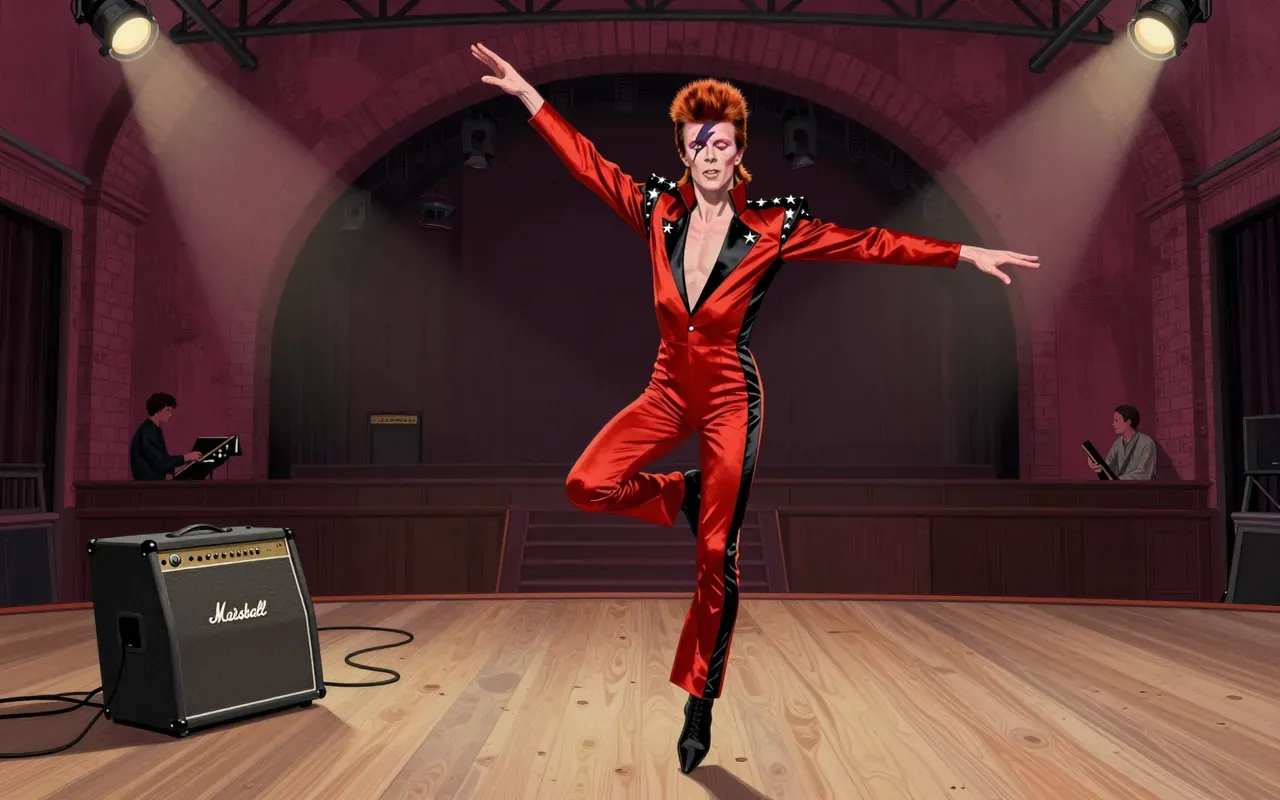
David Bowie

Bowie didn’t sing songs—he launched characters. And he made the pop star into a vessel for ideas, not just feelings.
video still
8:22

Gianni Versace

Gianni Versace

Versace founded an international luxury-fashion house producing diverse consumer goods; designed costumes for theatre and film; linked fashion to the music world; used vivid colours, bold prints and sexy cuts as a deliberate contrast to dominant minimalist aesthetics; combined luxurious classicism with overt sexuality, drawing both criticism and praise; rejected conventional notions of good taste and defied fashion rules; drew design inspiration from historical periods including Classicism, Byzantium, the 18th century, and the 1920s–1930s; reimagined historical elements like Ravenna's mosaics and Roman drapery for contemporary fashion; and was born and raised in Reggio di Calabria, with his career spanning 1946–1997.

video still
10:08

Mia Goth

Horror doesn’t need new monsters — it needs actors who treat ageing like a script, not a costume.
video still
9:09

Manga

Manga isn’t Japanese comics—it’s a 12th-century art form that got renamed, repackaged, and rebranded three times before becoming a magazine industry.
video still
8:36

Martin Margiela

Martin Margiela

Martin Margiela is not a person but a protocol: remove the signature, relocate the show, involve the neighbours, dismantle the garment, number the seams. It began in Genk. It landed in Paris in 1989. It ended in fashion in 2008—and began again as art. Its power lies not in what it made, but in what it refused to name.

video still
8:41

Minimalism

Minimalism didn’t remove meaning—it relocated it from the canvas to the ceiling, the floor, and the viewer’s feet.
video still
8:46

Street art

Street art isn’t rebellion—it’s a negotiation over who gets to speak where, and on what terms.
video still
9:28

Yohji Yamamoto

He didn’t liberate women’s fashion—he re-routed it through men’s tailoring, and never asked if that was the destination.
8:15

Adidas Superstar

A basketball shoe that won the NBA by 1973—and then vanished from the court, only to reappear on every street that mattered.
11:06

Air Jordan

Peter Moore / Nike · 1984

Air Jordan redefined athlete branding by treating Michael Jordan as intellectual property—not a spokesperson. It succeeded through contractual innovation (royalties), aesthetic provocation (NBA ban), and narrative control (dunk video pitch). Its legacy is structural, not stylistic.

8:55

Air Jordan

Peter Moore · 1984

The Air Jordan I redefined athlete branding by treating Michael Jordan as a co-owner, not a spokesperson—and made disobedience a selling point.

9:12

Alexander McQueen

Alexander McQueen

Alexander McQueen was a British fashion designer active from 1992 to 2010. He trained in Savile Row tailoring after leaving school at 16 with one O-level in art. His MA graduation collection at Central Saint Martins attracted patron Isabella Blow. He became known for the 'bumster' trousers and for combining historicism, autobiography and performance art in runway shows—including robotic spray-painting (Spring/Summer 1999) and a holographic Kate Moss (Autumn/Winter 2006). His work explored romanticism, sexuality and death.

9:02

Burberry

Thomas Burberry · 1856

Burberry is a system of material problem-solving disguised as a luxury brand. Its power lies in what it made possible—not what it declared.

9:50

Calvin Klein

Calvin Klein

Calvin Klein is a fashion designer who founded his eponymous company in 1968 after apprenticeship and design work in New York City. His early success followed his first major New York Fashion Week showing, where he was hailed as the new Yves Saint Laurent and noted for clean lines. His 1974 tight-fitting signature jeans achieved $200,000 in first-week sales. He was born in the Bronx, New York City, to a Jewish family of immigrants from Galicia and Bukovina, Austria-Hungary.

9:56

Cartier Tank

Louis Cartier · 1917

The Cartier Tank is a line of watches made by Cartier. It was created by Louis Cartier in 1917, and inspired by the new Renault tanks which Cartier saw in use on the Western Front. The prototype watch was presented by Cartier to General John J. Pershing of the American Expeditionary Force. The Tank was introduced in 1918, and entered full production in 1919, when six pieces were built. Its lines and proportions are similar to those of tanks used on First World War battlefields. Its strap is integrated into vertical sidebars called brancards. The defining features of a Tank watch include its bold Roman numeral dial with a chemin de fer chapter ring, sword-shaped blued steel hands, and a sapphire cabochon-surmounted crown.

8:33

Chanel

Gabrielle Chanel · 2010

Chanel is an Anglo-French luxury fashion house founded in 1910 by Coco Chanel in Paris. It began in 1909 as a millinery shop. It popularised sporty, casual chic in the post–World War I era using jersey and prêt-à-porter sports clothes. It closed in 1939. Chanel collaborated directly with the Nazi Sicherheitsdienst during the occupation. She was not charged due to Winston Churchill’s intervention. She revived the house in 1954.

9:28

Christian Dior

Christian Dior

Christian Dior’s work from 1947–1957 redefined fashion as seasonal, named, and nationally symbolic — not personal style, but statecraft in cloth.

10:56

Comme des Garçons

Rei Kawakubo · 1969

Comme des Garçons is a Japanese fashion label founded by Rei Kawakubo in Tokyo in 1969. It is anti-fashion, austere, sometimes deconstructed—and deliberately rejects consensus notions of beauty, history, and fit.

8:41

Converse (brand)

Marquis Mills Converse · 1910

Converse is a manufacturing company that made functional footwear for specific markets—basketball players, the Rens, the US military. Its cultural weight came later, from reuse, not design intent.

video still
8:30

Denim

Denim isn’t rebellious—it’s bureaucratic. It was issued by railways and air forces long before it was adopted by teenagers.
video still
9:02

Dr. Martens

Klaus Märtens · 1951

Dr. Martens is a functional footwear innovation repurposed as cultural symbol — its origins in rehabilitation and post-war scarcity are routinely overwritten by its later adoption elsewhere.

video still
9:30

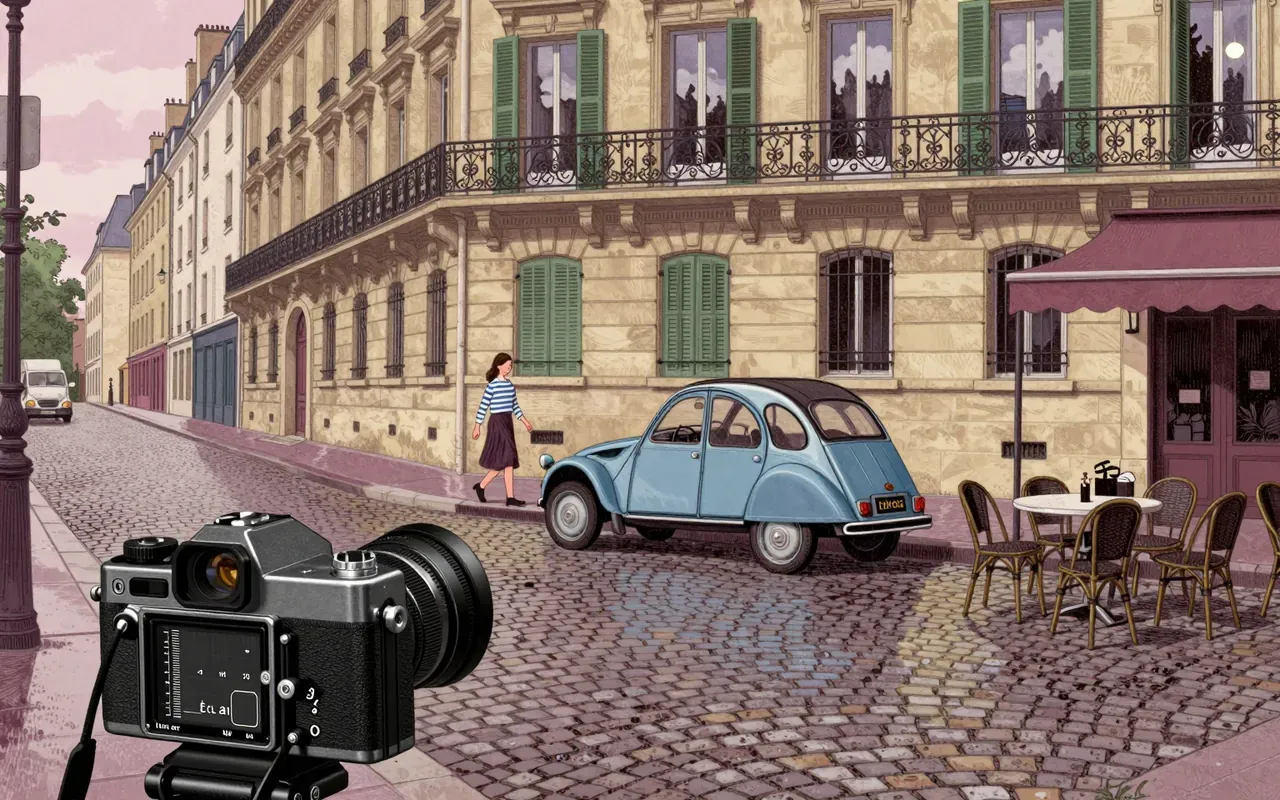
Fashion photography

Richard Avedon

Avedon reoriented fashion photography away from garment display and toward psychological exposure. His studio-based, strobe-lit method eliminated contextual cues—exotic locations, props, soft light—to force attention onto the subject’s face, posture and tension. This served his aim: revealing untypical aspects of character. But it undermined fashion photography’s primary function—portraying clothing. His work helped define America’s image of style and beauty, yet did so by diminishing the very thing being sold.

video still
10:16

Fashion week

Fashion week is not about clothes — it’s the world’s most expensive scheduling tool for an industry that can’t stop making more.
video still
8:47

Giorgio Armani

Giorgio Armani

Armani’s work established a new syntax for elegance: one based on removal, not addition. It reached executives, actors, and diplomats—not youth movements or subcultures. It displaced the stiff formality of Savile Row and the flamboyance of Italian couture alike. It did not invent minimalism—but it proved minimalism could sell, scale, and signify.

video still
10:26

Givenchy

Hubert de Givenchy · 1952

Givenchy’s 1952 launch was a system—not a style. It used raw cotton to make separates scalable, named garments after real women, and built ready-to-wear infrastructure before the term existed. Its later fame with Hepburn is real, but retrospective. The founding act was quieter: pragmatic, precise, and materially inventive.

video still
9:07

Gucci

Guccio Gucci · 1921

Gucci began as a Florentine leather shop in 1921, shaped by embargo, war and equestrian utility—not aspiration or artistry.

video still
10:34

Harajuku

Harajuku isn’t youth fashion—it’s a railway station, a shrine approach, and a bombed-out lot that got dressed up later.
video still
9:28

Hugo Boss

Hugo Boss · 1924

Hugo Boss in 1924 was a regional workwear factory — not a fashion institution, not a design innovator, not a global brand. Its significance lies entirely in what came after: Nazi Party membership in 1931, wartime exploitation of 140 forced labourers, and a delayed reckoning that arrived only in 2001. The 1924 origin is factual scaffolding — not cultural substance.

video still
9:15

Jean Paul Gaultier

Jean Paul Gaultier

Jean Paul Gaultier is a French fashion designer who launched his first individual collection in 1976. His work uses unconventional motifs—corsets, marinières, tin cans—and materials like plastic rubbish bags. He relaunched the marinière for men in 1983, introduced men’s kilts in 1984, debuted the cone bra in 1984, and launched the 'granny grey' hair trend via his 2011 autumn/winter show. He cast older men, fat women, and tattooed models, and played with gender roles. His influence lies in material specificity and casting choices—not in founding movements or naming ideologies.

video still
8:49

New Balance

William J. Riley · 1906

New Balance is a footwear company whose origin lies in biomechanical correction—not sport. Its founding premise was specific, functional, and local. Its later expansion into performance and lifestyle markets introduced contradictions it failed to reconcile—most visibly in its 2012 toning-shoe settlement. It matters now because it shows how medical authority gets repackaged as consumer identity—and how easily that packaging outlives its justification.

video still
9:26

Nike Air Max

Tinker Hatfield · 1987

Nike Air Max redefined sportswear branding by making engineering visible—not because it needed to be seen, but because it couldn’t be hidden.

video still
10:45

Off-White (company)

Virgil Abloh · 2012

Off-White is a case study in how conceptual framing, visual consistency, and asset sequencing can outpace traditional luxury development cycles.

video still
8:47

Prada

Mario Prada · 1913

Prada (1913) is the founding moment of a luxury institution built on imported English goods, patriarchal control, and architectural prestige—not design innovation.

video still
11:12

Punk fashion

Vivienne Westwood

Vivienne Westwood’s punk fashion was a targeted assault on British cultural authority — materially crude, politically charged, and commercially savvy. It succeeded in making dissent wearable. It failed when its symbols were stripped of context and sold back as style.

video still
9:08

Raf Simons

Raf Simons

Raf Simons is a Belgian menswear label launched in 1995 by a furniture-trained designer who rejected runway conventions, used video and street casting, fused divergent youth cultures into coherent silhouettes, and paused the label in 2000 after Confusion—before shifting focus from subcultural code to pure form.
video still
9:26

Ralph Lauren

Ralph Lauren

Ralph Lauren is a fashion brand founded in 1967 that built a global multibillion-dollar enterprise around Anglophile heritage aesthetics, beginning with men's ties and expanding through the Polo line, the Polo player emblem (first seen on a women's shirt cuff in 1971), and the first freestanding store for an American designer on Rodeo Drive in 1971.
video still
8:15

Rick Owens

Rick Owens

Rick Owens is a controlled system: Californian origin, 1994 launch, monochrome palette, bias-drape construction, anatomically precise model selection. It rejects noise. It also rejects variance. Its rigour is its value—and its limit.

video still
8:24

Rolex Submariner

The Submariner stopped being a diver’s tool in the 1960s—and became the world’s most successful status symbol disguised as one.
video still
10:17

Supermodel

The supermodel wasn’t born on a runway—it was minted in a boardroom and ratified by magazine covers.
video still
8:21

Swatch

Swatch didn’t save Swiss watchmaking—it outsourced its soul to plastic and price.
video still
8:44

Birkin bag

Hermès

The Birkin bag is a luxury object whose origin is unusually concrete: maternal need, sketched mid-flight, built by hand in France. Its durability as a symbol rests less on design than on controlled access — and its irony is structural: the woman who inspired it could not use it. It matters now as a case study in how utility becomes myth, and how myth displaces use.

video still
10:00

Chanel 2.55

Coco Chanel

The Chanel 2.55 is a functional object turned cultural cipher — its innovations real, its symbolism rooted, its legacy inflated.

video still
10:59

Little black dress

Coco Chanel · 1926

The little black dress is a 1926 Vogue-published design by Coco Chanel—a short, long-sleeved black dress that recast black as chic, not mournful. It originated earlier (1912–1913), was declared policy in 1920, and gained traction during the Great Depression due to affordability. Vogue likened it to the Model T and predicted it would become a uniform for women of taste. Male critics objected to its erasure of feminine form. By 2014, it was described as part of universal fashion vocabulary.

video still
10:28

Trench coat

Thomas Burberry

The trench coat is a functional garment that solved a narrow military problem. Its civilian life is a story of displacement—not evolution.

video still
8:28

Tommy Hilfiger

Tommy Hilfiger

Tommy Hilfiger is not a story of creative rupture. It is a case study in post-failure repositioning: a bankrupt retailer turned branded sportswear system, funded by Murjani, then Chou, staffed by Ralph Lauren veterans, and sold via spectacle before substance.

video still
9:54

Yves Saint Laurent (designer)

Yves Saint Laurent

Yves Saint Laurent’s early work at Dior was not about rebellion — it was about redistribution: of weight, of emphasis, of authority. His 'Trapeze' line moved fashion’s centre of gravity from the waist to the shoulder line. It reached young, affluent women who found Dior’s formality alienating. It displaced the New Look’s rigour without replacing it with theory — only geometry. Its influence is visible in every modern shift dress. But it did not invent youth culture in fashion — it responded to it.

9:41

Barbour

John Barbour

John Barbour (c. 1320–1395) was a Scottish poet and the first major named literary figure to write in Scots. His poem 'The Brus' is a foundational text in the Scots literary tradition.

9:11

Book collecting

Book collecting is not about love of books—it’s about control over what counts as knowledge.
10:01

Asado

Asado isn’t barbecue—it’s a two-hour social contract written in smoke and salt.
10:54

Baguette

The baguette is not tradition—it’s a 1920 legal fiction dressed as folklore.
7:45

Beer

Beer didn’t follow civilisation—it helped build it.
10:19

Bibimbap

Bibimbap isn’t tradition—it’s transcription: a dish whose name multiplied as Korea learned to write it.
9:19

Biryani

Biryani isn’t defined by rice—it’s defined by disagreement.
8:57

Bread

Bread did not follow civilisation—it built the conditions for it.
10:08

Bulgogi

Bulgogi isn’t Korean food history — it’s refugee history, written in marinade and charcoal.
10:20

Cappuccino

A drink named for monks’ habits, perfected by Austrian baristas, standardised by Italian machines—and now served everywhere as if it were born in Florence.
8:50

Caviar

Caviar isn’t luxury—it’s a legal fault line where taxonomy, empire, and extinction meet.
9:38

Ceviche

Ceviche isn’t cooked—it’s chemically tricked. And that deception has lasted 5,500 years.
9:34

Champagne

Champagne isn’t about bubbles—it’s about borders drawn in bottle pressure.
8:22

Cheese

Cheese is not food—it’s the first biotech platform.
8:10

Chocolate

Chocolate wasn’t invented for sweetness—it was weaponised for status, then industrialised for profit.
10:25

Cocktail

A word that began as a precise recipe ended up meaning nothing at all.
8:34

Coffee

Coffee wasn’t invented—it was ritualised, then exported, then industrialised.
9:58

Couscous

Couscous is older than the nations that claim it—and its real history is a quiet rebuke to cultural nationalism.
9:47

Crêpe

A wrinkled sacrament turned snack: crêpes are liturgy made edible.
8:50

Croissant

The croissant is not Austrian. It is not ancient. It is a French industrial compromise disguised as tradition.
video still
10:11

Curry

Curry isn’t a dish—it’s a colonial taxon that flattened India’s food into a single, exportable concept.
video still
9:32

Dim sum

Dim sum isn’t about variety — it’s about pacing, presence, and the quiet insistence that meals belong to people, not schedules.
video still
9:25

Enchilada

Enchiladas aren’t ancient tradition—they’re a 19th-century archive of survival, translation, and erasure.
video still
7:47

Espresso

Espresso isn’t about taste—it’s about control: a 1884 Italian patent that turned coffee into a timed, pressurised, repeatable unit of labour.
video still
8:56

Fast food

Fast food isn’t about taste — it’s the first fully industrialised food system, built for cars and clocks, not kitchens and care.
video still
8:02

Fine dining

Fine dining isn’t about taste—it’s about who gets to sit at the table, and who polishes the silver.
video still
9:31

Fondue

Fondue isn’t tradition—it’s cheese marketing that learned to serve itself at the table.
video still
10:42

Gelato

Gelato isn’t Italian ice cream—it’s an English mistranslation sold as authenticity.
video still
8:42

Goulash

Goulash isn’t Hungarian comfort food—it’s a 10th-century shepherd’s ration that got rewritten as soup after paprika arrived 600 years later.
video still
9:36

Gyros

Gyros isn’t Greek invention—it’s Greek inheritance, forged in forced migration.
video still
10:27

Hamburger

The hamburger isn’t German. It isn’t American. It’s a name pasted over a century of unconnected recipes.
video still
9:06

Hummus

Hummus isn’t a flag — it’s a 700-year-old Levantine-Egyptian dish that got drafted into a conflict it never chose.
video still
8:04

Jamón ibérico

A legal framework disguised as a delicacy—and the only cured meat where 'pata negra' means 'black label', not 'black hoof'.
video still
10:50

Kebab

Kebab isn’t one dish. It’s a thousand translations of fire, meat, and language—none of them pure.
video still
8:44

Kimchi

Kimchi is older than chillies — and that changes everything about how we read tradition.
video still
9:22

Mapo tofu

The first official mapo tofu recipe erased its defining ingredient—and made the dish legible to the nation by making it less Sichuan.
video still
8:18

Naan

Naan is not Indian tradition—it’s Delhi Sultanate infrastructure baked into dough.
video still
10:17

Paella

Paella is not Spanish. It is Valencian — and every global version that ignores socarrat, fire, and Albufera rice misses the point.
video still
9:23

Pasta

Pasta didn’t cross the Silk Road—it crossed the Mediterranean. And Marco Polo never carried it.
video still
9:25

Peking duck

Peking duck isn’t ancient tradition—it’s imperial branding, refined by Beijing restaurants over six centuries.
video still
10:54

Pho

Pho isn’t Vietnamese tradition—it’s Northern Vietnam’s early-20th-century street-food innovation, born in Nam Định and carried on poles.
video still
8:56

Pizza

Pizza is not a dish—it’s a thousand-year-old linguistic container for flatbread, tomato, and myth.
video still
8:34

Prosciutto

Prosciutto isn’t just cured ham—it’s a linguistic landmine and a climate-specific craft that English flattens into cliché.
video still
8:27

Ramen

Ramen is Cantonese soup in Japanese clothes—and it got the name wrong from day one.
video still
9:40

Ratatouille

A dish built on surplus became a symbol of refinement—despite arriving centuries late to its own origin story.
video still
8:44

Risotto

Risotto is not ancient tradition—it’s a 200-year-old technique that turned northern Italian marsh rice into a national staple.
video still
9:52

Sake

Sake isn’t rice wine—it’s a linguistic trap and a biochemical anomaly that Japan legally locked into place.
video still
9:28

Schnitzel

Schnitzel isn’t Austrian tradition—it’s 1845’s first mass-produced illusion of tenderness.
video still
9:05

Shawarma

Shawarma isn’t Levantine tradition—it’s Ottoman engineering, remade by migrants, measured in metres.
video still
8:22

Soba

Soba isn’t ancient tradition—it’s Edo-period urban infrastructure disguised as noodles.
video still
8:54

Sushi

Sushi isn’t Japanese tradition—it’s Southeast Asian preservation, Chinese documentation, and Edo-period fast-food engineering.
video still
8:56

Taco

Tacos are not Mexican street food—they’re a folding technique that survived conquest, mining, and translation.
video still
10:02

Tagine

A clay pot shaped like a dunce cap that turns scarcity into flavour—by design, not accident.
video still
11:02

Takoyaki

Takoyaki isn’t original. It’s Osaka’s 1935 refinement of an older flour-and-pan snack tradition — and that’s why it won.
video still
9:16

Tea

Tea is not a beverage. It is a botanical borderland made liquid—and then weaponised, ritualised and traded across continents.
video still
8:29

Tempura

A Catholic Lenten dish became Japan’s most exported symbol of lightness—by forgetting it was ever about restraint.
video still
8:24

Tiramisu

Tiramisu is not tradition—it’s a 1969 restaurant stunt that rewrote Italian dessert history.
video still
9:10

Wagyu

Wagyu isn’t marbled beef—it’s a Japanese cattle registry, and calling anything else Wagyu is linguistic fraud.
video still
7:41

Whisky

Whisky isn’t born of craft—it’s forged by accident, refined by commerce, and sold as heritage.
video still
8:59

Wine

Wine is not a luxury—it’s the oldest continuous technology of cultural transmission.
video still
8:10

Yakitori

Charcoal isn’t flavouring—it’s the ingredient yakitori can’t name but can’t live without.