culturebriefs
9:00in productionCh. 1 · The Only One/ 9:00 · ceiling 15 min
The arts · Movements & scenes

Bad for Good

1981

Steinman’s only solo album proves he wrote for Meat Loaf’s voice—not his own.

Bad for Good is Steinman’s only solo studio album, released April 1981. It contains songs written for Meat Loaf’s unreleased Renegade Angel, recorded after Meat Loaf’s vocal failure. Steinman wrote all songs and performed on most; Rory Dodd sang lead on some. Critical reaction was mixed, focused on Steinman’s vocals. The album broke the UK Top 10.

Chapters & takeaways6
  1. 0:56
    The Only One

    This is Steinman’s sole studio album—and every song on it is his.

  2. 2:04
    A Backup Plan

    It exists because Meat Loaf couldn’t sing—the songs were meant for Renegade Angel.

  3. 3:01
    The Voice That Broke the Frame

    Critics accepted the sound but rejected the singer: Steinman’s voice was the flaw.

  4. 4:03
    Commercial Proof, Artistic Question

    It broke the UK Top 10—proof that Steinman’s writing could sell without Meat Loaf’s voice.

  5. 4:56
    Shared Vocals, Singular Vision

    Rory Dodd sang lead on some tracks—Steinman performed on most, but not all.

  6. 6:09
    What Was Meant to Be Lost

    It is both an archive of lost intentions and a chart-topping detour.

Worth your time?

Yes. Study the whole thing.

3.5/ 5
What works
  • as a document of creative contingency
  • as evidence of how much Meat Loaf shaped Steinman’s sound
What does not
  • culture/photography
  • culture/literature
  • culture/cities
  • culture/subcultures
Study it if
  • fans of Bat Out of Hell
  • students of 1980s pop production
  • anyone studying authorship in popular music
Skip it if
  • casual listeners seeking vocal polish
  • those who only engage with definitive performances
The written brief1 min read

What the thing is

Bad for Good is Jim Steinman’s only studio album. It is a collection of songs written for Meat Loaf’s abandoned Renegade Angel, recorded solo in 1981.

Where it came from

It came from vocal failure: Meat Loaf could not record Renegade Angel after 1978 lyric theft in Toronto and subsequent vocal problems. Steinman recorded the material himself.

What it gets right

It delivers Steinman’s signature maximalist arrangements and narrative ambition intact. The conceptual framing—‘The Storm’ as prelude, ‘Rock and Roll Dreams Come Through’ as epilogue—holds the album together.

What it gets wrong

Steinman’s vocals are thin and strained. Critics noticed immediately. His singing does not carry the weight his compositions demand.

Why it matters now

It matters now as a case study in authorship versus interpretation—what happens when the architect steps into the role of the performer, and the scaffolding remains but the voice cracks.

Is it worth your time

Yes—if you want to hear how Steinman’s theatrical songwriting translated without Meat Loaf’s voice, and how that exposed the limits of his own performance.
Same beat · The arts4 of 9
9:26
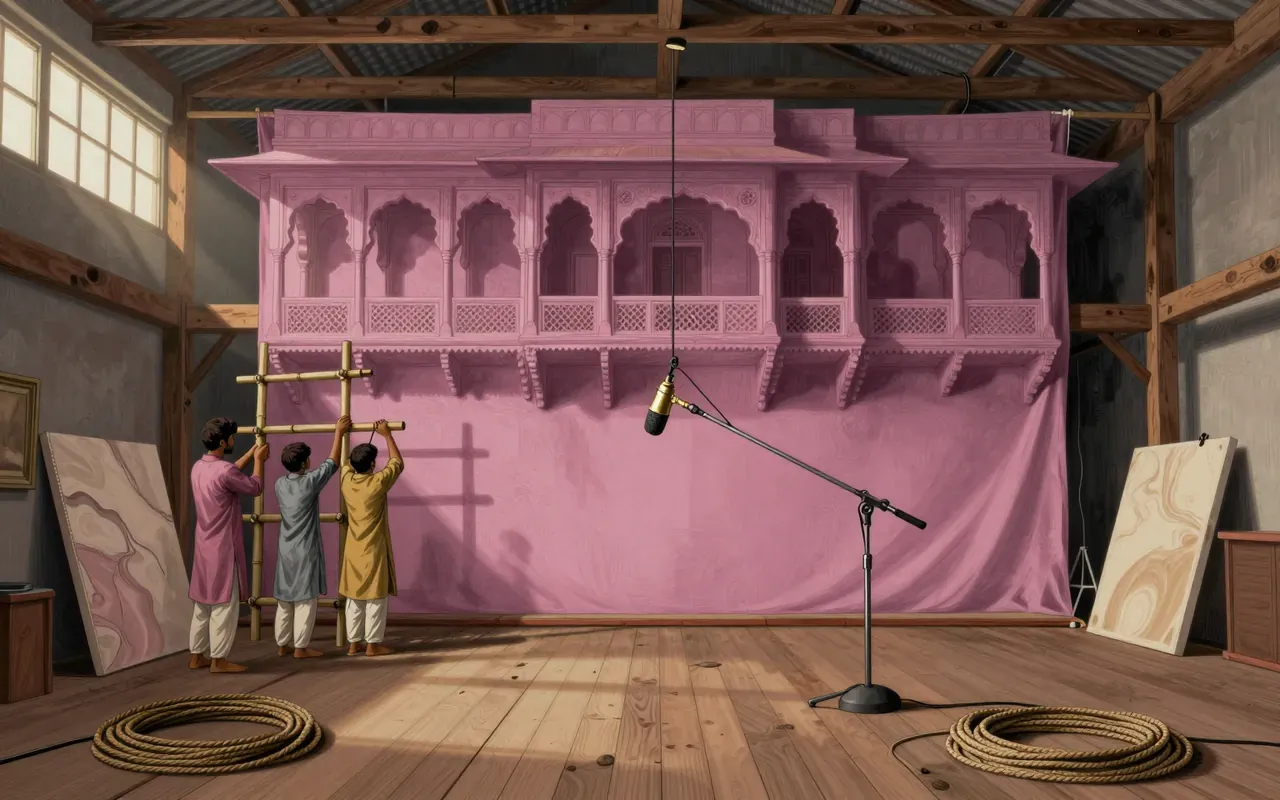
Hindi cinemaHindi cinema is India’s Hindi-language film industry, based in Mumbai. It began with Raja Harishchandra (1913) and consolidated with Alam Ara (1931). Its dominant mode is the masala film — mixing action, comedy, romance, drama, melodrama and musical numbers — while parallel cinema offers realist, non-musical alternatives. In 2017, it produced 364 of India’s 1,986 feature films. In 2022, it earned 33% of national box office revenue — more than any other Indian language industry. Its global reach relies on Hindustani linguistic roots, Hinglish evolution, song-and-dance integration, studio-based sound production and diaspora markets.
10:25
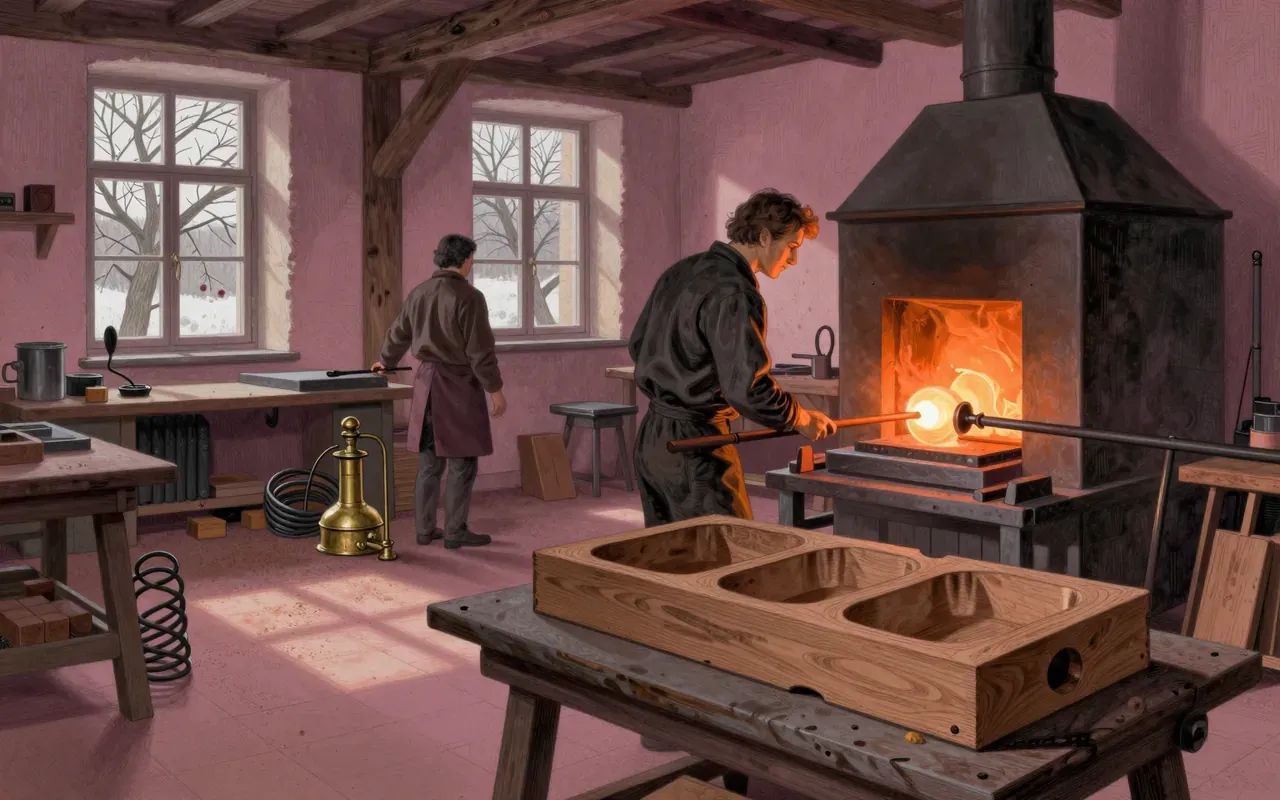
GlassblowingGlassblowing is a technique—not an art form, not a tradition, but a precise physical method. It turns glass’s disordered atomic structure into a controllable medium. It was invented once, in one place, at one time: the middle of the 1st century BC, by Phoenician and Syrian craftsmen. It spread rapidly because it worked: it enabled uniform thickness, prevented blow-through, and scaled from luxury vessels to everyday wares. It persists because nothing else does what it does.
9:18
Hindi cinemaHindi cinema is Mumbai-based Hindi-language commercial filmmaking. It began with Raja Harishchandra (1913) and entered the sound era with Alam Ara (1931). Its Golden Age ran from the late 1940s to the early 1960s. The masala film emerged in the 1970s. The term 'Bollywood' was coined then too. Since the 1960s, Indian cinema has been the world's largest producer of musical films. Salim-Javed revitalised screenwriting in the 1970s. Hindi cinema draws on ancient Indian epics, Sanskrit drama, folk theatre, Parsi theatre, Hollywood, Urdu literature and Hong Kong martial arts cinema. It faces challenges including copyright infringement, funding irregularities and evolving audience expectations.
10:14
Royal Ballet School1931The Royal Ballet School is a vocational pipeline—not an academy of broad artistic development. It was founded in 1926, became co-educational in 1931, and hardened into a dual-site system by 1955. Its rigour serves two companies. Its equity claims collapse under the weight of its own data: 90% of students require financial aid. That is not inclusivity. It is managed scarcity.
Up next in Culture

SOAS University of London

1916 · 9:42

A colonial instrument repurposed—not redeemed—into a rare centre for non-Western scholarship.

9:42