culturebriefs
8:58in productionCh. 1 · Origins/ 8:58 · ceiling 15 min
Movements & scenes · Art

Land art

Land art refuses the gallery—but needs it to be seen.

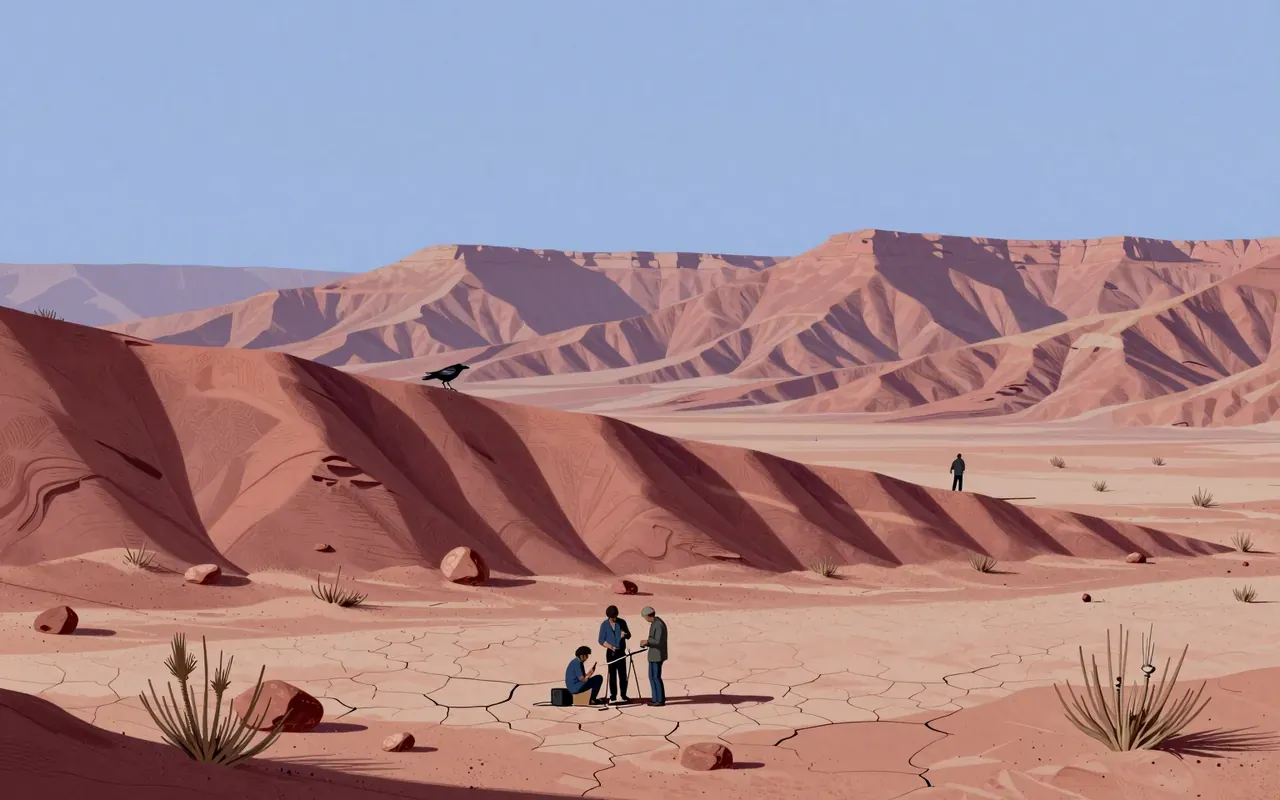
Land art is a 1960s–70s movement rooted in Great Britain and the US. It uses on-site natural materials—soil, rocks, vegetation, water—in remote locations. It rejects commercialisation and embraces ecological and spiritual concerns. It draws on older earthwork traditions and is inspired by minimal and conceptual art, De Stijl, Cubism, Brâncuși, and Beuys. Its remoteness necessitates photographic documentation for urban gallery presentation.

Chapters & takeaways4
  1. 0:48
    Origins

    Land art began in the 1960s–70s, but its roots go back to ancient earthworks and a 1955 Colorado mound.

  2. 2:13
    Method

    It uses soil, rocks, vegetation, and water—on site—and relies on photography to reach cities.

  3. 3:44
    Motivation

    It rejected art-market logic while embracing rural yearning and ecological concern.

  4. 5:06
    Influence

    It borrowed from minimalism and conceptual art—but also from Cubism, De Stijl, and Brâncuși.

Worth your time?

Yes. Study the whole thing.

3.5/ 5
What works
  • rejects commercialisation
  • uses on-site natural materials
  • aligns with ecological awareness
  • requires photography for urban reception
What does not
  • define a decade
  • influence named artists
  • start a movement
  • displace other art forms
Study it if
  • artists working outside institutions
  • critics examining art's relationship to land
  • audiences questioning what counts as legible art
Skip it if
  • viewers seeking immediate access
  • collectors seeking portable works
  • institutions needing display-ready objects
The written brief1 min read

What the thing is

Land art is a movement that places large-scale interventions directly into remote landscapes using natural, on-site materials.

Where it came from

It emerged in the 1960s–70s, primarily in Great Britain and the United States. Herbert Bayer’s Grass Mound in Aspen, Colorado (1955), marks an early precedent. It draws on hill figures and geoglyphs, and was inspired by minimal art, conceptual art, De Stijl, Cubism, Brâncuși, and Beuys.

What it gets right

It rejects gallery commodification by using soil, rocks, vegetation, and water on-site. It aligns with ecological awareness and spiritual engagement with Earth as home. It extends older traditions like hill figures and geoglyphs into contemporary practice.

What it gets wrong

Its remoteness makes it inaccessible without photographic mediation. Its reliance on urban galleries to frame and legitimise remote works reproduces the very commercial system it claims to reject.

Why it matters now

It prefigures urgent questions about land use, ecological responsibility, and the role of art in non-urban spaces—without offering answers, only propositions sited where infrastructure ends.

Is it worth your time

Yes—if you care about art that tests the limits of location, material, and legibility. No—if you expect durable objects, urban accessibility, or clear authorship.
Same beat · Movements & scenes4 of 139
9:24
Adbusters1989Adbusters is a Canadian anti-capitalist activist foundation founded in 1989 in Vancouver by Kalle Lasn and Bill Schmalz. It uses culture jamming—especially subvertisements and campaigns like Buy Nothing Day and Occupy Wall Street—to challenge consumerism and corporate control of information flows. It publishes the reader-supported, advertising-free Adbusters magazine. Its founding premise is that citizens lack equal access to information flows compared to corporations.
8:14
Crypto-anarchyCrypto-anarchy is a movement, not a prophecy. It uses cryptography to enable anonymity, free speech and trade. It emerged from Timothy C. May’s 1988 manifesto and the 1992 cypherpunk founding. It gets right that code can constrain power—but wrong that it will collapse the state. A 2022 study confirms its political irrelevance—yet its architecture remains vital for Internet-native dissent.
8:35
Culture jammingCulture jamming is anti-consumerist protest that uses détournement to subvert corporate media forms. It began in the 1950s, was named in 1984 by Don Joyce of Negativland, and draws directly from the Letterist and Situationist Internationals. It correctly identifies media as a tool of perception-shaping and conformity-enforcement. But it wrongly assumes irony alone can resist power—and ignores how quickly its tactics are absorbed into branding. It matters now because corporate language has colonised every channel of attention, yet its methods remain stuck in the logic of the 1980s media landscape. It is worth your time if you want to understand why resistance so often looks like the thing it opposes.
8:55
Free software movementThe free software movement is a precise, principled refusal of proprietary control over software. It began in 1983 with GNU and institutionalised in 1985 with the FSF. It gets right that software freedom must be guaranteed—not merely permitted. It gets wrong that licence compliance alone secures user agency. Its relevance has grown as software becomes infrastructural—but its methods remain rooted in individual refusal and collective development.
Up next in Culture

Levi Strauss & Co.

Levi Strauss · 1853 · 10:21

It didn’t invent jeans — it patented a fix for torn pockets, then turned durability into identity.

10:21