9:46in productionCh. 1 · Silhouette over story/ 9:46 · ceiling 15 min
Subcultures
Lolita fashion
Lolita fashion wasn’t about literature—it was about refusing adulthood in plain sight.
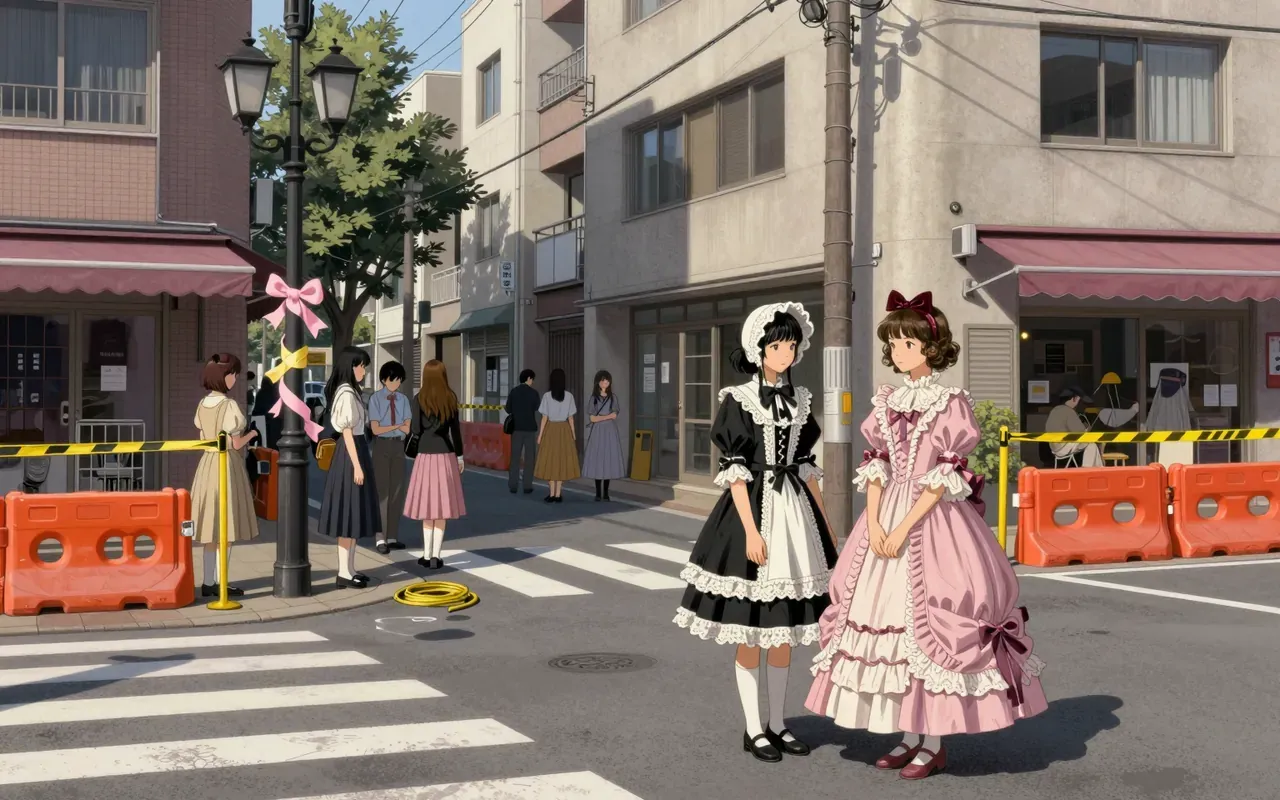
Lolita fashion was a Japanese subcultural response to rigid gender expectations, using Victorian-Rococo silhouette and enforced cuteness to assert visual autonomy. It crystallised in Harajuku in the 1990s–2000s, named in Ryukou Tsushin in 1987—without literary reference. Its decline in Japan since the 2010s reflects shifting generational pressures, not aesthetic failure.
It is defined by silhouette first—petticoat, crinoline, cuteness—not by narrative or rebellion.
2:13
Constraints that shaped it
It grew from real constraints: Sunday pedestrian zones in Harajuku and pressure to conform to gender roles.
3:50
A name without a novel
‘Lolita’ was a magazine label—not a literary claim—and Otome was its only named precursor.
5:39
Peak and retreat
It peaked globally in the 1990s–2000s, then faded in Japan—not because it failed, but because the conditions that birthed it changed.
Worth your time?
Yes. Study the whole thing.
4/ 5
What works
as-a-document-of-gender-refusal
as-a-case-study-in-aesthetic-autonomy
as-evidence-of-harajuku-as-incubator
What does not
literature
nabokov
sexualisation
global movement
Study it if
students-of-japanese-youth-culture
fashion-historians
designers-interested-in-silhouette-as-resistance
Skip it if
fans-of-the-novel-lolita
those-seeking-current-japanese-streetwear-trends
The written brief1 min read
What the thing is
Lolita fashion is a Japanese subcultural style defined by Victorian and Rococo silhouettes, enforced cuteness, and a skirt shape created by petticoat or crinoline.
Where it came from
It emerged in Japan in the 1990s–2000s as a reaction against rigid gender roles and societal expectations. It built on pedestrian interaction in Sunday-closed Harajuku and early brands like PINK HOUSE and Angelic Pretty. It was named in Ryukou Tsushin in September 1987.
What it gets right
It delivers visual autonomy through silhouette and cuteness. The petticoat-defined skirt asserts presence without sexualisation. It names a real refusal: of adult female conformity in stifling social conditions.
What it gets wrong
It misleads with its name. ‘Lolita’ evokes Nabokov’s novel—but the fashion has no documented connection to it. The term was applied in Ryukou Tsushin in 1987 without explanation or literary reference.
Why it matters now
It matters as evidence of how aesthetic resistance works—not through protest slogans, but through sustained, codified self-presentation. Its decline in Japan since the 2010s shows how tightly such styles are bound to specific generational pressures.
Is it worth your time
Yes—if you want to understand how young Japanese women used clothing to reject rigid gender roles in the 1990s and early 2000s. No—if you’re looking for a living, evolving subculture in Japan today.