What the thing is
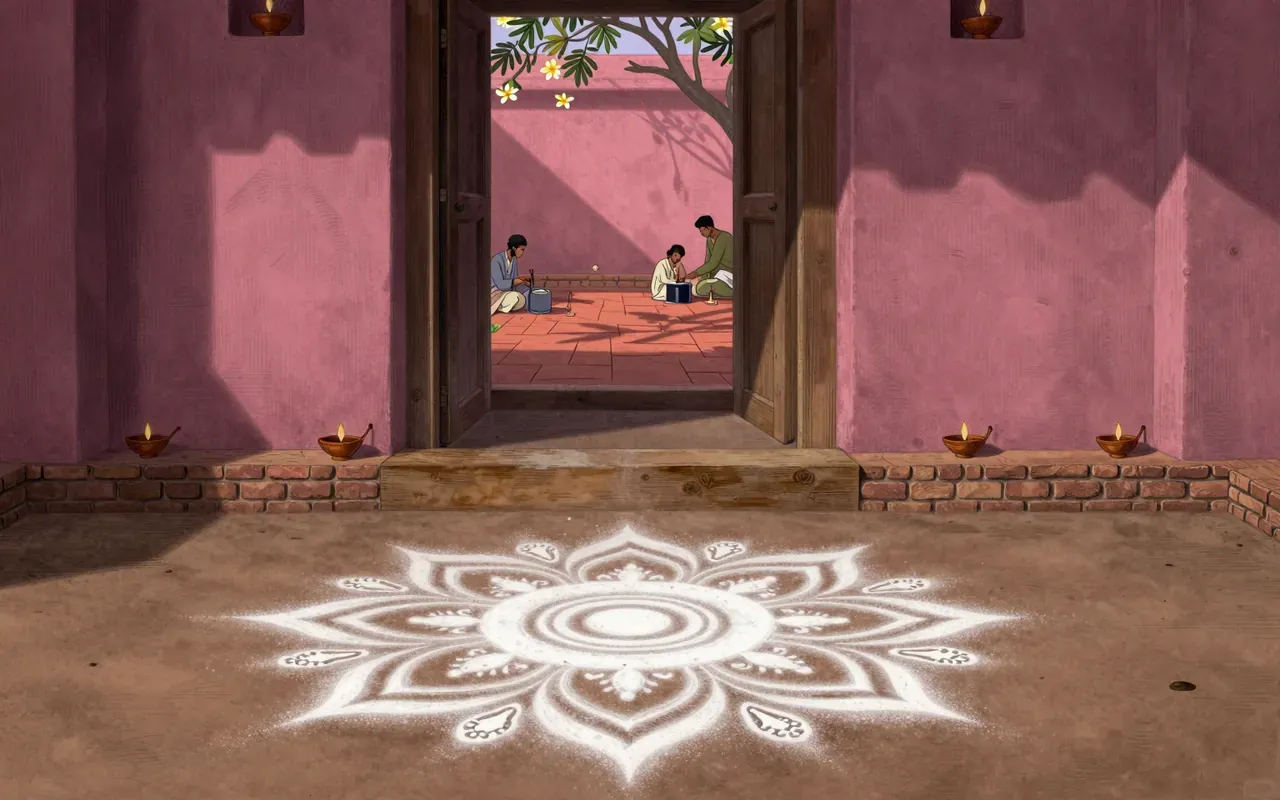
Rangoli is a floor-based Hindu art form made by women, using powdered or organic materials to create temporary patterns outside household entrances.
Where it came from
It originated on the untiled floors of Hindu households across the Indian subcontinent, where it served ritual, hygienic and cosmological functions before festivals formalised its timing.
What it gets right
It establishes auspiciousness through repetition, not spectacle. It ties hygiene, cosmology and deity worship into one daily act. It transmits knowledge physically—through posture, rhythm and touch—not just instruction.
What it gets wrong
It does not resolve the tension between its ritual function and its modern commercialisation. When made with synthetic dyes or stencils for corporate Diwali campaigns, it abandons the insect-deterrent purpose and intergenerational transmission that define its practice.
Why it matters now
It persists as a counterpoint to digital permanence—a tactile, ephemeral, gendered practice that reclaims thresholds in an era of surveillance, gated communities and algorithmic curation of public space.
Is it worth your time
Yes—if you want to understand how ritual, material constraint and domestic labour cohere into a living visual language that still shapes public space in India.