What the thing is
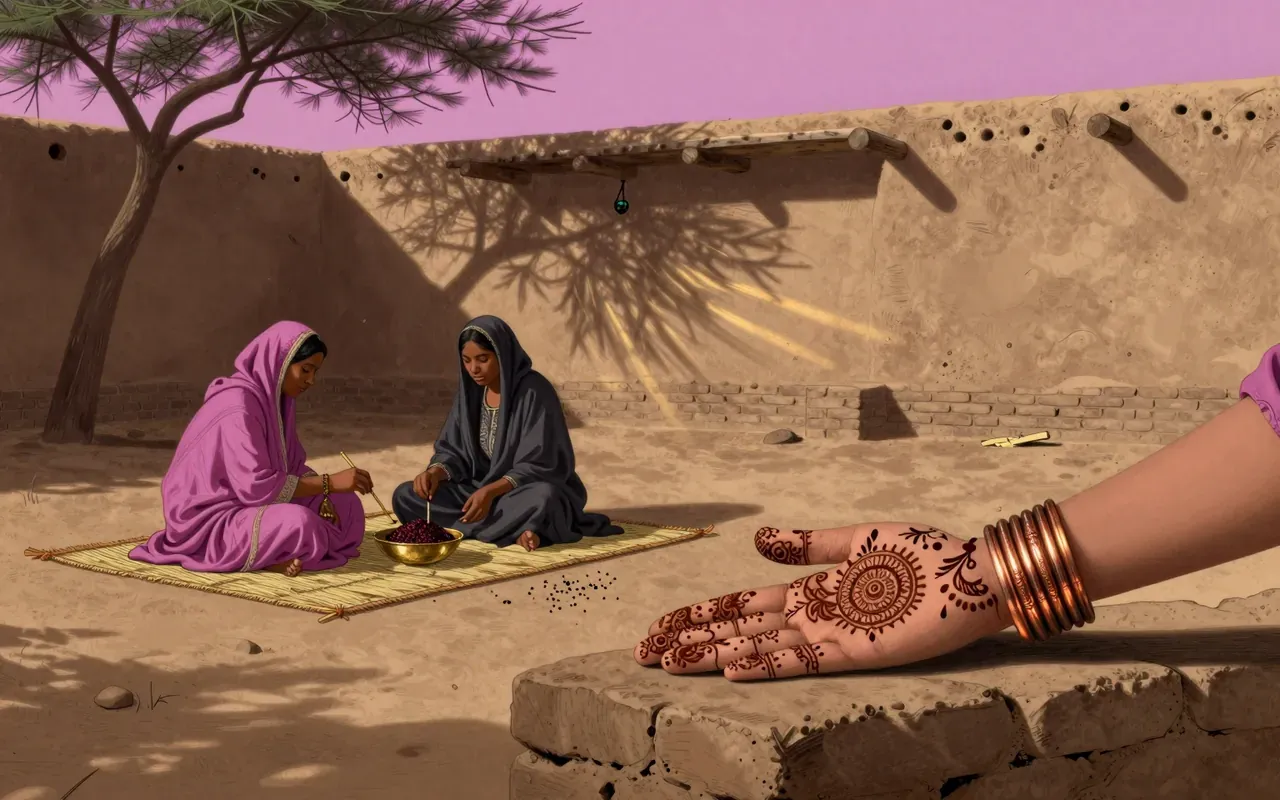
Mehndi is temporary skin decoration using henna paste applied to hands, wrists, forearms, feet, ankles, and lower legs.
Where it came from
It originated in ancient Babylon and Egypt and was established in India by the 4th century CE. It became widespread during the Mughal Empire (early 1500s–mid 1800s).
What it gets right
It honours time-bound bodily transformation. It links celebration to impermanence. It centres women’s hands as sites of skill, memory, and social marking. It uses a single plant—Lawsonia inermis—to generate region-specific visual languages.
What it gets wrong
It risks harm when adulterated with synthetic PPD for black colour. It flattens into ‘exotic’ decoration outside its ritual contexts. It obscures regional variation by grouping Indian Subcontinent, North Africa, East Africa, and the Middle East under one term without specifying divergent lineages or meanings.
Why it matters now
Because it persists as a counterpoint to permanent cosmetic culture—rooted in plant chemistry, timed oxidation, and communal ceremony—not algorithmic curation or branded self-expression.
Is it worth your time
Yes—if you need to understand a living ritual that bridges faith, gender, and bodily adornment across continents. No—if you expect novelty, digital integration, or individual authorship.