What the thing is
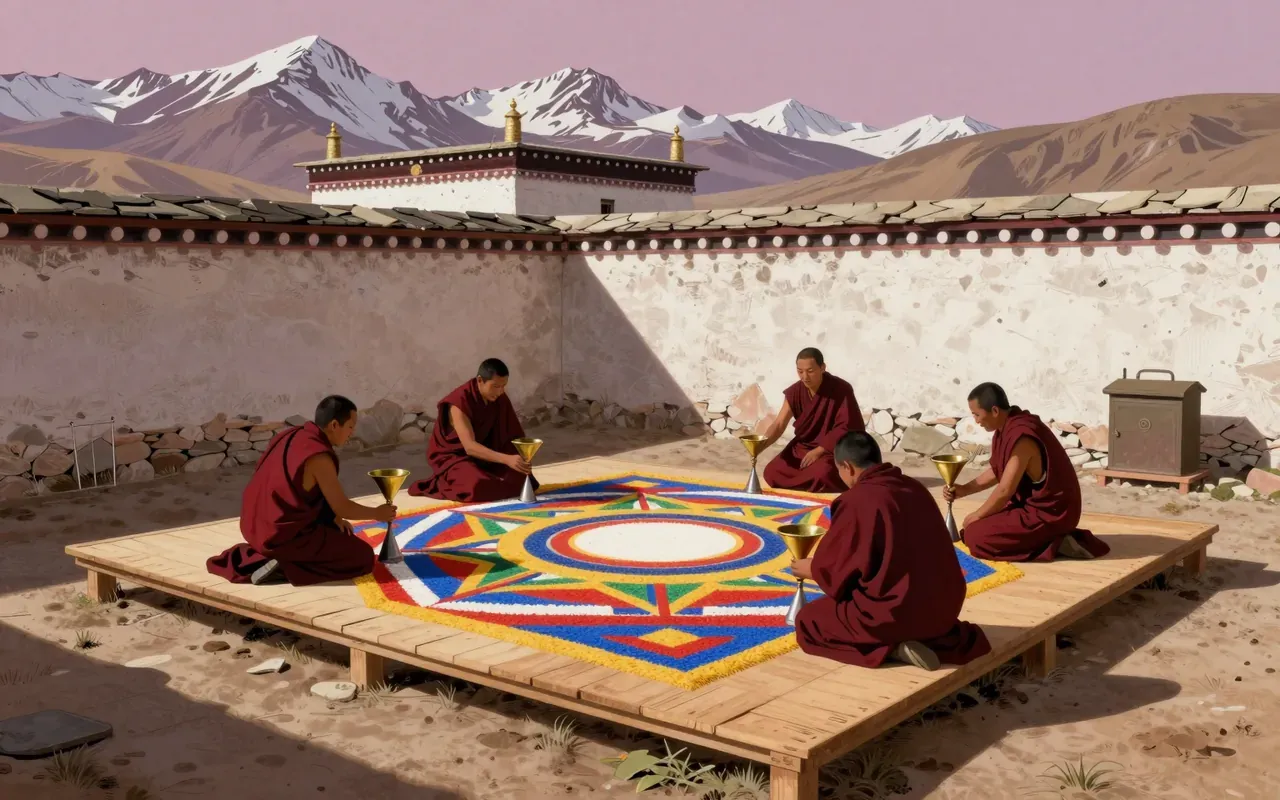
A mandala is a geometric configuration of symbols. It is a square-with-gates-and-centred-circle form in Hinduism. In Vajrayana Buddhism, it is a sand-constructed visualisation of pure lands and enlightenment archetypes.
Where it came from
It originated in Indian religions. The term appears in the Rigveda as the name of sections. Mandala as an art form first appeared in Buddhist art in India in the first century B.C.E. Sand mandalas originated in India between the 8th and 12th centuries.
What it gets right
It maps cosmology and consciousness in one form. Radial balance, concentric geometry, and central focus make it a functional diagram of order, impermanence, and selfhood.
What it gets wrong
It is often stripped of its tantric or doctrinal grounding. When divorced from yantra practice, Vajrayana visualisation, or textual teaching aids like the Taima mandala, it becomes aestheticised abstraction.
Why it matters now
It persists where ritual meets psychology—Jung’s archetype of the Self, Borobudur’s architecture, and contemporary art all rely on its formal grammar. But its current use in wellness marketing obscures its doctrinal rigour.
Is it worth your time
Yes—if you need a tool for interior transformation, not decoration. Its ritual precision demands attention; its modern commodification drains it of function.