culturebriefs
10:51in productionCh. 1 · What a rave actually is/ 10:51 · ceiling 15 min
Subcultures · Movements & scenes

Rave

Rave wasn’t a movement—it was a loophole in the law, a crack in the night, and a blueprint for how capital would later absorb rebellion.

Rave is a dance party format defined by electronic music, non-traditional venues, and immersive production. It crystallised in the late 1980s around acid house, spreading from Chicago to Manchester to London—first in squats, then clubs, then festivals. It succeeded in creating portable, affective collectivity. It failed in sustaining equity, access or autonomy as it scaled. Its legacy is infrastructural, not ideological.

Chapters & takeaways4
  1. 1:15
    What a rave actually is

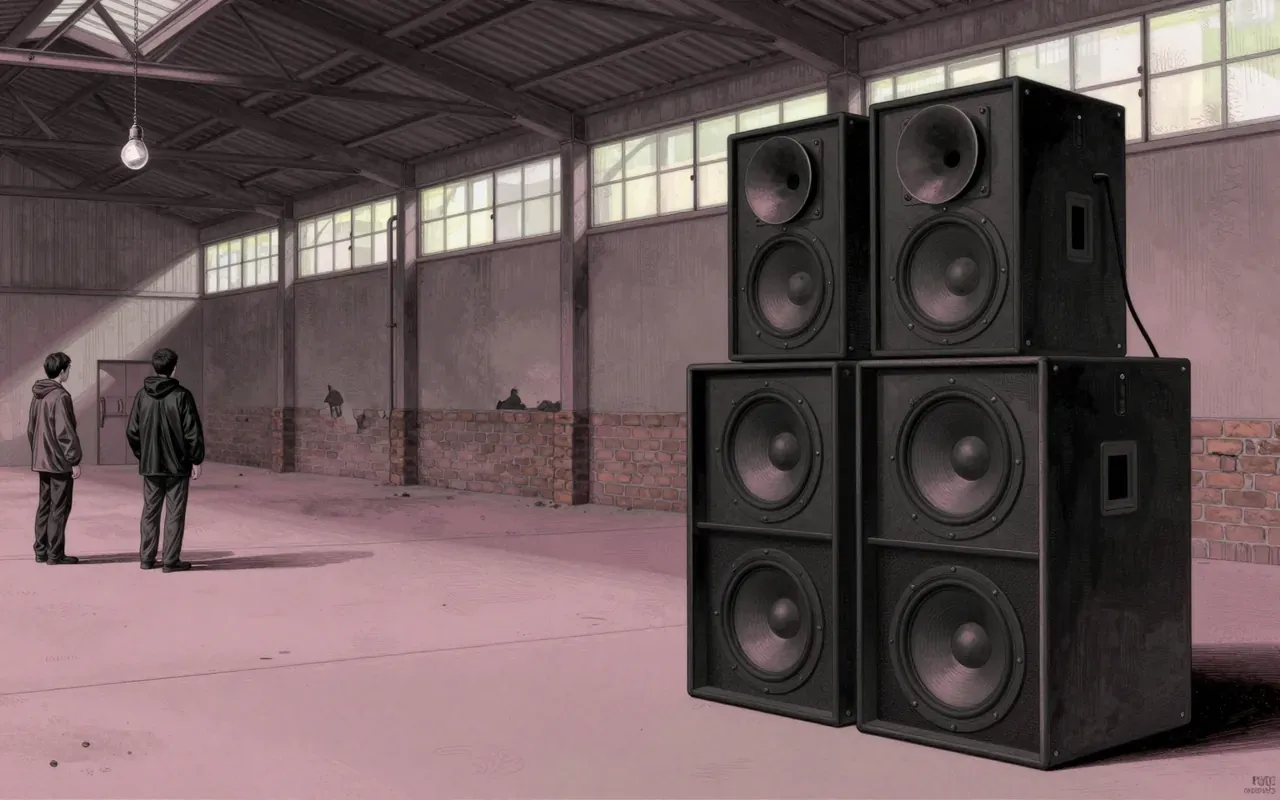
    A rave is defined by its apparatus—not its ethos: DJs, electronic music, and non-traditional venues are its constants.

  2. 3:06
    How the name was borrowed

    The word ‘rave’ was repurposed—not invented—in the late 1980s to name a subculture born from acid house.

  3. 4:23
    The transatlantic relay

    Chicago birthed acid house; Manchester imported it first; London scaled it into myth—all within five years.

  4. 6:43
    Genre was never fixed

    By the 1990s, raves hosted breakbeat hardcore, gabber, drum and bass—not just acid house—proving genre fluidity was built in.

Worth your time?

Yes. Study the whole thing.

4.5/ 5
What works
  • as a lens on 1980s–1990s UK urban policy
  • as evidence of grassroots audiovisual engineering
  • as a case study in subcultural diffusion
What does not
  • culture/art
  • culture/arts
  • culture/cities
  • culture/generations
Study it if
  • people who study how youth reconfigure space
  • those tracking the institutionalisation of rebellion
  • listeners curious about pre-festival electronic music infrastructure
Skip it if
  • anyone seeking definitive origins or singular authorship
  • readers expecting moral clarity on drug use or legality
  • those looking for a nostalgic celebration
The written brief1 min read

What the thing is

A rave is a dance party at a warehouse, club, or other venue featuring DJs playing electronic dance music.

Where it came from

Its modern form emerged from acid house parties in Chicago in the mid-to-late 1980s, then spread to Manchester in the mid-1980s and London by the late 1980s—first in squats, fuelled by bands like The Prodigy and defined by genres including acid house, techno, jungle and hardcore.

What it gets right

It established a new grammar of collective euphoria: all-night duration, immersive sound systems, visual saturation, and chemical augmentation as structural elements—not just atmosphere. It treated venues as temporary autonomous zones, not fixed destinations.

What it gets wrong

It displaced local club cultures with transient, often exclusionary, event-based logic. Its embrace of illegality romanticised risk while obscuring policing disparities and the erasure of working-class and Black spaces where acid house first circulated.

Why it matters now

Rave’s shift from illegal squat to global festival maps the broader capture of countercultural infrastructure by capital—and reveals how youth-led spatial improvisation remains a persistent, if increasingly constrained, tactic of resistance.

Is it worth your time

Yes—if you want to understand how underground electronic music culture reshaped public space, youth identity and commercial entertainment in Britain and the US. It is not worth your time if you seek a unified origin story or a stable definition: ‘rave’ was always plural, contested and locally improvised.
Same beat · Subcultures4 of 96
8:48
Image macroImage macros are a digital interface—not an art form. They standardised how millions expressed irony, frustration and affiliation before platforms automated tone and stripped away authorship. Their rigidity enabled scale. Their simplicity enabled theft. Their legacy isn’t humour—it’s the template as infrastructure.
10:01
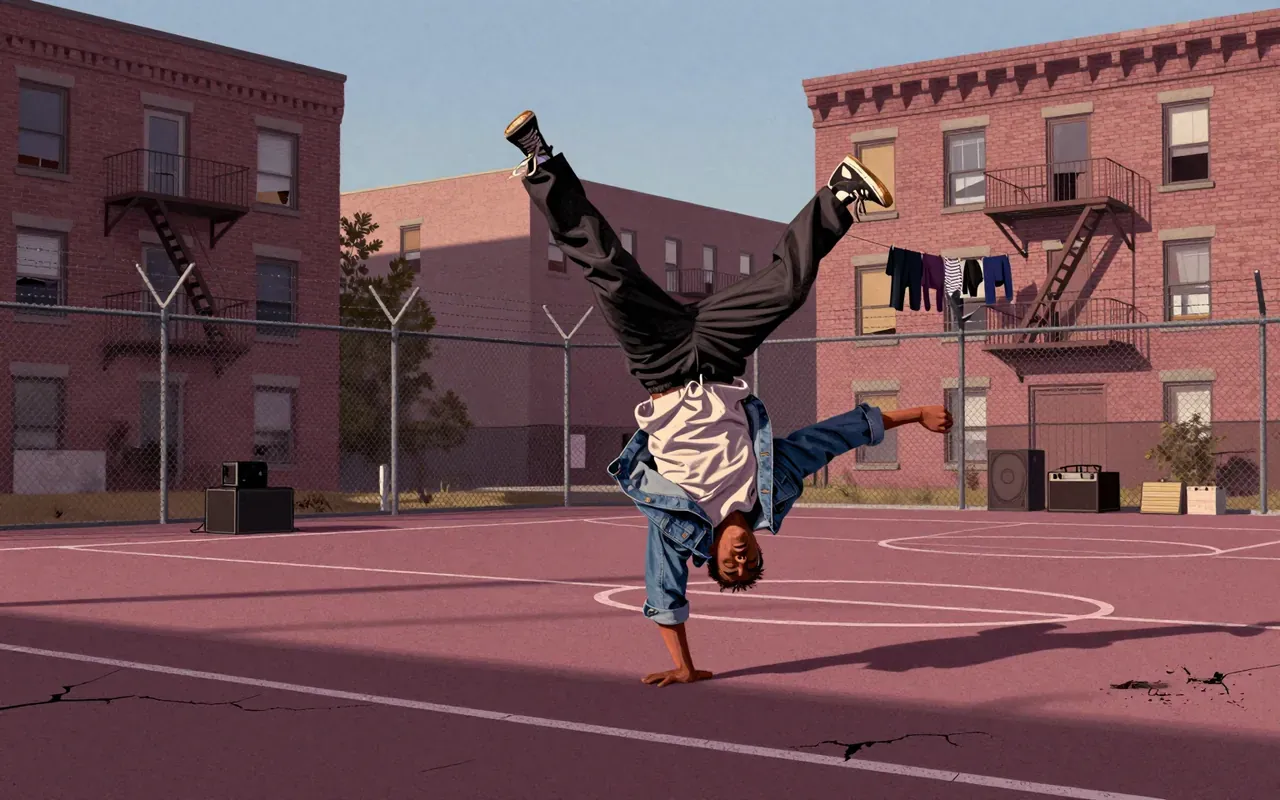
BreakdancingBreakdancing is a street dance style developed by African Americans and Puerto Ricans in the Bronx during the 1970s and early 1980s. It consists of four core movement types — toprock, footwork, power moves, and freezes — performed to music featuring drum breaks. Its Olympic debut in Paris 2024 formalised a global practice that began as an act of cultural assertion in marginalised communities.
9:42
BanksyBanksy is a pseudonymous England-based street artist whose practice centres on stencilled, satirical interventions placed on publicly visible surfaces. He emerged from the Bristol underground scene in the 1990s. His first known large-scale mural was The Mild Mild West in 1997 on Stokes Croft. Banksy makes satire legible on city walls. His stencils deliver punchlines fast. They occupy surfaces people pass daily. They force confrontation without requiring attention. The method relies on evasion—but that evasion obscures authorship, dilutes accountability, and turns political gesture into branded ambiguity. His work established a template for art that operates outside institutions but trades on their validation—exposing the friction between subversion and market absorption.
9:46
BeatnikBeatnik was a media slur—not a self-chosen identity. It erased Kerouac’s spiritually grounded 'beat' in favour of a consumable caricature. Its legacy is not influence, but warning: how fast serious ideas become costumes.
Up next in Culture

Realism (arts)

· 8:14

Realism didn’t make art honest—it made honesty a weapon.

8:14