What the thing is
Ikebana is a codified Japanese art of floral arrangement. It is not freeform decoration. It is a system of placement governed by hierarchy, number, and orientation.
Where it came from
It began as Shinto yorishiro: evergreen trees and flowers used to invite gods. It absorbed Buddhist altar offerings after Buddhism arrived. It evolved from unsystematic temple and shrine vases into shin-no-hana—the first formal style.
What it gets right
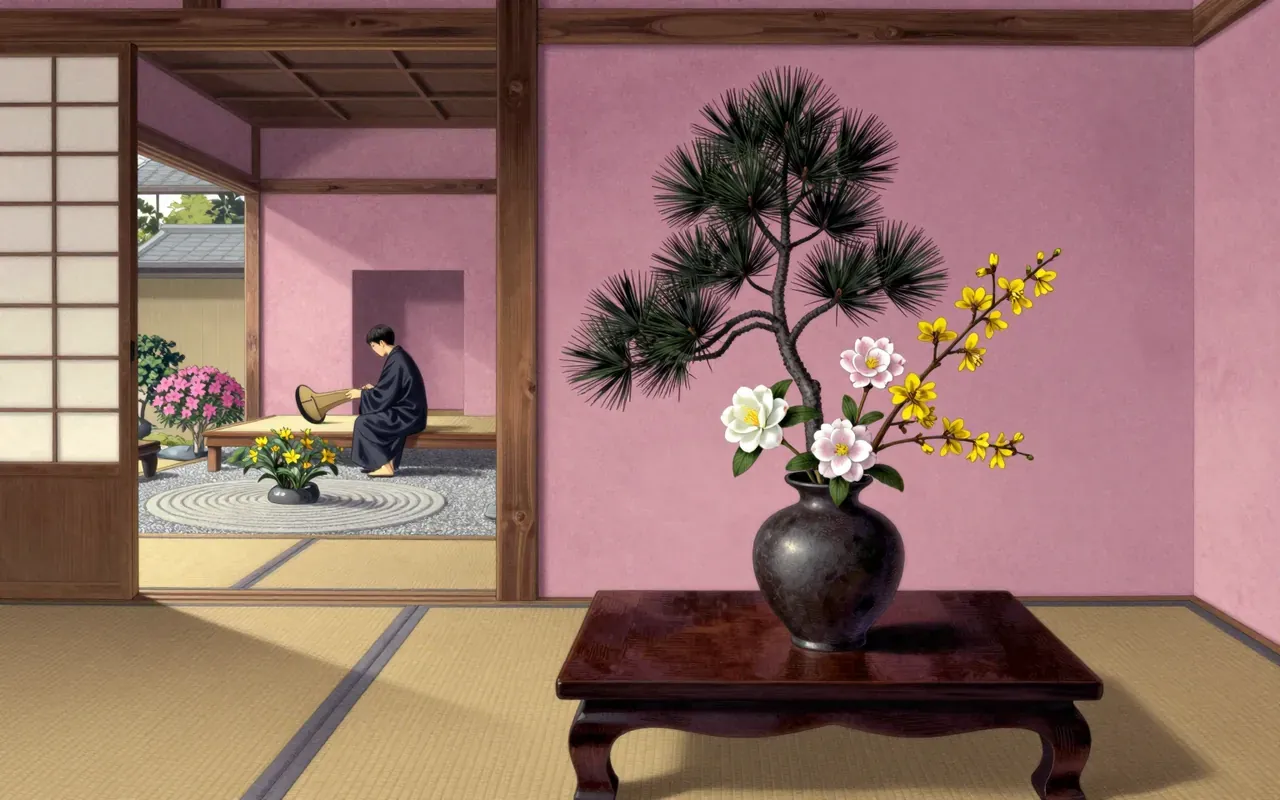
It treats flowers as architectural elements. The upright pine or cryptomeria branch establishes vertical authority. Seasonal flowers are placed with arithmetic precision: three or five, never arbitrary.
What it gets wrong
It mistakes symmetry for reverence. Shin-no-hana’s rigid centrality and uncurved stems reject asymmetry, movement, and decay—elements central to Shinto yorishiro practice and Buddhist impermanence.
Why it matters now
It reveals how spiritual practice hardens into classical form. Its presence in the tokonoma alcove shows how sacred function migrates into domestic display—without losing its grammar of restraint.
Is it worth your time
Yes—if you want to understand how ritual becomes discipline, and discipline becomes aesthetic. It is not meditative by default. It is structural first.