What the thing is
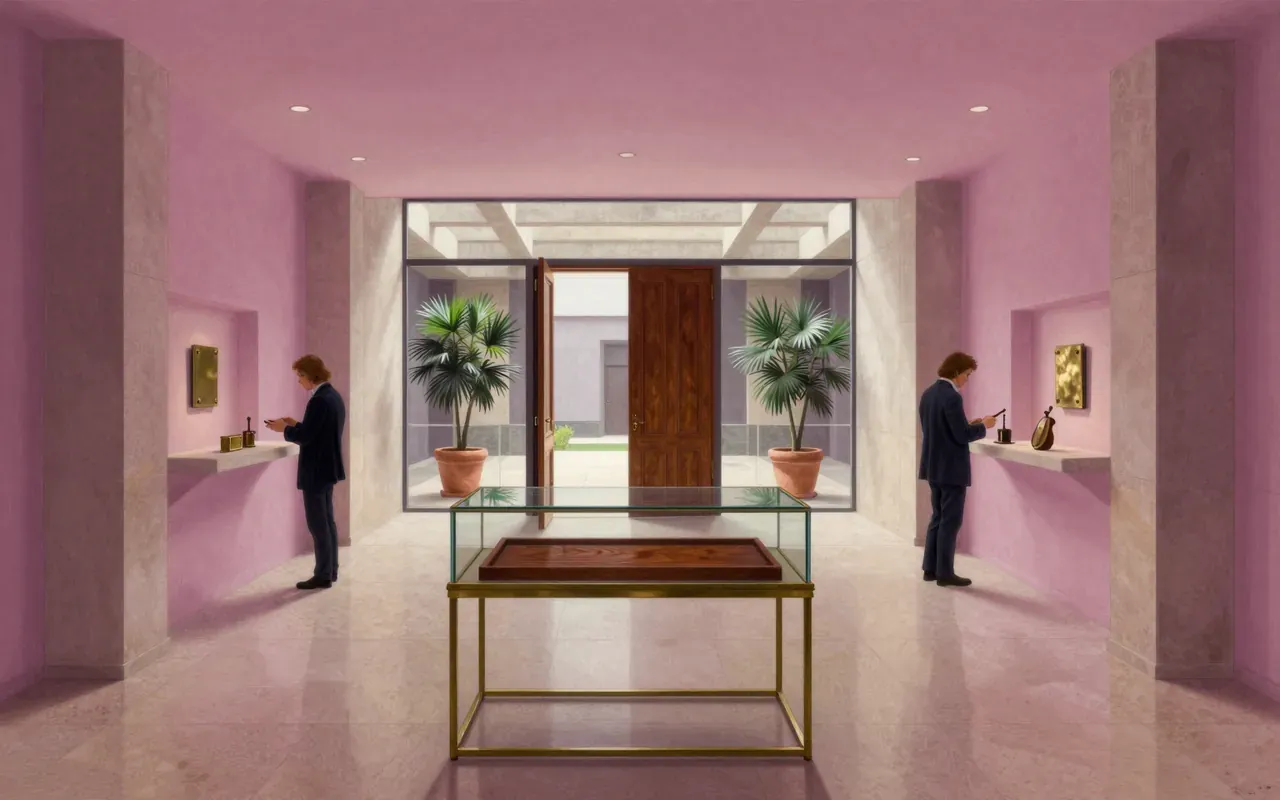
Institutional critique is a systematic inquiry into galleries and museums. It uses temporary interventions, architectural alterations, and performative gestures. It targets assumptions about aesthetic autonomy, the white cube, and objective information delivery.
Where it came from
It emerged in the late 1960s. It is associated with artists including Michael Asher, Marcel Broodthaers, Daniel Buren, Andrea Fraser, John Knight, Adrian Piper, Fred Wilson, and Hans Haacke. It draws on critical theory.
What it gets right
It exposes how galleries and museums manufacture neutrality. It maps the white cube as ideology. It reveals taste as classed, racialised, gendered. It treats architecture, lighting, labels, and staff roles as political acts.
What it gets wrong
It assumes critique is possible from inside the institution. It reproduces the very exclusivity it diagnoses. Its language requires specialist training. Its interventions often vanish without trace—leaving only documentation for other insiders.
Why it matters now
Because museums still claim neutrality while shaping national memory, repatriation policy, and funding priorities. Because institutional power has grown—not shrunk—since the 1960s. Because its central question remains unanswered: can you dismantle the frame while hanging inside it?
Is it worth your time
Yes—if you work in or around museums, galleries, or cultural policy. No—if you expect clear answers or public-facing tools. It demands insider knowledge to follow. It offers no exit strategy from the institutions it names.