What the thing is
The Musée d’Orsay is a Paris museum on the Left Bank of the Seine. It occupies the former Gare d’Orsay railway station. It holds French art from 1848 to 1914.
Where it came from
The building was the Gare d’Orsay, a Beaux-Arts railway station built from 1898 to 1900. Many of its artworks were previously held at the Galerie nationale du Jeu de Paume. It opened as a museum in 1986.
What it gets right
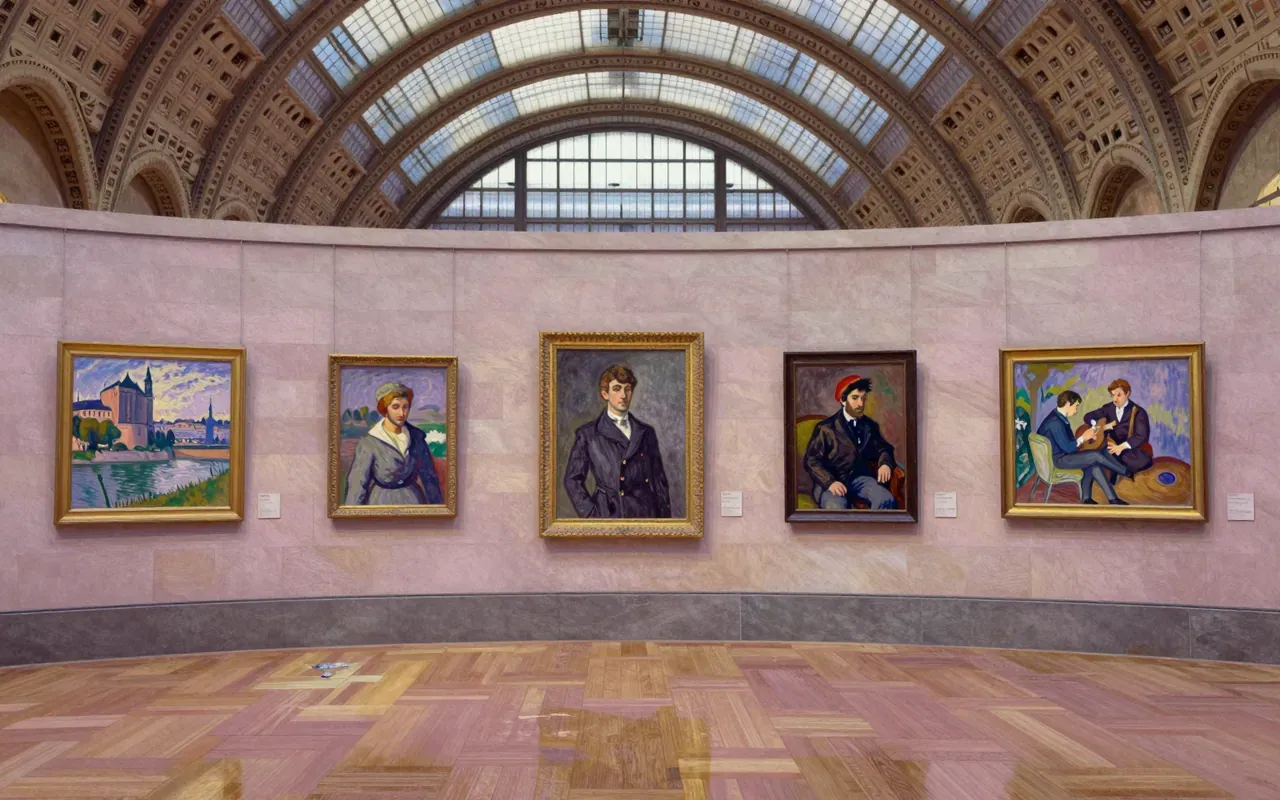
It houses the world’s largest collection of Impressionist and post-Impressionist masterpieces. It anchors them within French art from 1848 to 1914. It gives architectural weight to a period often flattened into stylistic labels.
What it gets wrong
It excludes French art after 1914. It does not hold work from outside that date range, even when directly connected to artists in its collection. Its chronological framing cuts off dialogue with modernism before it begins.
Why it matters now
It remains the dominant public site for experiencing Impressionism and post-Impressionism as a concentrated historical phenomenon — not as scattered highlights, but as a body of work shaped by industrialisation, urban expansion, and institutional exclusion.
Is it worth your time
Yes — if you want to see Impressionist and post-Impressionist works in context, not as isolated icons. It is not a substitute for deep study, but it delivers scale, coherence, and physical presence no book or screen can match.