culturebriefs
8:42in productionCh. 1 · Tone, Not Line/ 8:42 · ceiling 15 min
Art

Aquatint

Aquatint didn’t imitate painting—it invented a new grammar of printed tone.

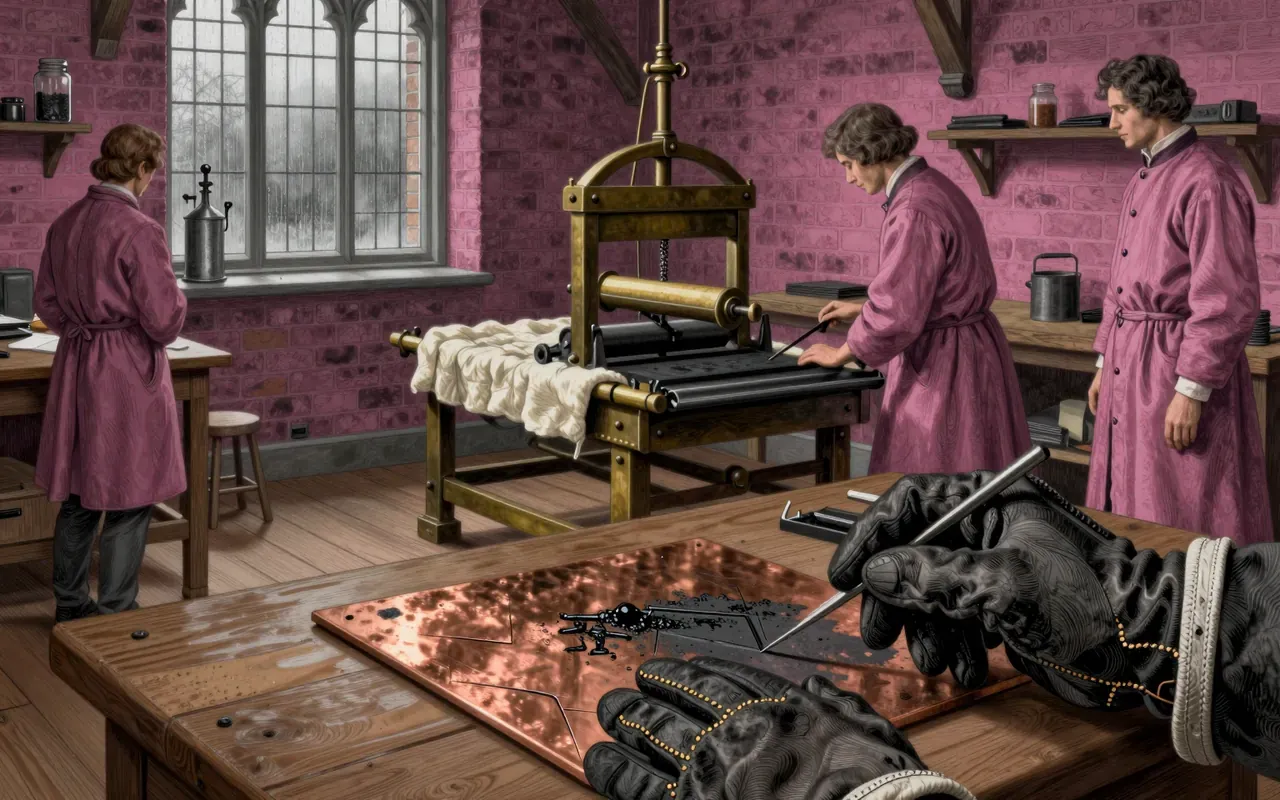
Aquatint is a tonal printmaking method using acid-etched rosin particles. It originated in Amsterdam c.1650 but matured 1770–1830. It excels at atmospheric gradation but fails at precision. Its legacy is structural—not aesthetic—and it remains a key reference for how analogue systems encode continuous tone.

Chapters & takeaways4
  1. 1:02
    Tone, Not Line

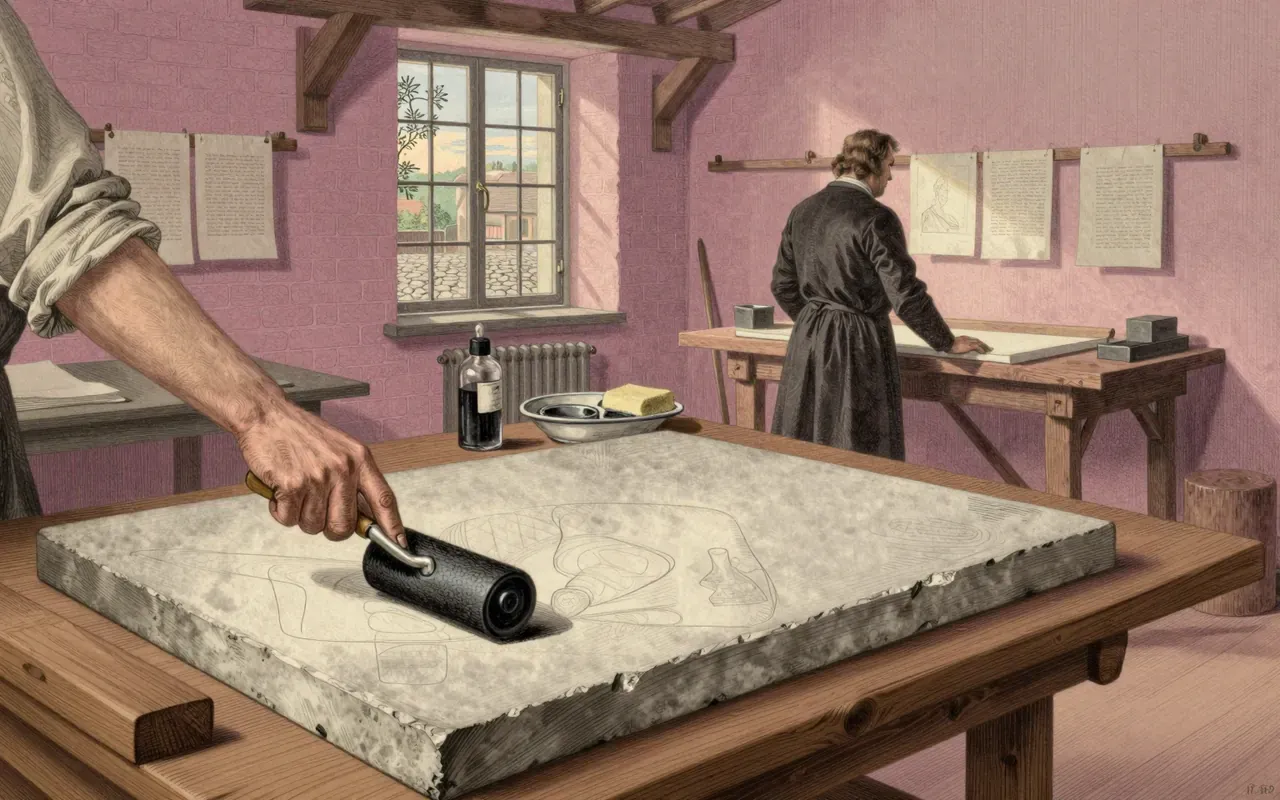
    Aquatint makes tone, not line—using rosin grains, not needles.

  2. 2:26
    Line + Tone

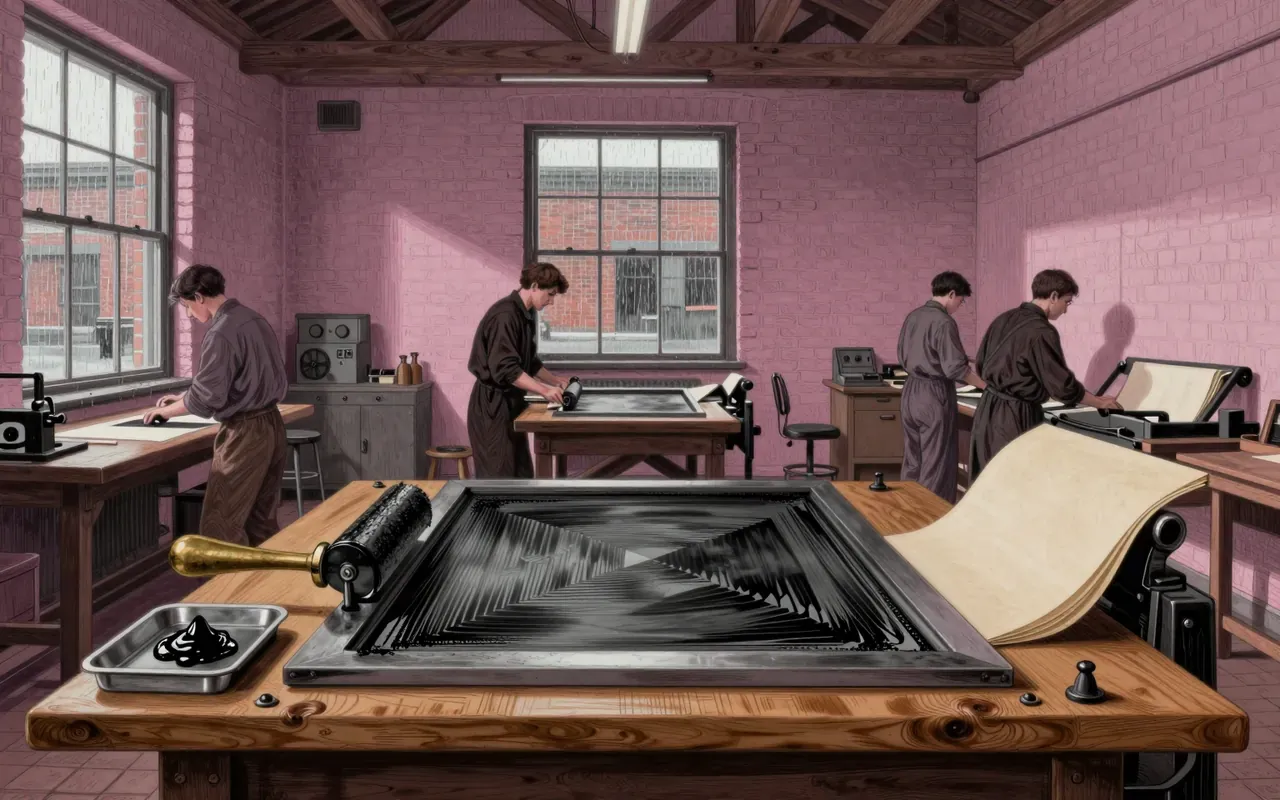
    It works only when paired with etching—lines anchor the tones.

  3. 3:51
    How It’s Made

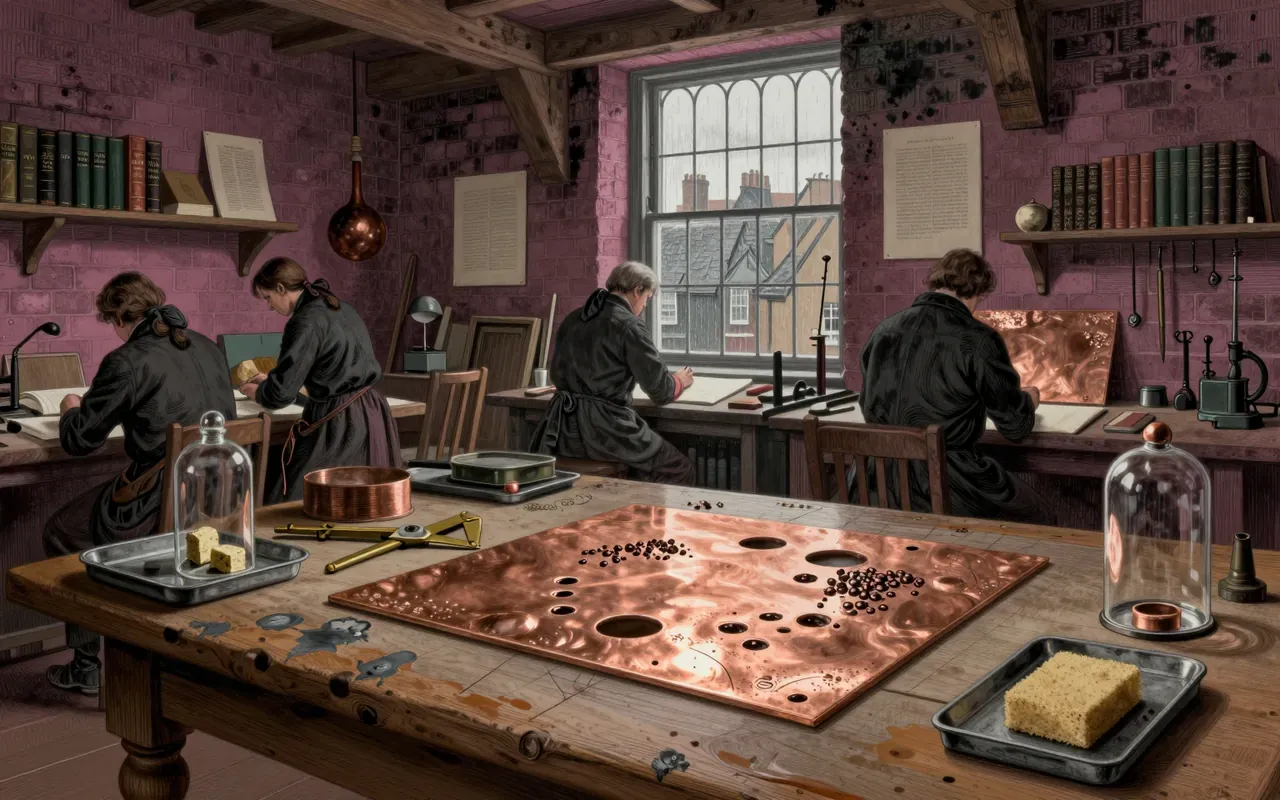
    Acid bites around heated rosin; the grains wash off before printing.

  4. 5:05
    Colour by Hand or Plate

    Colour came via multiple plates or hand-colouring—not built into the process.

Worth your time?

Yes. Study the whole thing.

3.5/ 5
What works
  • as a technical solution
  • as historical evidence of pre-lithographic tonal thinking
What does not
  • influence
  • define
  • launch
  • revolutionise
Study it if
  • print historians
  • conservators
  • artists working with tone
Skip it if
  • casual art viewers
  • digital designers unaware of analogue roots
The written brief1 min read

What the thing is

Aquatint is an intaglio printmaking technique that produces tonal areas, not lines.

Where it came from

It emerged from early experiments in Amsterdam around 1650 but entered regular use only from the later 18th century.

What it gets right

It delivers rich, granular tonal fields impossible with line-based etching alone.

What it gets wrong

It cannot render fine detail or precise edges—its strength is atmosphere, not definition.

Why it matters now

It reveals how pre-industrial printmakers solved the problem of scalable, reproducible tone—still relevant to digital halftoning and texture synthesis.

Is it worth your time

Yes—if you need to understand how tonal gradation entered printmaking without engraving or lithography.

Same beat · Art4 of 80
8:03
Art Deco1910Art Deco was a Paris-born, commercially rooted design language that treated jewellery, furniture, textiles, and architecture as interchangeable surfaces for geometric, luxurious styling. It began before WWI—not at the 1925 Exposition—and spread through department stores and fashion, not manifestos or salons.
10:37
Art Nouveau1890Art Nouveau was an international style of art, architecture and applied art—especially the decorative arts—that emerged in Brussels in the 1890s and was popular between 1890 and 1910. It was inspired by natural forms such as the sinuous curves of plants and flowers. It featured dynamism and movement through asymmetry and whiplash lines. It used modern materials like iron, glass, ceramics and concrete. A major objective was to break down the distinction between fine and applied arts. The first houses and interiors appeared in Brussels in the 1890s, designed by Paul Hankar, Henry van de Velde and Victor Horta—whose Hôtel Tassel was completed in 1893. By 1914, Art Nouveau was largely exhausted.
9:49
Arts and Crafts movementThe Arts and Crafts movement was a British design reform effort active from the 1880s to about 1920. It opposed factory production and machine-made ornament, citing the 1851 Great Exhibition as proof of decline. It succeeded in shifting taste and establishing craft as moral category—but failed to address class, gender or colonial dimensions of production.
10:50
BanksyBanksy is a method—not a person—defined by anonymity, stencilling for speed, and placement on public surfaces. It began in Bristol in the 1990s, anchored by community participation and culminating in The Mild Mild West mural in 1997. It gets right the power of immediacy and accessibility. It gets wrong the erasure of collective context. It matters now because its constraints remain legible even as its outputs are auctioned and licensed. It is worth your time if you care how dissent becomes visible—and at what cost to its origins.
Up next in Culture

Arepa

· 10:00

The arepa is not Venezuelan folklore—it’s 3,000 years of unbroken maize logic.

10:00