8:14in productionCh. 1 · Acid, not pressure/ 8:14 · ceiling 15 min
Art
Etching
Etching isn’t about precision—it’s about surrendering control to acid, metal, and time.
Etching is a chemical drawing process rooted in ancient Indus Valley practice. It uses acid to bite lines into metal protected by wax. Its strength is tactile immediacy. Its flaw is dependence on hazardous, inconsistent materials. It matters now because it shows how craft is never neutral—it carries the weight of its infrastructure.
Etching is defined by acid biting unprotected metal—not pressure, heat or light.
2:20
Wax as threshold
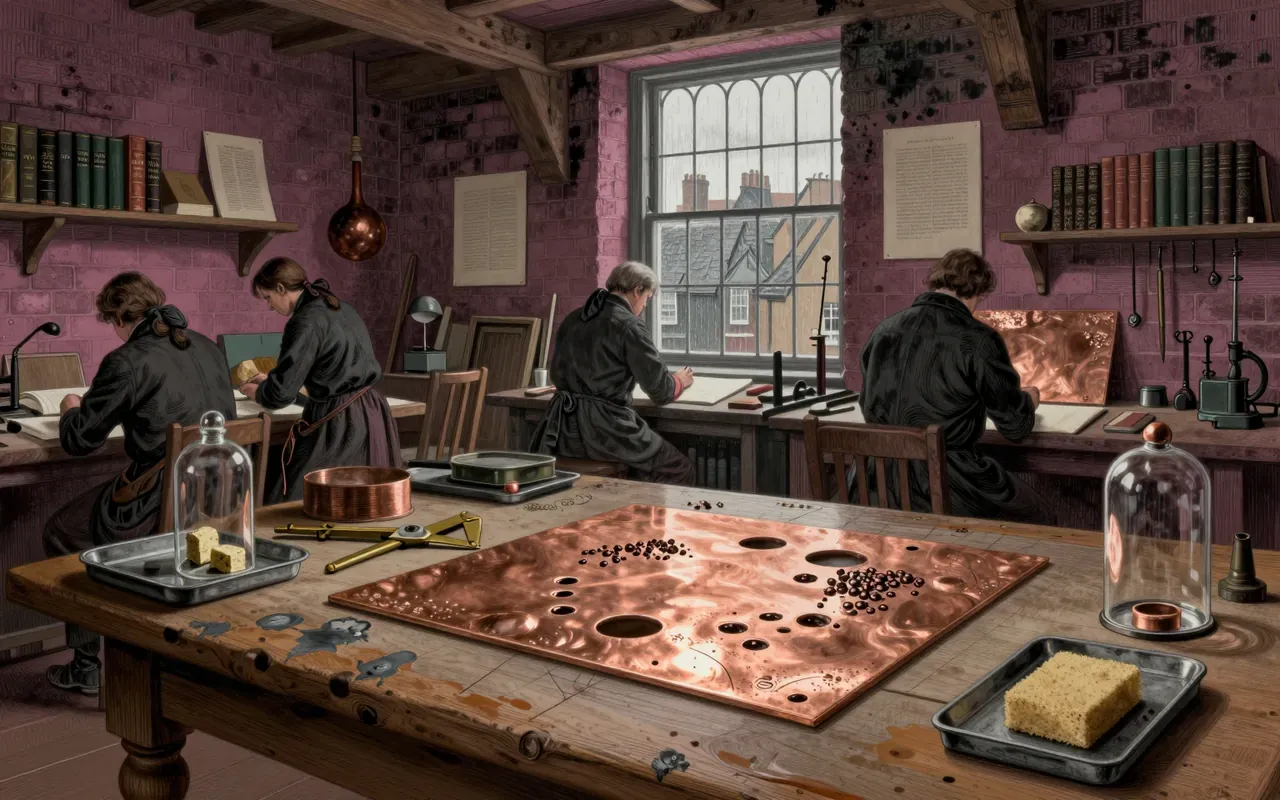
The waxy ground isn’t just a barrier—it’s the first act of intention, and the first point of failure.
4:09
Scratch to reveal
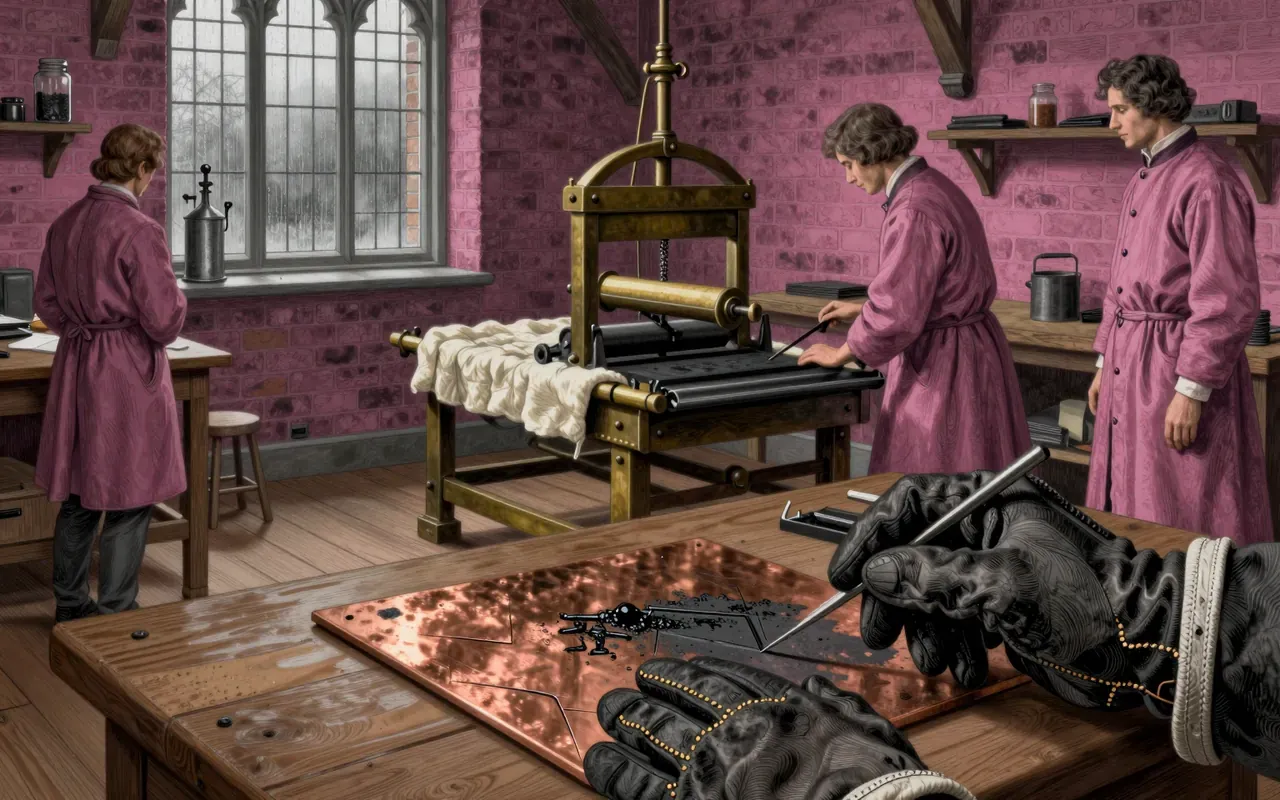
Every line begins with removal: scratching through wax exposes metal to corrosion.
5:07
Clean, then wipe
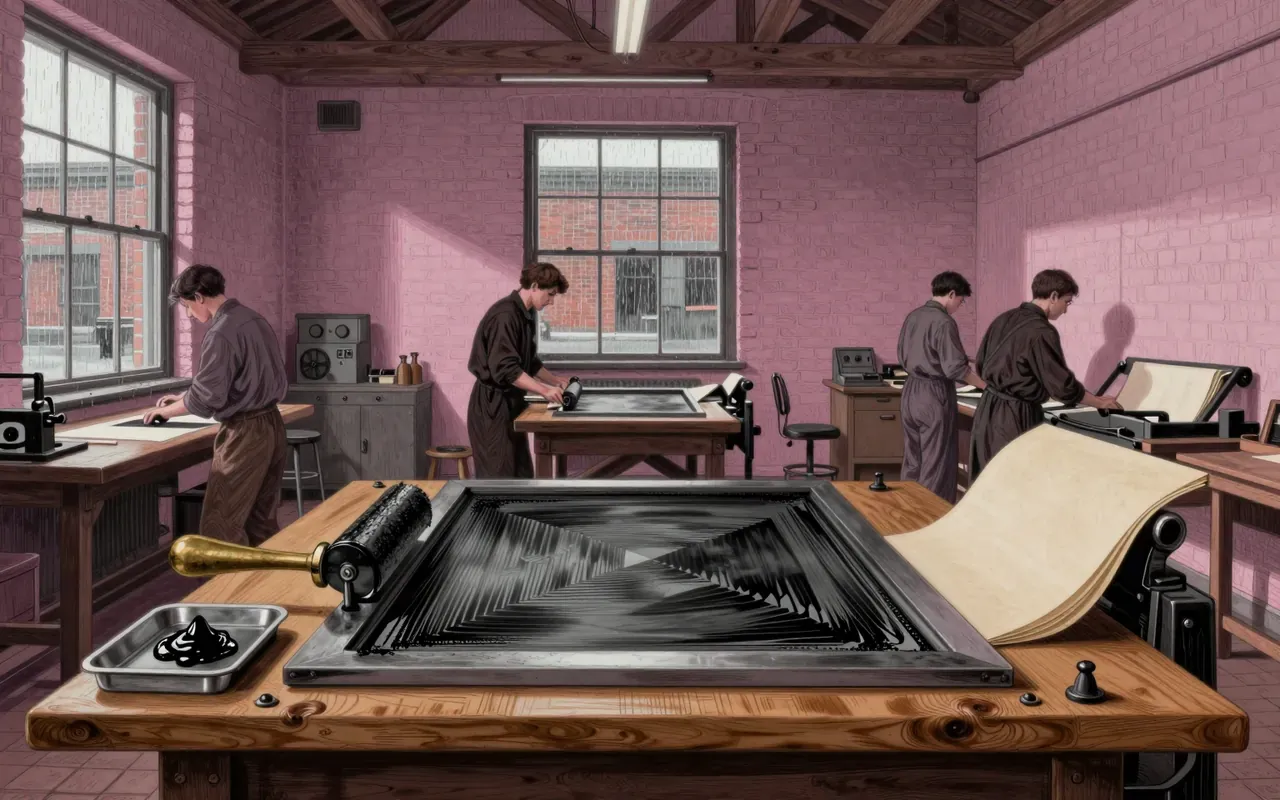
Cleaning the ground and wiping ink are not finishing touches—they’re where the image becomes legible.
Worth your time?
Yes. Study the whole thing.
4/ 5
What works
gives direct line control
embeds time and chemistry into image-making
reveals constraints as generative
What does not
influence
define
start
displace
Study it if
artists who make prints
conservators
historians of craft
Skip it if
casual viewers
digital designers without material interest
The written brief1 min read
What the thing is
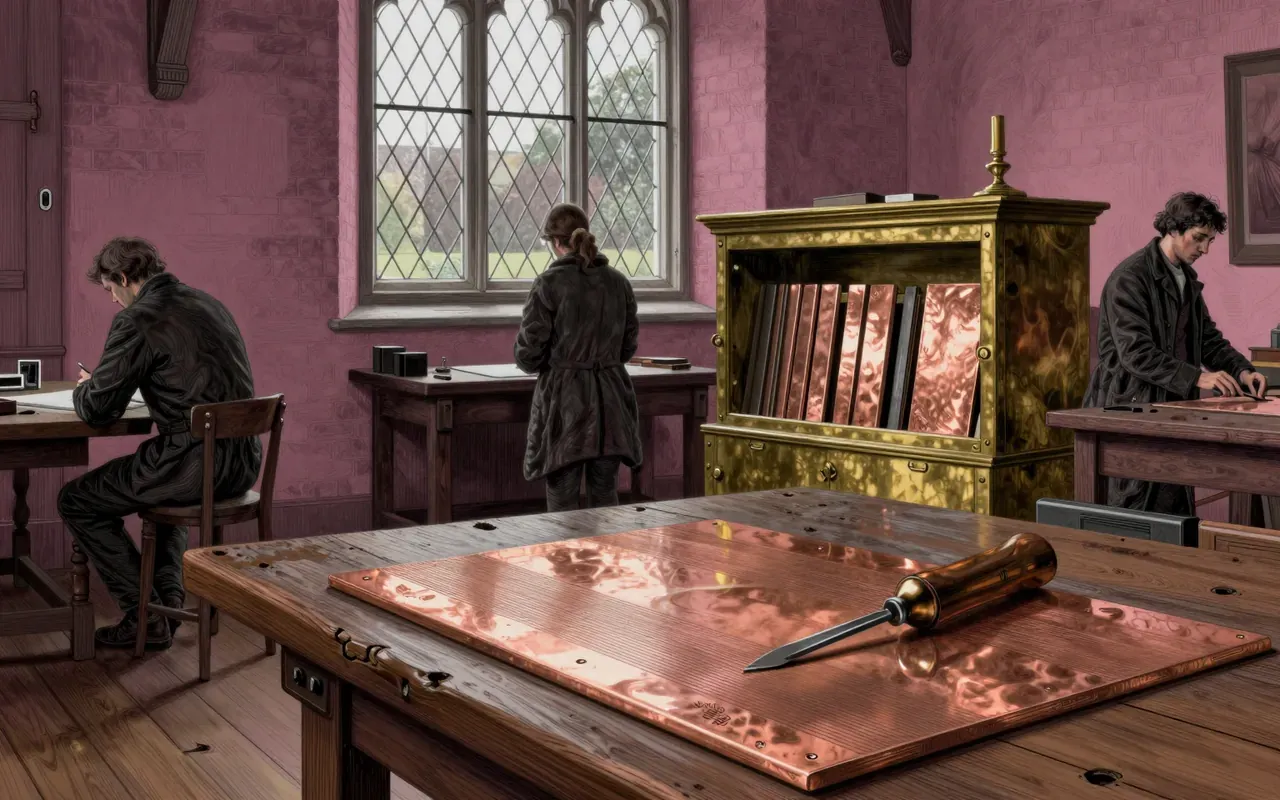
Etching is an intaglio printmaking method. Acid bites lines into metal. A waxy ground protects the rest. The ground is an acid-resistant coating applied to a metal plate, typically copper, zinc or steel. The artist exposes bare metal by scratching through the ground with a pointed etching needle.
Where it came from
It originated in the Indus Valley civilisation in the 3rd millennium BCE.
What it gets right
It gives the artist direct, gestural control over line while outsourcing depth and tone to chemistry and time. After biting, the remaining ground is cleaned from the plate. The plate is then inked all over and wiped so that ink remains only in the etched forms.
What it gets wrong
It assumes metal, acid, and waxy ground are neutral tools. They are not. Copper corrodes unevenly. Zinc bites unpredictably. Acid fumes demand ventilation that most studios lacked until the 20th century.
Why it matters now
It reveals how technical limits shape visual language—and why revivals of ‘traditional’ methods often ignore the labour, hazard and contingency baked into their original use.
Is it worth your time
Yes—if you need to understand how image-making embeds material constraint into meaning.