What the thing is
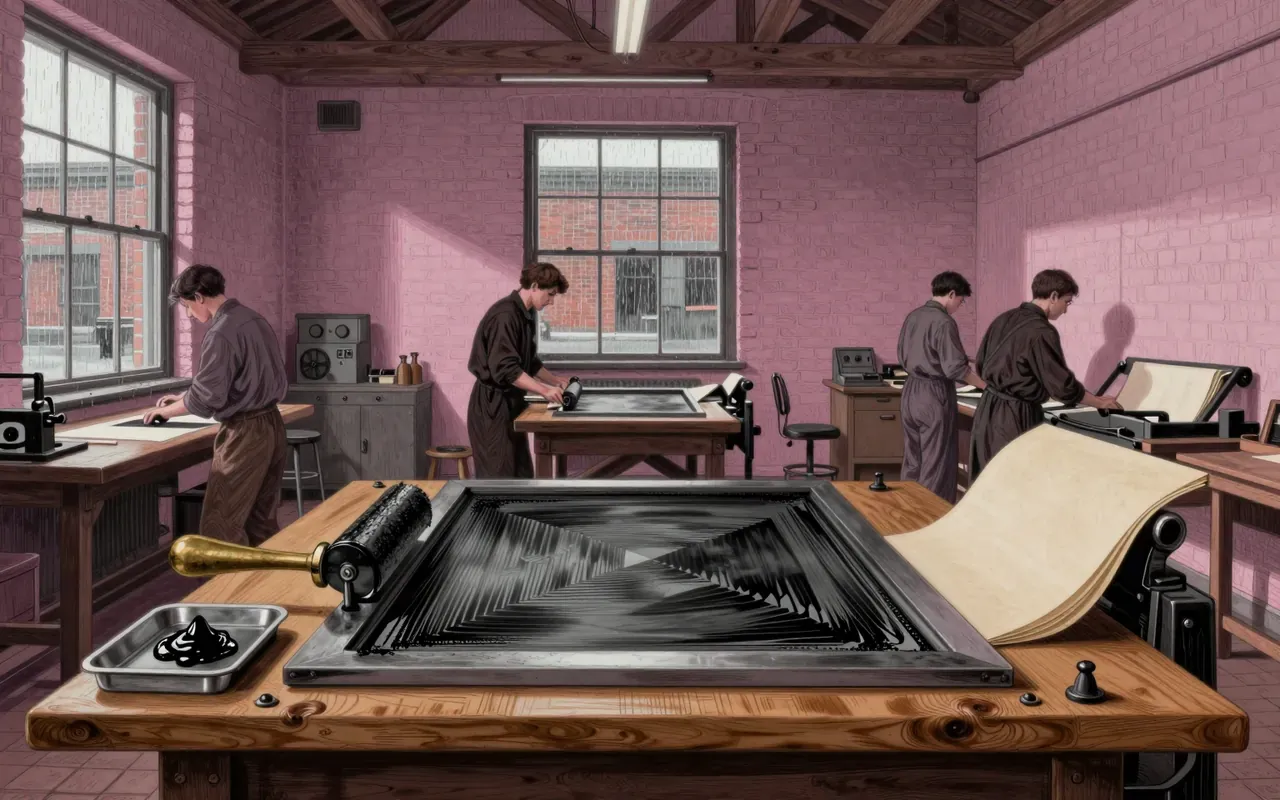
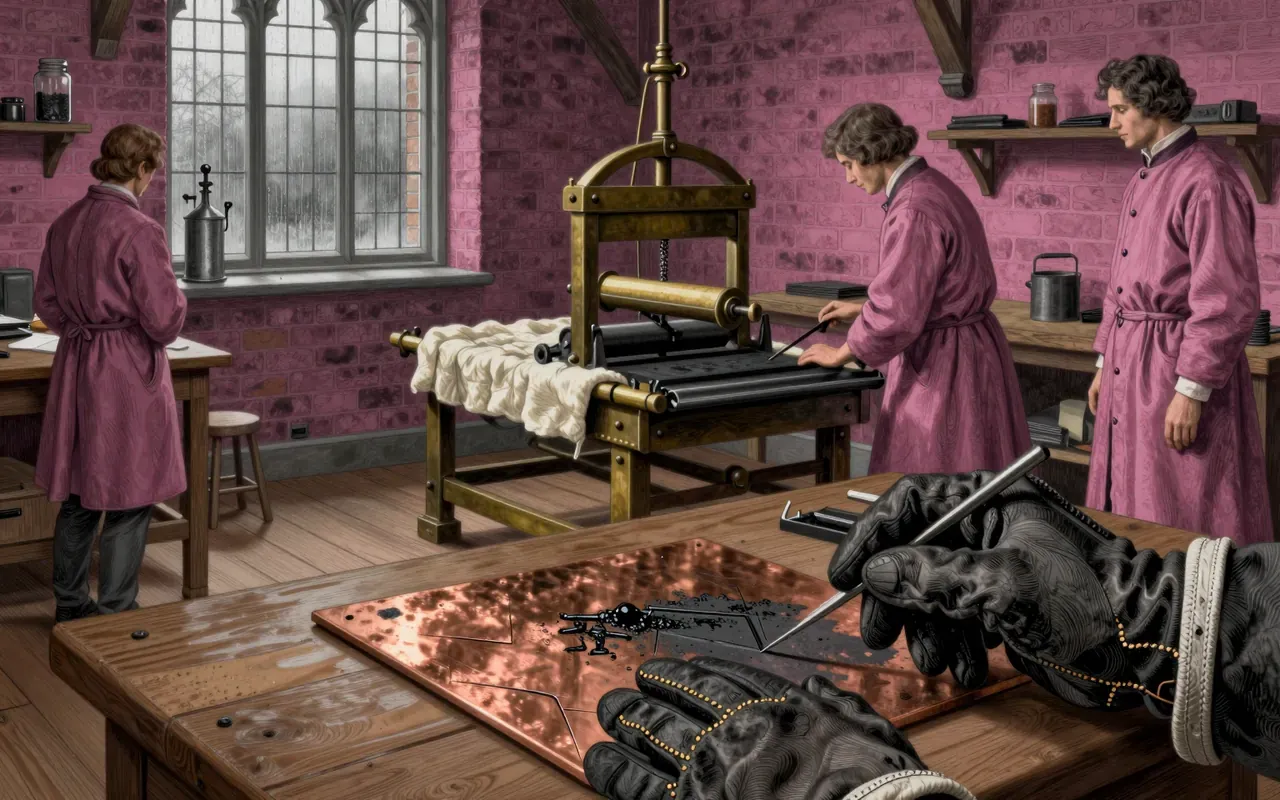
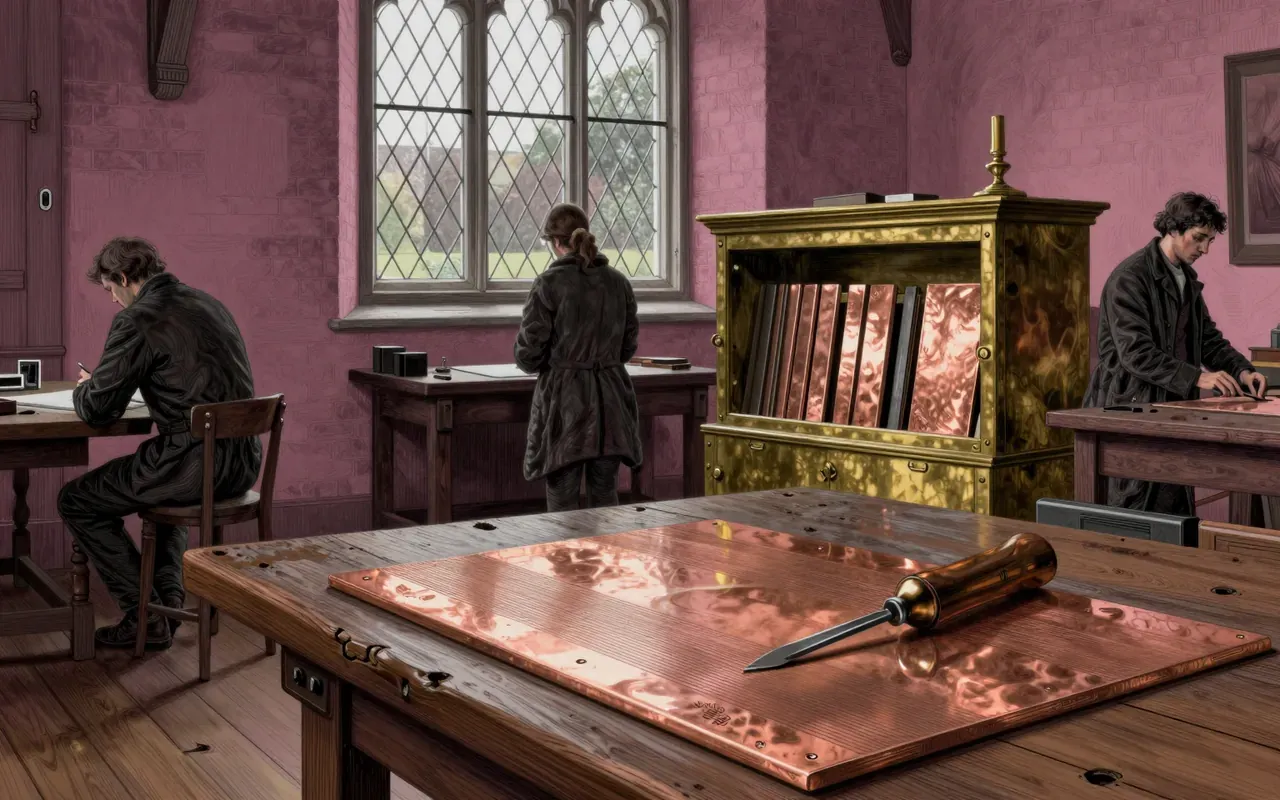
Engraving is incising a design into a hard, flat surface using a burin. It yields decorated objects or intaglio printing plates for paper images. The decorated objects can be, for example, silver, gold, steel or glass, and a plate can be copper. Engravers traditionally use a hardened steel burin, or graver, to cut the design into a copper plate.
Where it came from
It originated with Homo erectus in Trinil, Java, Indonesia, between 540,000–430,000 years ago. A later instance appears on ostrich eggshells at Diepkloof Rock Shelter, South Africa, around 60,000 BC.
What it gets right
It establishes direct physical agency: a burin cuts copper; a hand incises shell. No intermediary medium. It is the oldest known method of deliberate visual notation.
What it gets wrong
It implies continuity between Homo erectus shell markings and Renaissance copper-plate prints. There is no evidence of lineage—only isolated instances across half a million years. Within printmaking, engraving is among the oldest and most important techniques. Historically it produced images on paper for artistic printmaking, mapmaking, and commercial book and magazine illustration.
Why it matters now
It reframes ‘art’ as an ancient, bodily, technical act—not symbolic expression alone—but persistent tactile engagement with material resistance. Photographic processes have since replaced engraving in commercial applications, and etching and other techniques have largely replaced it in printmaking because it is so difficult.
Is it worth your time
Yes—if you care about deep-time human mark-making, not just its aesthetic residue.