What the thing is
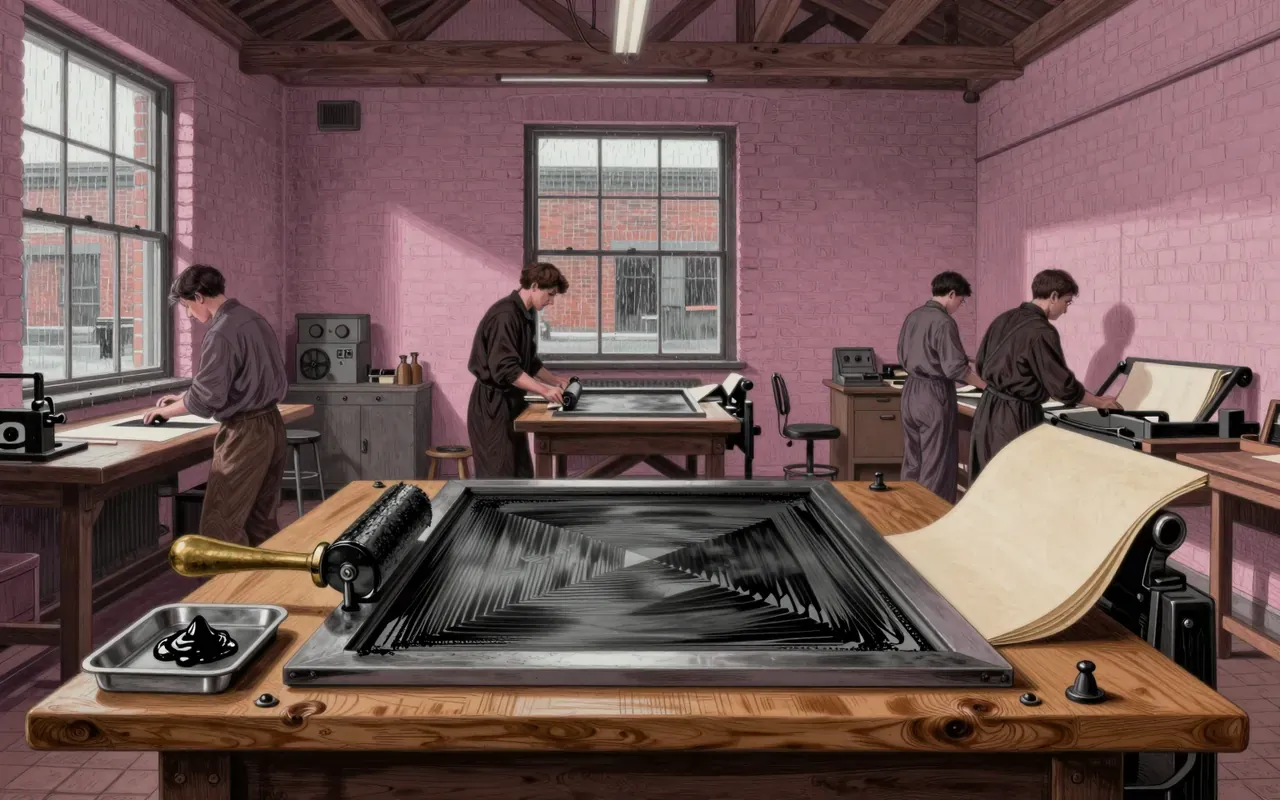
Monoprinting is a printmaking method that yields unique impressions—one per run—from reusable blocks like metal plates, litho stones, or wood blocks.
Where it came from
Its techniques appear in historical practice—Rembrandt and Degas made works now understood as monoprints—but the term and formal distinction emerged later, unnamed in their time.
What it gets right
Monoprinting delivers irreproducible impressions from reusable blocks. It merges painting, drawing, and printmaking in one act. It embraces variation as structural, not incidental.
What it gets wrong
It is routinely mislabelled as monotyping. The distinction matters: monoprints rely on persistent, reprintable features; monotypes do not.
Why it matters now
In an age of digital replication and algorithmic uniformity, monoprinting reasserts the value of the unrepeatable mark made through physical, contingent process.
Is it worth your time
Yes—if you want a printmaking method that privileges singularity over repetition, and treats the plate as a mutable surface rather than a fixed matrix.