8:40in productionCh. 1 · Not a movement. A mood./ 8:40 · ceiling 15 min
Movements & scenes · Art
Expressionism
Expressionism isn’t a style—it’s the moment art stopped copying the world and started reporting on the nervous system.
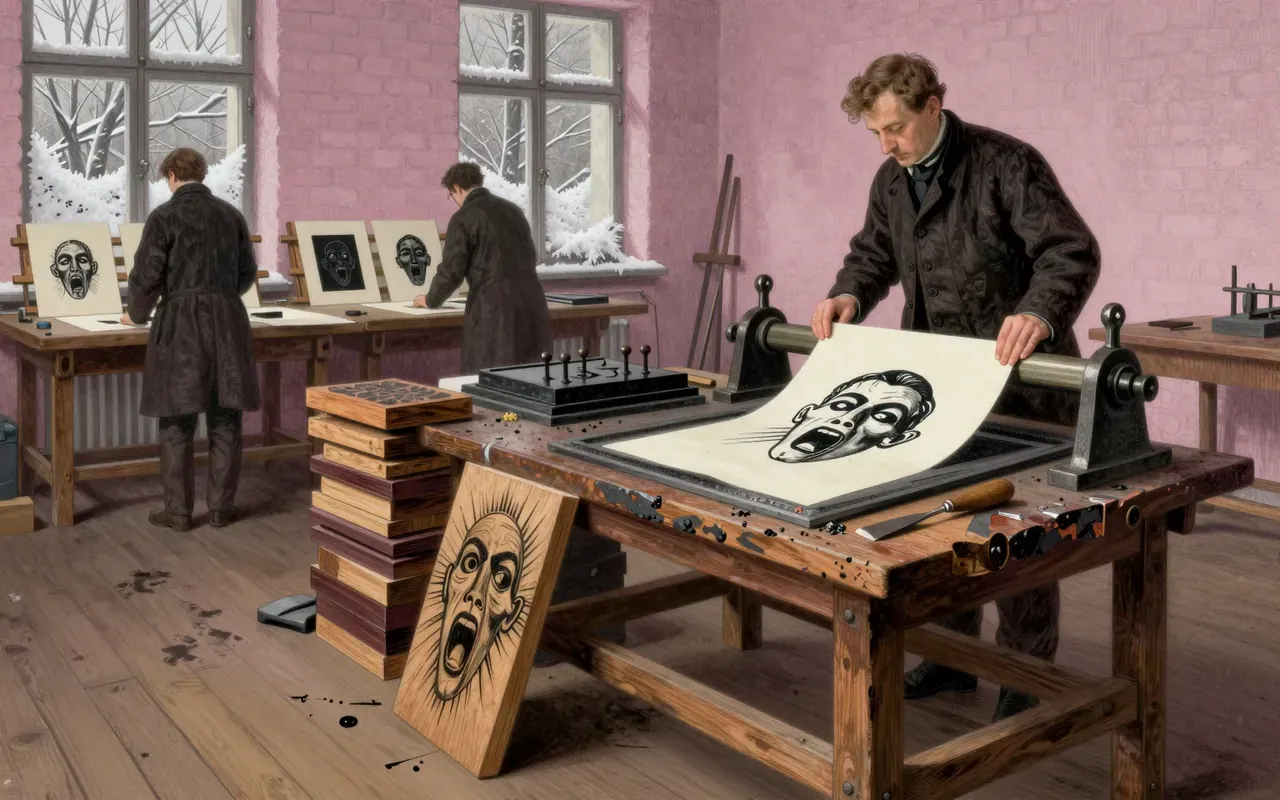
Expressionism is a modernist movement originating in Northern Europe around 1900, defined by subjective perspective and radical distortion for emotional effect. It developed as an avant-garde style before the First World War and became predominant in Germany between 1910 and 1930—especially in painting, poetry and theatre. Though mainly German in its peak, its precursors were not. The term did not firmly establish itself until 1913. Die Brücke, founded in Dresden in 1905, was arguably its founding organisation—even if its members never used the word.
Expressionism began as a loose, pre-war avant-garde impulse—not a manifesto, not a school, but a shared refusal of realism.
2:29
Distortion as evidence
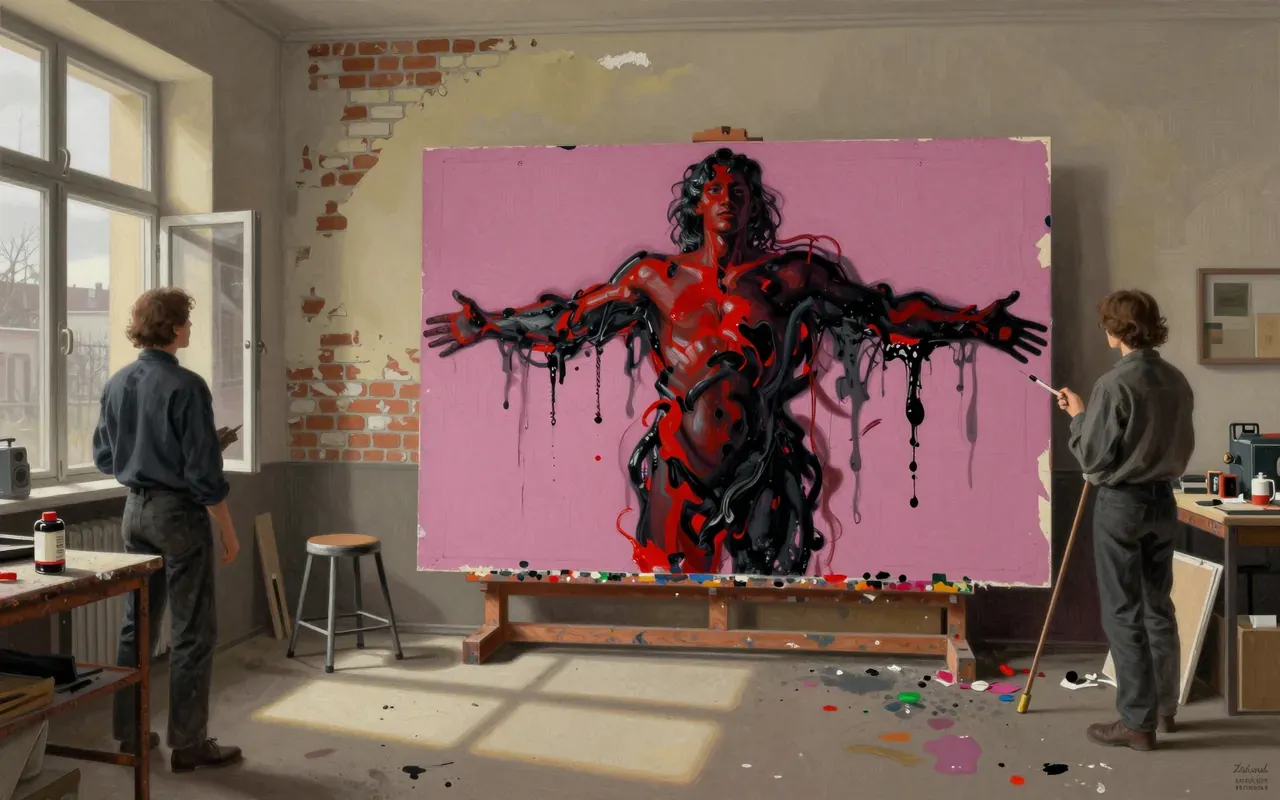
Its method was absolute subjectivity: distortion not for shock, but as the only honest way to convey feeling.
3:25
The Bridge came before the label
Die Brücke in Dresden (1905) acted first—before the name existed—and set the terms for what would later be called Expressionism.
4:40
Popular, not marginal
It thrived in Weimar Berlin—not as underground dissent, but as mainstream cultural language in theatre and print.
Worth your time?
Yes. Study the whole thing.
4/ 5
What works
distortion-as-method
subjectivity-over-realism
emotional-experience-as-subject
What does not
expressionism
germany
northern-europe
die-brucke
Study it if
artists
writers
theatre-makers
Skip it if
historians seeking doctrinal clarity
students expecting stylistic consistency
The written brief1 min read
What the thing is
Expressionism is a modernist movement defined by subjective perspective and radical distortion for emotional effect. It is not a style but a functional principle: to express emotional experience, not physical reality.
Where it came from
It originated in Northern Europe around 1900. Die Brücke formed in Dresden in 1905. The term did not firmly establish itself until 1913. It developed as an avant-garde style before the First World War and peaked in Germany between 1910 and 1930—in painting, poetry and theatre.
What it gets right
It names a real shift: from depicting the world as it appears to rendering it as it feels. It prioritises emotional truth over optical fidelity. It treats distortion as method, not mistake.
What it gets wrong
It implies unity where there was fragmentation. Die Brücke in Dresden and Der Blaue Reiter in Munich shared little beyond rejection of naturalism. The label ‘Expressionism’ was applied retrospectively—not adopted by most practitioners before 1913.
Why it matters now
It established the licence for art to be dysphoric, unstable, urgent. Its legacy is not in brushstrokes but in permission: to misrepresent reality in order to tell truer things about anxiety, alienation and perception.
Is it worth your time
Yes—if you need to understand how art became a vehicle for interior states rather than external appearances. No—if you expect coherent doctrine, unified technique or stable definitions.