12:34in productionCh. 1 · The Archivist Myth/ 12:34 · ceiling 15 min
Ideas · Literature
Laozi
Laozi was never a man. He was a question that outlived its answer.
Laozi is a tradition, not a person. The earliest recoverable strand—the Confucius–Lao Dan encounter—dates to the 4th century BC. Sima Qian’s 1st-century BC biography is the first written record, not evidence of historicity. Guodian Chu Slips, buried c. 300 BC, contain 40% of the Dào Dé Jīng and prove its authority predated authorship. This reframes Daoist thought as collective, anonymous, and institutionally embedded—not the insight of a sage.
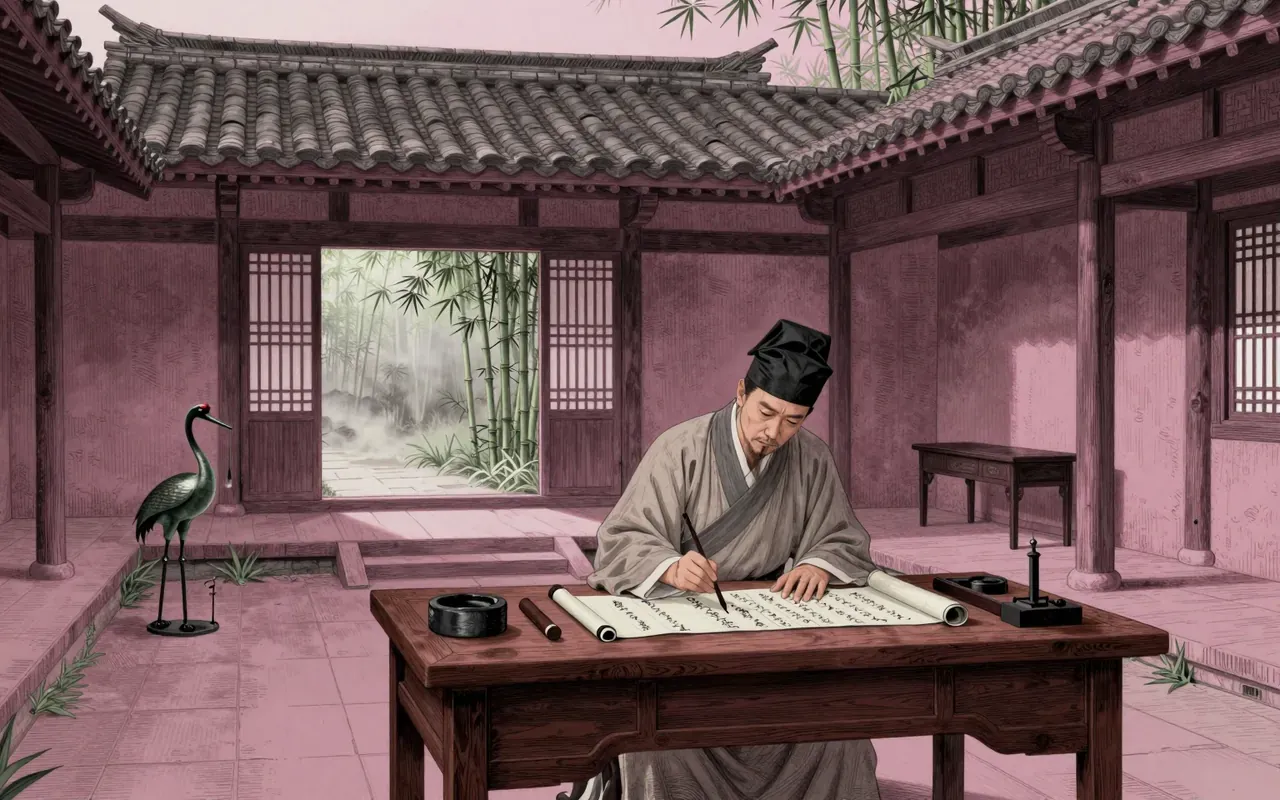
Laozi was positioned as an archivist and elder contemporary of Confucius—long before any text bore his name.
2:16
The First Biography Is Already Legend
Sima Qian’s 1st-century BC biography is the first written reference—not proof of existence, but proof of mythmaking.
3:54
Text Before Author
Guodian manuscripts buried c. 300 BC contain 40% of the Dào Dé Jīng—and show it was already authoritative.
5:13
The Earliest Strand Is a Dialogue
The Confucius–Lao Dan encounter is the oldest recoverable strand—and it circulated by the 4th century BC.
6:46
Two Traditions, Not One Man
A. C. Graham separated the composite Sima Qian biography from the older Lao Dan tradition—refusing to collapse them.
8:16
Archaeology Overturned the Premise
The Guodian discovery didn’t settle the dating debate—it shattered its evidentiary basis.
Worth your time?
Yes. Study the whole thing.
4.5/ 5
What works
as a case study in how ideas become canonical without authors
as a corrective to romanticised Eastern sage tropes
as evidence that authority precedes attribution
What does not
buddhism
religion
mysticism
Study it if
readers who distrust origin stories
students of textual transmission
critics of author-centred historiography
Skip it if
those seeking spiritual guidance
readers assuming Laozi wrote the Dào Dé Jīng
audiences wanting biographical certainty
The written brief1 min read
What the thing is
Laozi is not a person but a textual and legendary construct. The name attaches to shifting traditions, earliest among them a philosophical encounter with Confucius.
Where it came from
From Zhou dynasty archival culture, filtered through Warring States storytelling, then codified in Sima Qian’s Records of the Grand Historian—and materially anchored by the Guodian Chu Slips buried c. 300 BC.
What it gets right
It treats Laozi as a tradition, not a person. It anchors early strands—like the Confucius–Lao Dan encounter—in the 4th century BC. It uses the Guodian Chu Slips to constrain speculation: texts buried c. 300 BC already carried authority.
What it gets wrong
It conflates the traditional biography with the historical problem. Sima Qian’s 1st-century BC account is presented as evidence of Laozi’s life, not as the first recorded mythmaking about him.
Why it matters now
It shows how canonical thought can emerge without authorship, without consensus, and without chronology—exposing the gap between reverence and record.
Is it worth your time
Yes—if you care how foundational ideas enter history without a verifiable author.