culturebriefs
8:20in productionCh. 1 · Not explanation. Intervention./ 8:20 · ceiling 15 min
Ideas · Society

Critical theory

Critical theory doesn’t explain society—it weaponises doubt against every claim to neutrality.

Critical theory is a philosophical perspective originating in the Frankfurt School in the 1920s, formally defined by Max Horkheimer in 1937 as a social theory oriented toward critiquing and transforming society. Its method centres on analysing systemic power relations—especially between dominant and oppressed groups—and challenging assumptions of objectivity and rationality by showing how knowledge and truth are shaped by those relations. It emphasises praxis, historical specificity, intersecting oppressions, and critique of capitalism. It evolved from Marxist foundations through Freudian, post-structuralist, and postmodern influences, expanding into diverse fields like critical race theory, feminist theory, and critical pedagogy.

Chapters & takeaways4
  1. 0:50
    Not explanation. Intervention.

    Critical theory was born as a deliberate break from traditional social science—its purpose was change, not understanding.

  2. 2:01
    Power first. Everything else follows.

    It treats power relations as the core of all social analysis—not an add-on, but the lens.

  3. 3:30
    Truth is never neutral.

    It rejects the idea of objective truth—and forces us to ask who benefits from calling something 'true'.

  4. 4:48
    No action? No theory.

    Praxis is non-negotiable: theory must feed into collective action, or it fails its own test.

Worth your time?

Yes. Study the whole thing.

4/ 5
What works
  • exposing hidden hierarchies in language, law, and curriculum
  • linking psychological repression to economic exploitation
  • foregrounding intersectional analysis before the term existed
What does not
  • explain how to resolve conflicting claims of injustice
  • offer a method to verify its own assertions
  • define who constitutes 'dominant' or 'oppressed' beyond context
Study it if
  • students of ideology
  • educators confronting institutional bias
  • organisers mapping structural barriers
Skip it if
  • policy designers needing measurable outcomes
  • scientists requiring falsifiable claims
  • jurists seeking neutral standards
The written brief1 min read

What the thing is

Critical theory is a philosophical perspective that treats society as a system of power relations. It does not seek neutral description. It seeks critique and transformation.

Where it came from

It originated in the Frankfurt School in the 1920s. Max Horkheimer defined it formally in 1937 as a social theory oriented toward critiquing and changing society as a whole.

What it gets right

It correctly identifies that knowledge is never neutral. It shows how dominant groups shape what counts as truth, rationality, or common sense. It insists on linking analysis to collective action—not just diagnosis but intervention.

What it gets wrong

It offers no method to arbitrate between competing claims of oppression. Its rejection of objectivity leaves no shared ground for debate. It assumes power relations are always zero-sum, obscuring cooperation, ambiguity, and unintended consequences.

Why it matters now

Because debates over truth, expertise, education, and justice now pivot on questions critical theory raised: whose knowledge counts, who sets the terms of reason, and whether reform is possible without dismantling structures.

Is it worth your time

Yes—if you need tools to dissect how power shapes knowledge, institutions, and everyday life. No—if you expect clear prescriptions, empirical methods, or neutrality.

Same beat · Ideas4 of 214
8:14
Crypto-anarchyCrypto-anarchy is a movement, not a prophecy. It uses cryptography to enable anonymity, free speech and trade. It emerged from Timothy C. May’s 1988 manifesto and the 1992 cypherpunk founding. It gets right that code can constrain power—but wrong that it will collapse the state. A 2022 study confirms its political irrelevance—yet its architecture remains vital for Internet-native dissent.
13:44
CypherpunkCypherpunk is a libertarian movement that champions strong cryptography and privacy‑enhancing technologies to effect social and political change. It began in the late 1980s, gained traction with the 1992 mailing list, and has influenced Bitcoin, secure messaging, and privacy browsers. While it rightly foregrounds decentralisation and individual autonomy, it over‑emphasises technology as a panacea and ignores legal and economic barriers. In an era of state surveillance and corporate data mining, Cypherpunk ideas underpin modern cryptocurrencies and secure messaging, offering useful concepts for those who value digital privacy and decentralised finance, but its tech‑first focus may feel incomplete for those seeking concrete policy solutions.
8:55
Free software movementThe free software movement is a precise, principled refusal of proprietary control over software. It began in 1983 with GNU and institutionalised in 1985 with the FSF. It gets right that software freedom must be guaranteed—not merely permitted. It gets wrong that licence compliance alone secures user agency. Its relevance has grown as software becomes infrastructural—but its methods remain rooted in individual refusal and collective development.
12:36
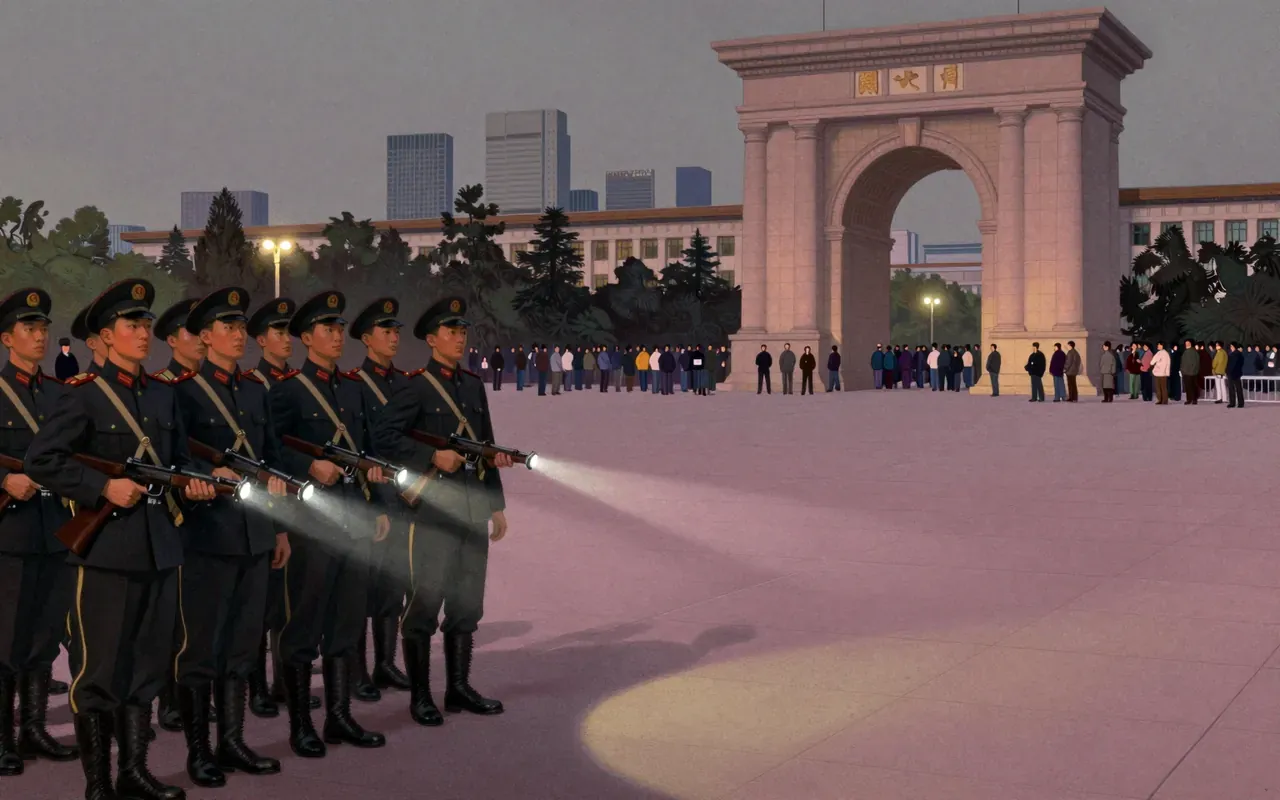
1989 Tiananmen Square protests and massacre1989The 1989 Tiananmen Square protests were a mass demonstration in Beijing that grew to about one million participants at its peak. The Chinese government declared martial law in late May and deployed troops to occupy the square on the night of 3 June.
Up next in Culture

Cubism

1907 · 9:01

Cubism didn’t show reality—it showed how hard it is to agree on what reality is.

9:01