culturebriefs
9:47in productionCh. 1 · The Hand That Drew the Unthinkable/ 9:47 · ceiling 15 min
Art · Movements & scenes

Salvador Dalí

Dalí proved surrealism didn’t need sloppy hands to feel unhinged.

Dalí was a technically exacting Spanish Surrealist who built a career across media—from Madrid training to Paris exhibitions, Buñuel collaborations, and US commercial success—using draftsmanship to anchor bizarre, symbol-laden explorations of dreams, religion, science, and desire. His work raised questions about authenticity, politics, and commerce that remain unresolved.

Chapters & takeaways4
  1. 0:56
    The Hand That Drew the Unthinkable

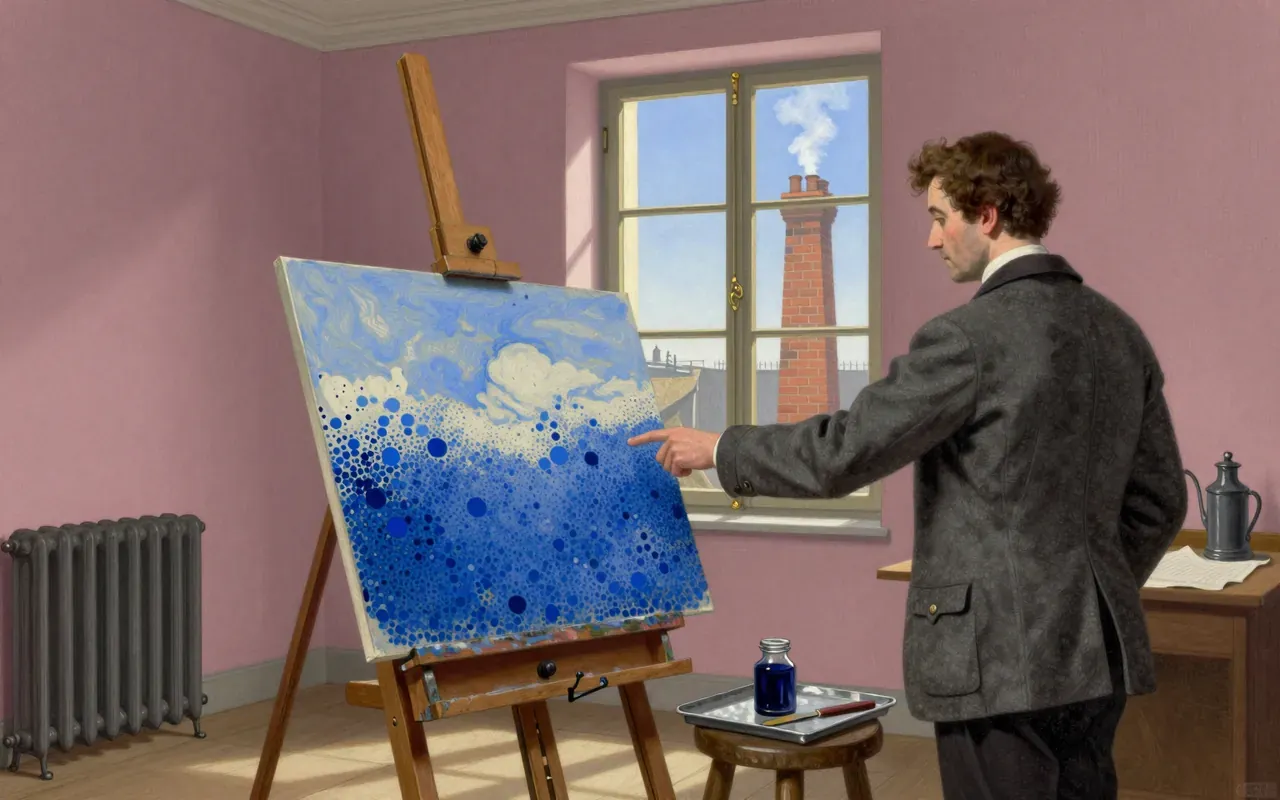
    He used precise draftsmanship to render dreams, the subconscious, sexuality, religion, science, and personal relationships as tangible objects.

  2. 2:28
    1929: The Year He Crossed Borders

    His 1929 Paris debut and collaboration with Buñuel on Un Chien Andalou established him as a core Surrealist voice—not just a painter but a scriptwriter and cross-medium operator.

  3. 3:59
    From Paris to New York, via War

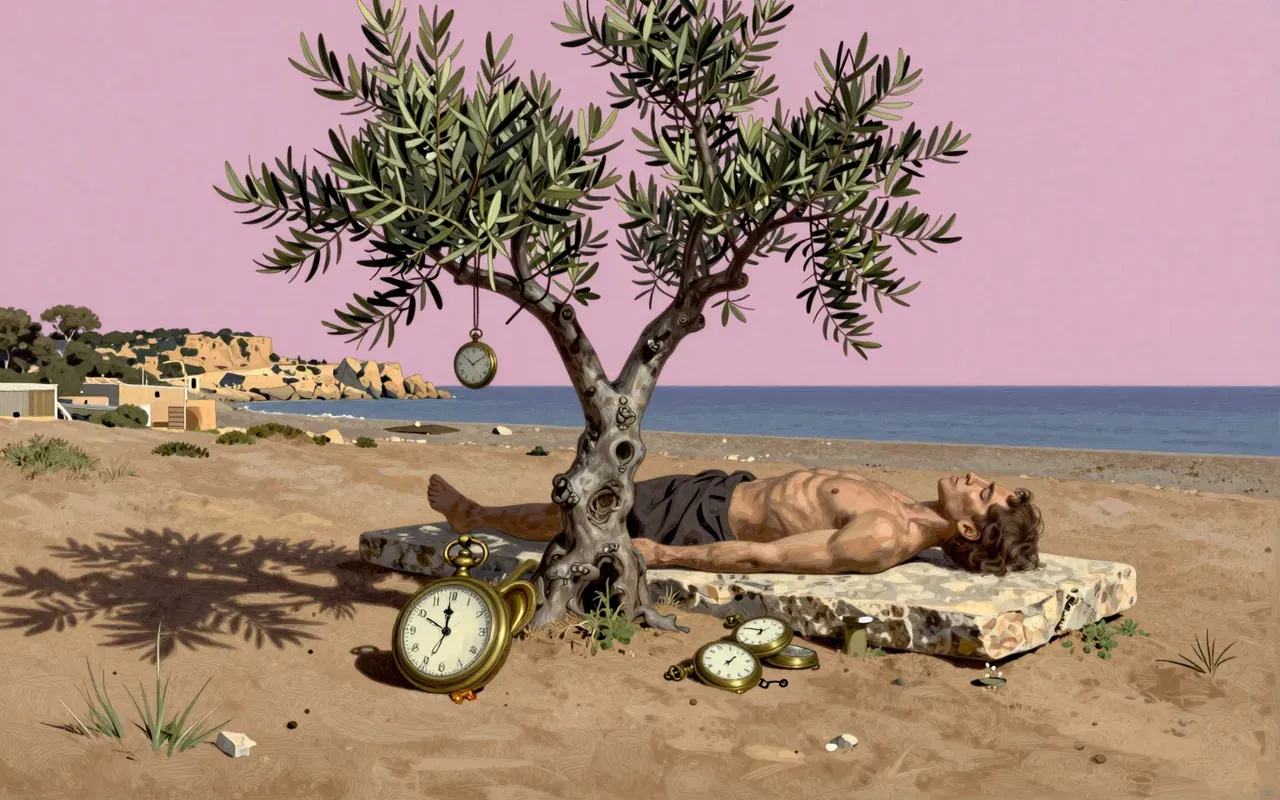
    The Persistence of Memory was finished in August 1931—and Dalí left Europe for the US in 1940, turning wartime displacement into commercial success.

  4. 5:31
    No Medium Was Off-Limits

    His repertoire included sculpture, film, animation, fashion, and photography—often in collaboration—making him one of the first artists to treat medium boundaries as optional.

Worth your time?

Yes. Study the whole thing.

4/ 5
What works
  • The Persistence of Memory
  • Un Chien Andalou
What does not
  • fashion
  • photography
Study it if
  • artists
  • film-students
  • designers
Skip it if
  • historians-of-science
  • theologians
The written brief1 min read

What the thing is

A Spanish Surrealist artist whose output spanned painting, sculpture, film, graphic arts, animation, fashion, and photography.

Where it came from

Dalí trained formally in Madrid, shifted toward Surrealism in the late 1920s, joined the Surrealist group in 1929, held his first Paris exhibition at the Goemans Gallery in November 1929, and lived in France during the Spanish Civil War before relocating to the United States in 1940.

What it gets right

Dalí fused rigorous draftsmanship with destabilising imagery to make the subconscious legible. His paranoiac-critical method gave structure to irrational content. His cross-disciplinary work—especially with Buñuel on Un Chien Andalou in 1929—proved Surrealism could operate beyond painting.

What it gets wrong

The document notes controversies around his politics, commercial activities, and late work authenticity—but does not specify what those controversies were or how they manifested. It offers no evidence that he resolved them, nor that audiences accepted them.

Why it matters now

Dalí’s insistence on craft within irrational subject matter challenges today’s binary between conceptual ease and technical rigour—and his commercial collaborations prefigure contemporary art’s entanglement with branding without clarifying whether that was critique or capitulation.

Is it worth your time

Yes—if you want to see how technical precision and deliberate absurdity can coexist in a single artistic practice.
Same beat · Art4 of 80
8:42
AquatintAquatint is a tonal printmaking method using acid-etched rosin particles. It originated in Amsterdam c.1650 but matured 1770–1830. It excels at atmospheric gradation but fails at precision. Its legacy is structural—not aesthetic—and it remains a key reference for how analogue systems encode continuous tone.
8:03
Art Deco1910Art Deco was a Paris-born, commercially rooted design language that treated jewellery, furniture, textiles, and architecture as interchangeable surfaces for geometric, luxurious styling. It began before WWI—not at the 1925 Exposition—and spread through department stores and fashion, not manifestos or salons.
10:37
Art Nouveau1890Art Nouveau was an international style of art, architecture and applied art—especially the decorative arts—that emerged in Brussels in the 1890s and was popular between 1890 and 1910. It was inspired by natural forms such as the sinuous curves of plants and flowers. It featured dynamism and movement through asymmetry and whiplash lines. It used modern materials like iron, glass, ceramics and concrete. A major objective was to break down the distinction between fine and applied arts. The first houses and interiors appeared in Brussels in the 1890s, designed by Paul Hankar, Henry van de Velde and Victor Horta—whose Hôtel Tassel was completed in 1893. By 1914, Art Nouveau was largely exhausted.
9:49
Arts and Crafts movementThe Arts and Crafts movement was a British design reform effort active from the 1880s to about 1920. It opposed factory production and machine-made ornament, citing the 1851 Great Exhibition as proof of decline. It succeeded in shifting taste and establishing craft as moral category—but failed to address class, gender or colonial dimensions of production.
Up next in Culture

Subaru Sambar

· 9:58

A tax loophole on wheels — engineered to fit Japan’s Kei class, not human ergonomics or safety norms.

9:58