9:52in productionCh. 1 · Not a generation. A subculture./ 9:52 · ceiling 15 min
Literature · Movements & scenes
Beat Generation
It wasn’t a revolution—it was a courtroom breakthrough wrapped in a beret.
The Beat Generation was a literary subculture movement rooted in 1944 Columbia University friendships. Its public arrival came via Howl’s 1956 publication and the 1957 obscenity trial—a legal turning point that loosened U.S. publishing restrictions. While Beatniks formed a visible 1950s subculture, major Beat authors distanced themselves from it. Elements later fed the 1960s hippie movement—but the movement’s enduring impact lies in its courtroom victories, not its cultural mythology.
It was a literary subculture movement—not a generation, not a manifesto, not a mass movement.
2:49
From campus to courtroom
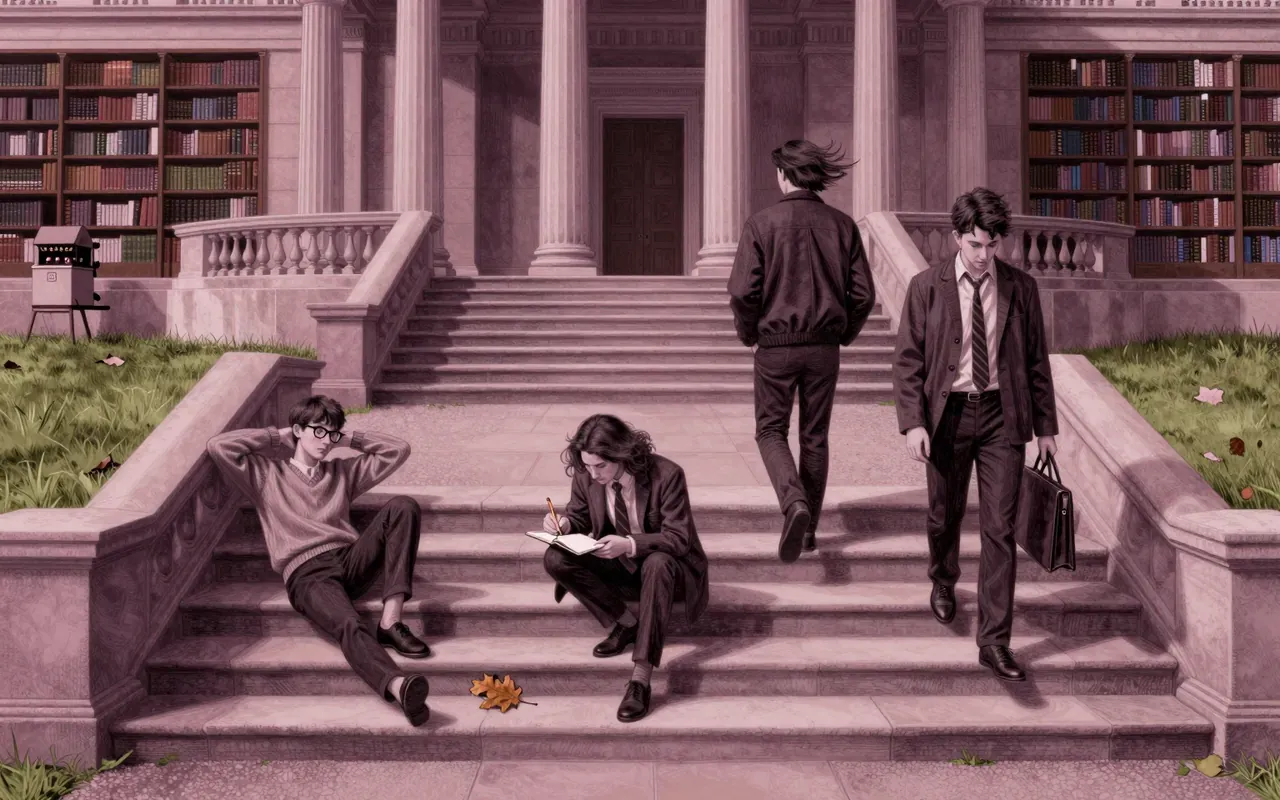
It started in 1944 at Columbia University—and went national only after Howl’s 1956 release and 1957 trial.
4:38
Beatniks ≠ Beats
Beatniks were a 1950s subculture—not the authors themselves—and were often dismissed by them.
5:58
Legacy is legal, not lyrical
Its legal battles liberalized publishing. Its ideas fed the hippie movement—but didn’t define it.
Worth your time?
Yes. Study the whole thing.
3.5/ 5
What works
Howl (1956)
Naked Lunch (1959)
What does not
iconic
groundbreaking
seminal
timeless
Study it if
readers interested in publishing history
students of postwar American literature
anyone tracking how counterculture enters law before culture
Skip it if
those seeking a coherent philosophy
fans of polished narrative craft
readers looking for inclusive representation
The written brief1 min read
What the thing is
A literary subculture movement. Not a unified school. Not a political party. A loose network of writers testing language, law, and lifestyle against Cold War orthodoxy.
Where it came from
It began in 1944 among authors at Columbia University in New York City. Kerouac coined ‘Beat Generation’ in 1948. The 1956 publication of Howl marked its public emergence.
What it gets right
It exposed the repressive conformity of postwar America. It challenged censorship. It gave voice to marginalised experiences: addiction, queerness, spiritual searching.
What it gets wrong
It romanticised poverty and addiction. Its male core sidelined women writers and erased their contributions. Its anti-establishment pose often masked privilege.
Why it matters now
Because obscenity trials for Howl and Naked Lunch helped liberalize U.S. publishing—setting legal precedents that still protect controversial speech today.
Is it worth your time
Yes—if you want to understand how literary dissent entered mainstream culture through legal confrontation, not just poetry.