culturebriefs
8:41in productionCh. 1 · Not a movement/ 8:41 · ceiling 15 min
Art

Relational art

1996

Relational art didn’t invent social practice—it renamed it, then claimed it as theory.

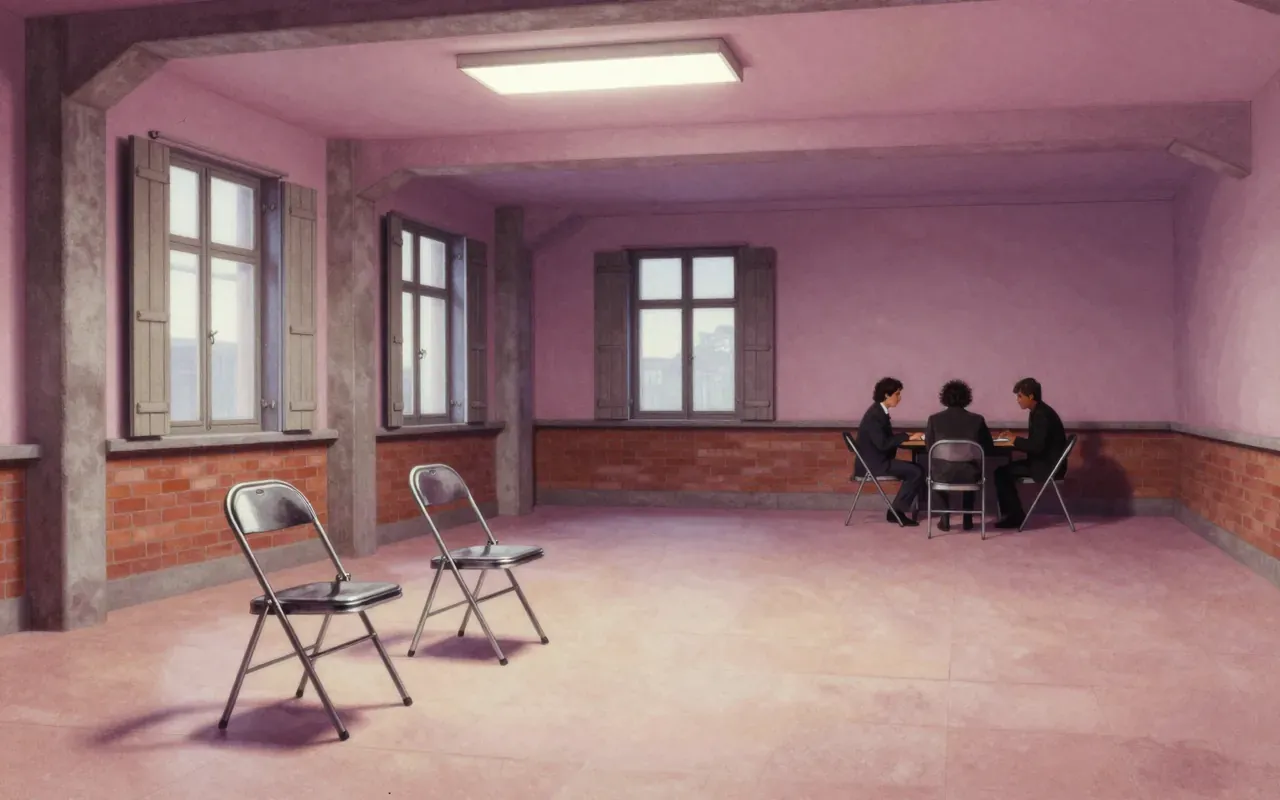
Relational art is a 1990s fine art tendency defined by Nicolas Bourriaud in 1998 (first used in 1996). It treats human relations and social context as its medium. It produces collective meaning through participatory encounters. It displaces the artwork-as-object with the artwork-as-gathering. It claims art should be a way of living—not a representation of one.

Chapters & takeaways4
  1. 0:57
    Not a movement

    It was never a movement—just a label applied after the fact to scattered 1990s practices.

  2. 2:30
    Encounters, not objects

    It replaces the artwork-as-object with the artwork-as-gathering: meaning happens between people, not before a thing.

  3. 4:02
    Ways of living

    It demands art function as lived reality—not representation, not escape, but a provisional way of being together.

  4. 5:22
    Meaning moves, not matter

    The original artifact stays untouched; its meaning shifts only when perception changes through participation.

Worth your time?

Yes. Study the whole thing.

3.5/ 5
What works
  • names a real formal shift
  • clarifies the stakes of participation
  • exposes limits of authorship in shared action
What does not
  • invent social practice
  • define a coherent movement
  • establish influence beyond its naming
Study it if
  • critics needing a frame for 1990s participatory work
  • artists working with gathering as form
Skip it if
  • those seeking historical causality
  • readers who conflate naming with origin
The written brief1 min read

What the thing is

Relational art is a label for fine art practices that produce collective meaning through participatory encounters between people—not between viewer and object.

Where it came from

It emerged in the 1990s as a tendency in fine art practice. Nicolas Bourriaud named it in 1998, having first used the term in 1996.

What it gets right

It names a real shift: art abandoning solitary contemplation for co-produced meaning. It correctly identifies participation as central. It insists meaning emerges in encounter, not consumption.

What it gets wrong

It overstates coherence. The term bundles disparate practices under one label without evidence of shared intent or lineage. It implies intentionality where only resemblance may exist.

Why it matters now

It frames a persistent question: when art dissolves into social infrastructure, what remains of authorship, critique, and resistance? That tension is sharper now than in the 1990s.

Is it worth your time

Yes—if you need tools to analyse art that treats social interaction as medium, not backdrop.
Same beat · Art4 of 98
9:47
Guerrilla artGuerrilla art is a UK-born street art movement defined by inseparability from environment, psychological effect over permanence, and roots in post-graffiti practice. Its earliest documented instance was in 1978 in Wellington, New Zealand. It has no external boundary between image and environment. The surface is fundamental to meaning. It depends on urban dynamics to avoid becoming 'art for art's sake'. Production focuses on cause and effect, not the material piece. It aims to produce an effect in local residents’ minds—not necessarily meaningful art in itself.
8:10
Arte Povera1967Arte Povera was a materially specific, institutionally embedded, temporally tight Italian art movement. It used perishable matter and physical forces to stage critique—but never left the gallery circuit it claimed to dismantle.
9:01
Cubism1907Cubism is an early-20th-century avant-garde art movement that began in Paris and flourished across the 1910s and 1920s. It involved analyzing, breaking up, and reassembling subjects in abstract form, depicting them from multiple perspectives rather than a single viewpoint. A major innovation was the introduction of collage in 1912. The movement is historically divided into phases—Analytic Cubism (1910–1912) and Synthetic Cubism (1912–1914)—each marked by distinct formal strategies. It emerged from collaborative work in the studios of Picasso and Braque and rapidly expanded to include numerous artists across painting, sculpture, architecture, literature, and design.
9:18
Fauvism1904Fauvism was a short-lived French painting movement (1905–1908) that treated colour as architecture and brushwork as velocity. It fused Post-Impressionist intensity with Neo-Impressionist technique and Tahitian colour fields—and was shaped by the visual experience of driving. Its strength was its sensory immediacy; its limit was its lack of structural logic beyond intensity. It matters now because it shows how technology alters perception before theory catches up.
Up next in Culture

Retrofuturism

· 10:01

Retrofuturism isn’t about the future—it’s about giving up on it.

10:01