The written brief1 min read
What the thing is
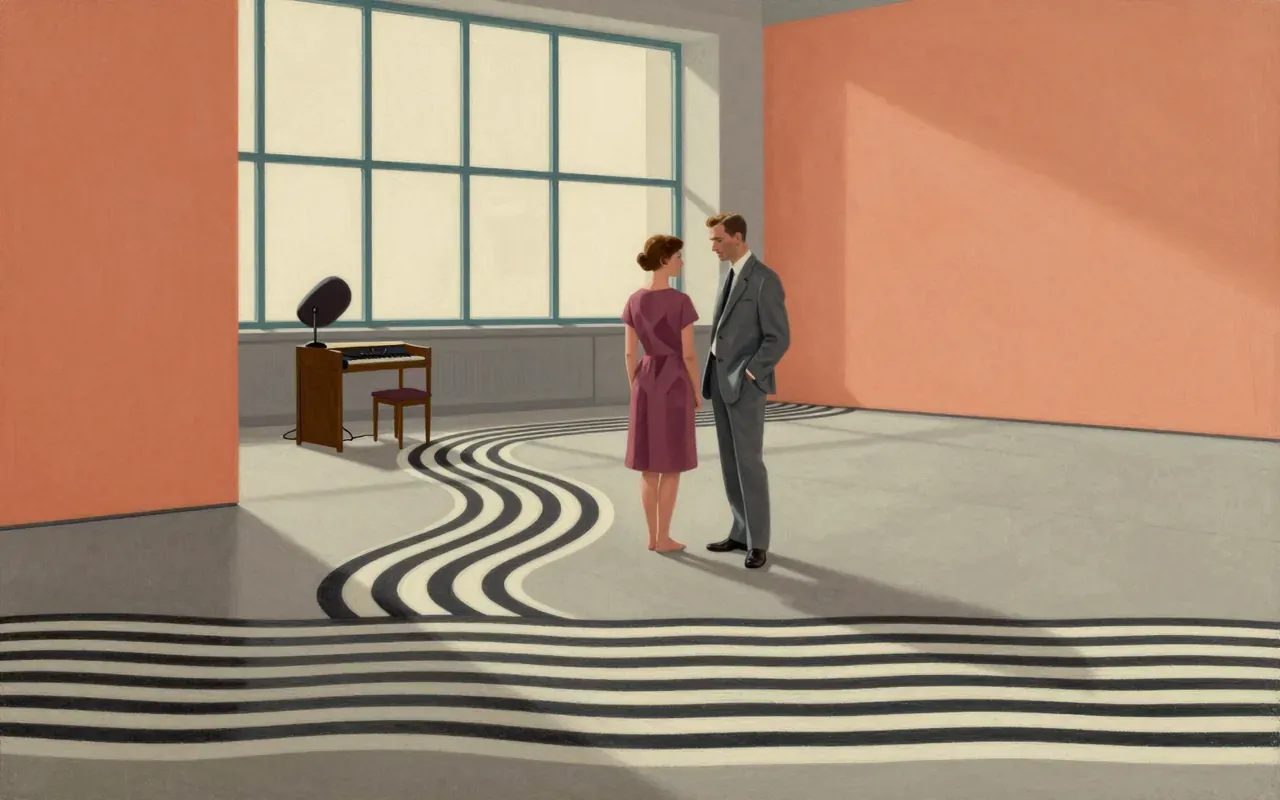
Op art is abstract visual work built from pattern and line. It creates illusions—movement, vibration, after-images—by exploiting figure-ground tension and retinal processing.
Where it came from
It emerged in the early 20th century. It draws from Bauhaus and constructivist traditions. It gained prominence in the 1960s.
What it gets right
It isolates perception as material. It treats the retina as a site of action, not just reception.
What it gets wrong
It assumes uniform visual response. It ignores how age, fatigue, neurodivergence or cultural habit alter the effect.
Why it matters now
It prefigures algorithmic interfaces that hijack attention through flicker, pulse and forced depth—without naming a single platform.
Is it worth your time
Yes—if you want to see how vision can be weaponised as pattern, not narrative.