What the thing is
Spectacle is an event memorable for its appearance.
The word came into Middle English from Old French, which took it from the Latin spectaculum, “a show”, from spectare, “to view, watch”.
Where it came from
It originated in Middle English c. 1340 as a specially prepared or arranged display. It became a term of art in 17th-century English theater, especially in Jacobean and Caroline court masques reliant on non-verbal, multimedia presentation. Early film adopted it in the late 19th century via zoetrope and nickelodeon technology.
Court masques of the Jacobean and Caroline era kept their cast lists small, in keeping with the ability of a small family of patrons to act, but their costumes and theatrical effects were lavish. The writing was spare and philosophical, with few marks of traditional dramatic structure, because the purpose was family entertainment and spectacle. Most masques recreated well-known mythological or religious scenes, and they were multimedia, using costume and music to convey the story. Ben Jonson wrote masques with the architect Inigo Jones, who designed the staging, which was elaborate and often ended in a fireworks show.
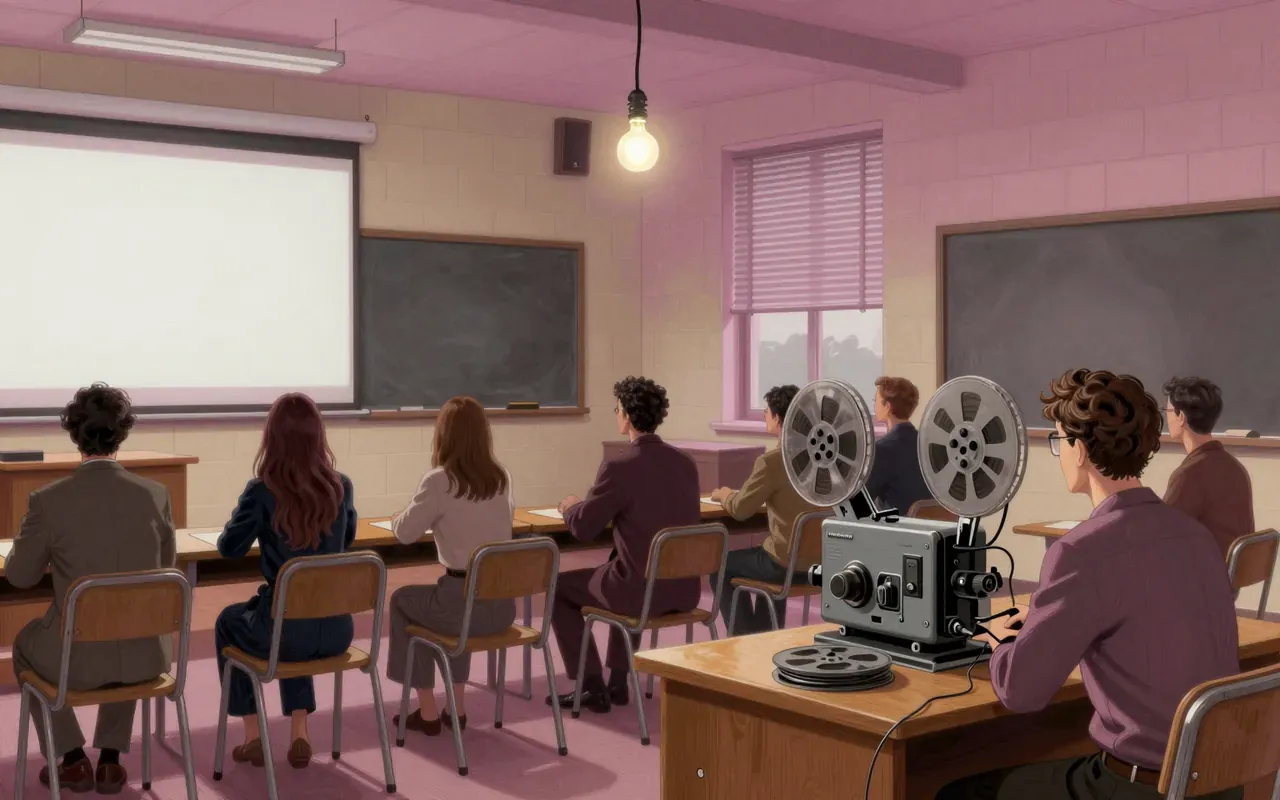
The earliest films were spectacles too. They caught the attention of common people by showing things people would rarely see to a wide audience. Thomas Edison filmed the Eiffel Tower, actual Native Americans in a simulated attack and celebrated beauty queens. In 1895 Louis Lumière filmed a train pulling into a station with the camera in front of it, so the train seemed to come straight at the viewer, and it astonished people unaccustomed to the illusion of moving images.
What it gets right
Spectacle names a real historical shift: from event to image, from participation to observation, from narrative to display.
In industrial and post-industrial societies, spectacle has been used for appearances said to be at once enticing, deceptive, distracting and superficial (Jonathan Crary, 2005). The term also names a society that critics describe as dominated by electronic media, consumption and surveillance, which reduces citizens to spectators through political neutralization.
What it gets wrong
It conflates all visual excess under one term—masque fireworks, nickelodeon reels, and Debord’s media society—as if they shared intent or effect.
Guy Debord’s The Society of the Spectacle (1967) is perhaps the best-known example of the critical analysis. Debord described the Spectacle as the autocratic reign of a market economy that had acceded to an irresponsible sovereignty, together with the new techniques of government that accompanied it.
Why it matters now
Because we still mistake visibility for significance—and assume that what commands attention must also command authority.
Is it worth your time
Yes—if you want to understand how appearance became a mode of power, not just decoration.