culturebriefs
9:14in productionCh. 1 · Not content. Structure./ 9:14 · ceiling 15 min
Ideas · Society

The medium is the message

The light bulb has no content—but it remade the night. So do your apps.

A foundational idea in media theory, stripped of myth and measured against its own claims.

Chapters & takeaways4
  1. 1:01
    Not content. Structure.

    McLuhan didn’t study what media say—he studied how they rewire us.

  2. 2:36
    The juicy piece of meat

    Content is bait—the distraction that stops us seeing how the medium reshapes time and space.

  3. 4:12
    Change of scale

    A new medium changes scale, pace, or pattern—not just what we see, but how much, how fast, and with whom.

  4. 5:51
    The bulb without a message

    The light bulb proves a medium needs no content to create an environment—and therefore no narrative to exert power.

Worth your time?

Yes. Study the whole thing.

4.5/ 5
What works
  • Understanding Media: The Extensions of Man
What does not
  • culture/art
  • culture/arts
  • culture/cities
  • culture/fashion
Study it if
  • media students
  • designers
  • platform workers
Skip it if
  • historians of literature
  • film critics
The written brief1 min read

What the thing is

A conceptual pivot: ‘the medium is the message’ names the claim that the technological form of communication—not its subject matter—determines how humans relate, act, and organise.

Where it came from

Marshall McLuhan coined it in 1964 as the title of the first chapter of Understanding Media: The Extensions of Man.

What it gets right

It correctly identifies that media forms restructure human association independently of content. The light bulb example proves environments can be shaped without messages. Content does distract from structural change—this is observable in every screen-lit room.

What it gets wrong

It overstates the separability of medium and message. A medium cannot operate without some functional constraint or affordance that implies use—and use implies intention, which is inseparable from message. McLuhan gives no mechanism for how ‘medium’ acts without human uptake or interpretation.

Why it matters now

Because algorithmic platforms now operate as invisible, ambient media environments—like light bulbs—whose structural effects on attention, time, and social scale are masked by their feeds, posts, and streams.

Is it worth your time

Yes—if you want to see how a single phrase reframed media analysis by treating technology as environment, not conduit.

Same beat · Ideas4 of 214
8:14
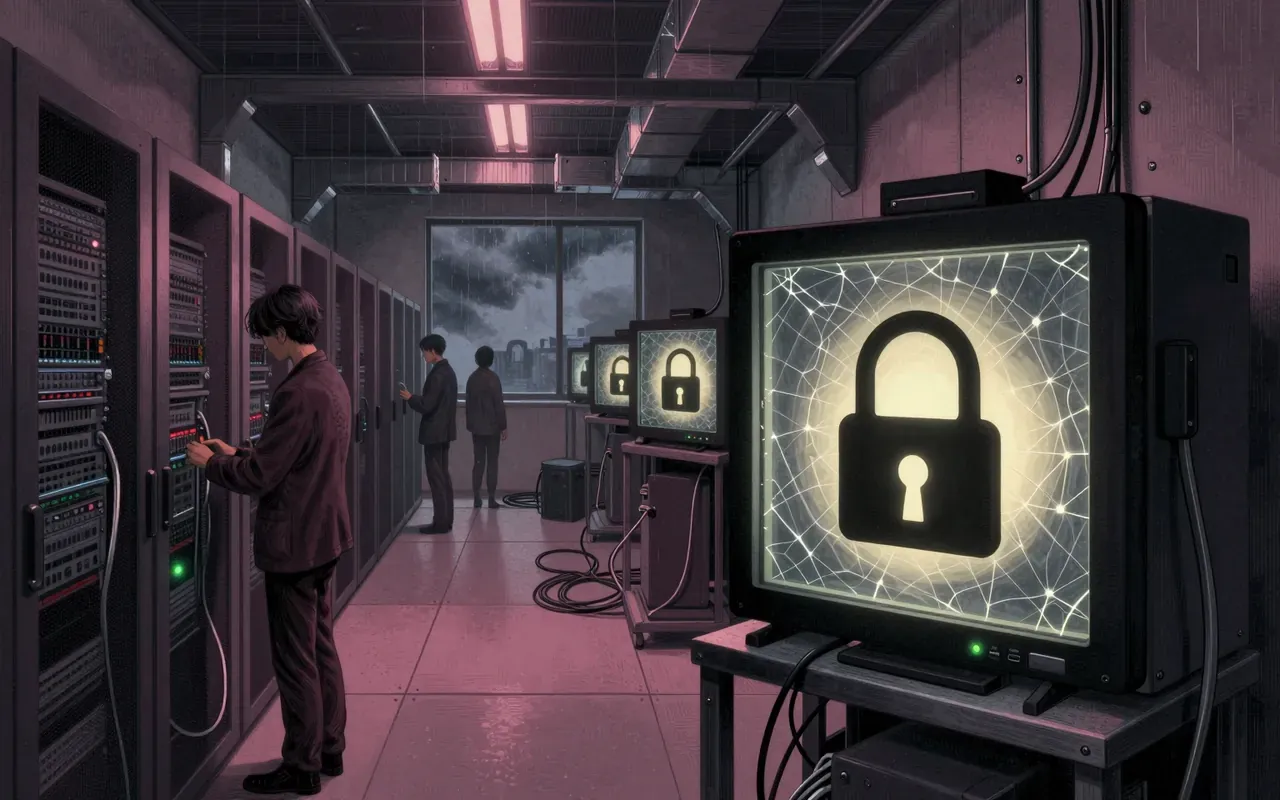
Crypto-anarchyCrypto-anarchy is a movement, not a prophecy. It uses cryptography to enable anonymity, free speech and trade. It emerged from Timothy C. May’s 1988 manifesto and the 1992 cypherpunk founding. It gets right that code can constrain power—but wrong that it will collapse the state. A 2022 study confirms its political irrelevance—yet its architecture remains vital for Internet-native dissent.
13:44
CypherpunkCypherpunk is a libertarian movement that champions strong cryptography and privacy‑enhancing technologies to effect social and political change. It began in the late 1980s, gained traction with the 1992 mailing list, and has influenced Bitcoin, secure messaging, and privacy browsers. While it rightly foregrounds decentralisation and individual autonomy, it over‑emphasises technology as a panacea and ignores legal and economic barriers. In an era of state surveillance and corporate data mining, Cypherpunk ideas underpin modern cryptocurrencies and secure messaging, offering useful concepts for those who value digital privacy and decentralised finance, but its tech‑first focus may feel incomplete for those seeking concrete policy solutions.
8:55
Free software movementThe free software movement is a precise, principled refusal of proprietary control over software. It began in 1983 with GNU and institutionalised in 1985 with the FSF. It gets right that software freedom must be guaranteed—not merely permitted. It gets wrong that licence compliance alone secures user agency. Its relevance has grown as software becomes infrastructural—but its methods remain rooted in individual refusal and collective development.
12:36
1989 Tiananmen Square protests and massacre1989The 1989 Tiananmen Square protests were a mass demonstration in Beijing that grew to about one million participants at its peak. The Chinese government declared martial law in late May and deployed troops to occupy the square on the night of 3 June.
Up next in Culture

Merry Pranksters

· 9:06

They didn’t change America — they staged a perceptual intervention and called it a revolution.

9:06