10:31in productionCh. 1 · Rooted in Java/ 10:31 · ceiling 15 min
Art
Batik in Indonesia
Batik is not folklore — it is a living, state-recognised, Javanese-rooted textile discipline with a 700-year material record.
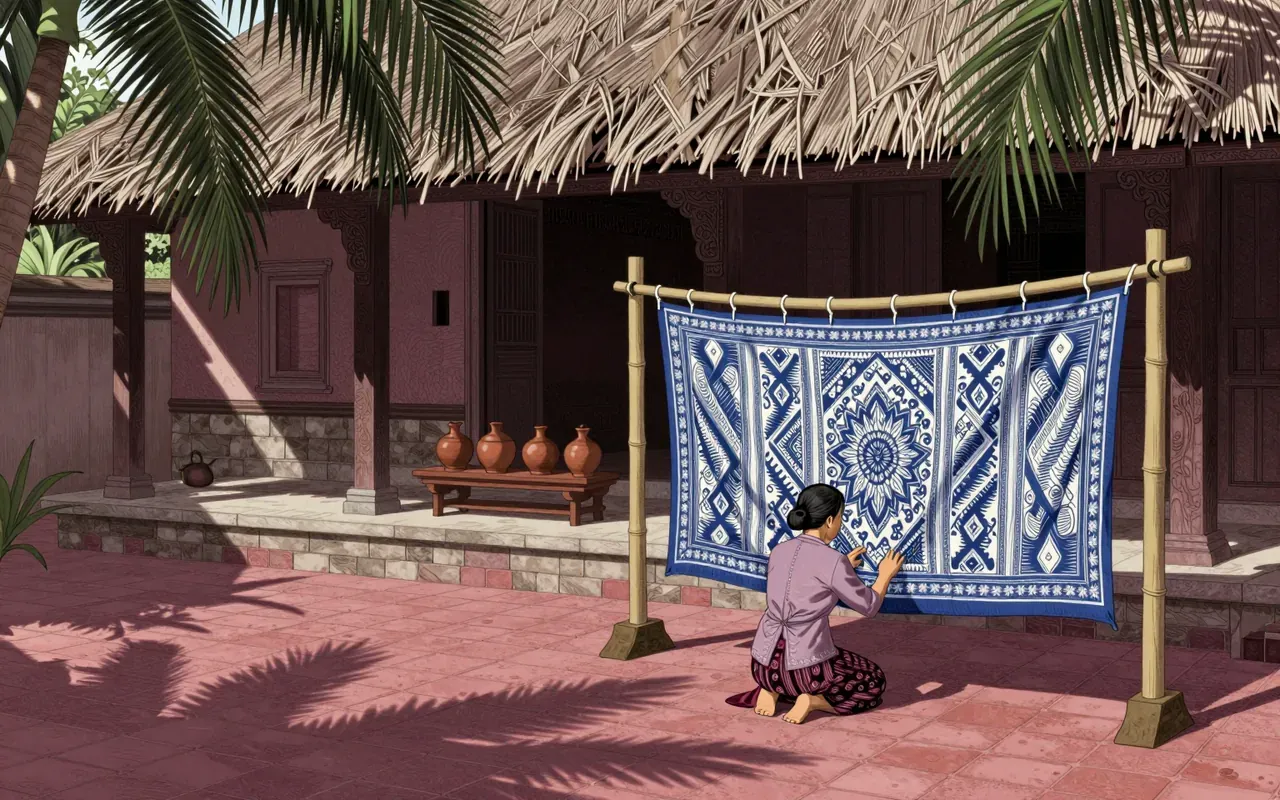
Batik is a wax resist-dyeing textile tradition from Indonesia. It is most highly developed in Java, where the technique has been used for centuries. The oldest surviving physical example is a 700-year-old blue-white valance. Raffles described it in his 1817 History of Java — the first European scholarly account. In 2009, UNESCO inscribed batik tulis, batik cap, and their associated education as Masterpieces of Oral and Intangible Heritage — prompting annual Batik Day and institutional preservation.
Batik is a centuries-old Javanese wax resist-dyeing technique, most highly developed on Java.
3:05
Seven Centuries Old
The oldest surviving physical example is a 700-year-old blue-white valance.
4:16
First Documented in 1817
Raffles’s 1817 History of Java marked the first European scholarly description and the start of collecting interest.
6:02
UNESCO Recognition in 2009
UNESCO inscribed batik tulis, batik cap, and their associated education as Intangible Heritage on 2 October 2009 — launching Batik Day and preservation policy.
Worth your time?
Yes. Study the whole thing.
4.5/ 5
What works
as a case study in intangible heritage policy
as evidence of long-term technical continuity in textile arts
as a model for state-supported craft education
What does not
culture/arts
culture/society
Study it if
students of material culture
practitioners of traditional crafts
policy makers in cultural heritage
Skip it if
casual viewers seeking novelty
those expecting a global fashion narrative
The written brief1 min read
What the thing is
Batik is a wax resist-dyeing textile tradition from Indonesia.
Where it came from
It originated in Java, where the technique has been used for centuries and reached its highest development.
What it gets right
It establishes batik as a Javanese-centred, centuries-old wax resist-dyeing practice embedded in Indonesian cultural life.
What it gets wrong
It does not establish batik as a unified national craft across Indonesia — the document states the technique is most highly developed in Java and adopted in varying forms elsewhere.
Why it matters now
UNESCO’s 2009 inscription triggered annual Batik Day, formal preservation efforts, and recognition of batik education as intangible heritage.
Is it worth your time
Yes. It is a living textile tradition with institutional recognition, national ritual, and material continuity stretching back seven centuries.