culturebriefs
8:46in productionCh. 1 · Not Small Trees. Confined Ones./ 8:46 · ceiling 15 min
Art · Ideas

Bonsai cultivation and care

Bonsai isn’t about miniaturising trees. It’s about sustaining mature life under artificial, hostile confinement.

Bonsai cultivation is a precise, high-maintenance horticultural discipline rooted in container constraint—not aesthetics alone. It demands daily attention to root health, water balance, and structural manipulation. Its strength is its honesty about biological cost. Its silence is on who bears that cost, and who benefits.

Chapters & takeaways4
  1. 1:01
    Not Small Trees. Confined Ones.

    Bonsai is not dwarfing—it’s sustaining mature trees in biologically hostile containers.

  2. 2:35
    Two Kinds of Constraint

    Containers restrict roots, nutrition, and transpiration—and trunks, branches, and foliage are then shaped to compensate.

  3. 3:58
    Tools for Damage Control

    Specialised tools protect health—but only because the system itself is destabilising.

  4. 5:07
    No Seeds. Just Borrowed Life.

    Seed growth is rare. Most bonsai begin as cuttings, grafts, or collected material—already shaped by other hands.

Worth your time?

Yes. Study the whole thing.

4/ 5
What works
  • container horticulture
  • aesthetic discipline
  • biological adaptation
What does not
  • culture/movements-and-scenes
  • culture/subcultures
  • culture/fashion
  • culture/food
Study it if
  • gardeners
  • urban dwellers with outdoor access
  • horticultural educators
Skip it if
  • casual plant owners
  • indoor-only residents without sunlight control
  • those seeking low-effort greenery
The written brief1 min read

What the thing is

Bonsai cultivation is long-term container-based horticulture. It produces mature miniature trees through extreme structural restriction and repeated aesthetic manipulation.

Where it came from

It comes from the Japanese tradition of this art form. The document does not name an origin date, location, or historical lineage beyond that reference.

What it gets right

It acknowledges container life as biologically hostile. It names the trade-offs: miniature form requires constant manipulation of roots, canopy, and physiology.

What it gets wrong

It treats bonsai as a self-contained practice. It omits who teaches it, who learns it, who sells tools, who curates displays—or how access to species, soil, or outdoor space shapes who can do it.

Why it matters now

Because urban living intensifies container constraints—smaller spaces, less soil, more temperature volatility—and bonsai techniques codify what all potted plants endure, but rarely name.

Is it worth your time

Yes—if you need to grow a tree in a small space, and are prepared for daily observation and intervention.
Same beat · Art4 of 98
9:47
Guerrilla artGuerrilla art is a UK-born street art movement defined by inseparability from environment, psychological effect over permanence, and roots in post-graffiti practice. Its earliest documented instance was in 1978 in Wellington, New Zealand. It has no external boundary between image and environment. The surface is fundamental to meaning. It depends on urban dynamics to avoid becoming 'art for art's sake'. Production focuses on cause and effect, not the material piece. It aims to produce an effect in local residents’ minds—not necessarily meaningful art in itself.
8:10
Arte Povera1967Arte Povera was a materially specific, institutionally embedded, temporally tight Italian art movement. It used perishable matter and physical forces to stage critique—but never left the gallery circuit it claimed to dismantle.
9:01
Cubism1907Cubism is an early-20th-century avant-garde art movement that began in Paris and flourished across the 1910s and 1920s. It involved analyzing, breaking up, and reassembling subjects in abstract form, depicting them from multiple perspectives rather than a single viewpoint. A major innovation was the introduction of collage in 1912. The movement is historically divided into phases—Analytic Cubism (1910–1912) and Synthetic Cubism (1912–1914)—each marked by distinct formal strategies. It emerged from collaborative work in the studios of Picasso and Braque and rapidly expanded to include numerous artists across painting, sculpture, architecture, literature, and design.
9:18
Fauvism1904Fauvism was a short-lived French painting movement (1905–1908) that treated colour as architecture and brushwork as velocity. It fused Post-Impressionist intensity with Neo-Impressionist technique and Tahitian colour fields—and was shaped by the visual experience of driving. Its strength was its sensory immediacy; its limit was its lack of structural logic beyond intensity. It matters now because it shows how technology alters perception before theory catches up.
Up next in Culture

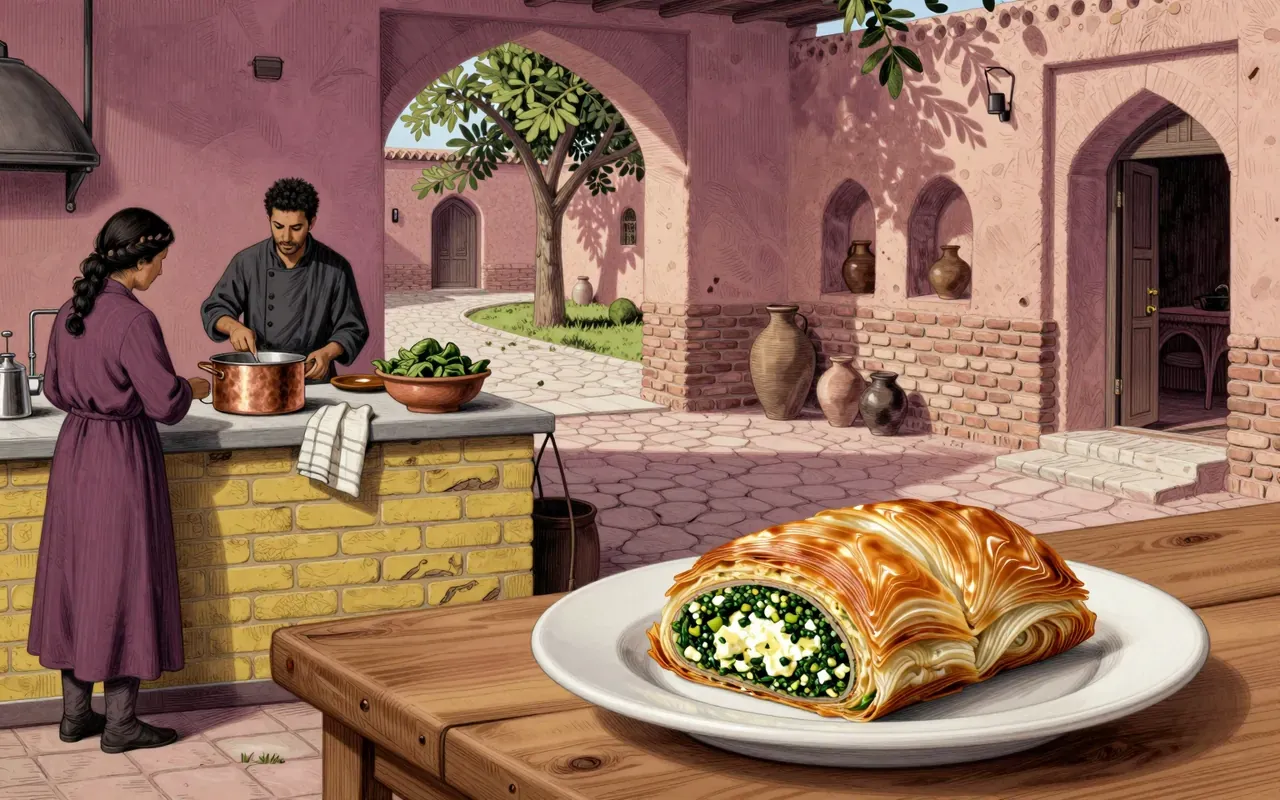
Börek

· 7:27

Börek is not a dish—it’s a grammatical form: a noun derived from a verb meaning 'to roll', now folded into centuries of custom.

7:27