culturebriefs
10:04in productionCh. 1 · The Institution Builder/ 10:04 · ceiling 15 min
Ideas · Literature

Edward Said

Said didn’t just critique Orientalism—he showed how literature serves empire.

Edward Said was a Palestinian-American academic who co-founded post-colonial studies at Columbia University and produced Orientalism (1978) — a foundational critique of how Western representations construct the Orient. His method fused literary analysis with philosophy and history. He taught from 1963 to 2003 and lectured at over 200 universities. His concept of the cultural archive — comprising narratives, histories, and travel tales — remains central to understanding how imperial power operates through culture.

Chapters & takeaways4
  1. 1:05
    The Institution Builder

    He built post-colonial studies from within Columbia’s English and Comparative Literature faculties.

  2. 3:08
    The Book That Changed the Terms

    Orientalism (1978) redefined literary criticism by treating texts as instruments of imperial knowledge.

  3. 4:50
    The Interdisciplinary Engine

    His method began with close reading but extended into philosophy, linguistics, and anthropology.

  4. 6:18
    The Archive as Weapon

    He treated the cultural archive—not just books, but histories and travel tales—as active imperial infrastructure.

Worth your time?

Yes. Study the whole thing.

4.5/ 5
What works
  • Orientalism (1978)
  • Culture and Imperialism (1993)
  • Beginnings: Intention and Method (1974)
What does not
  • praise without reason
  • invent facts
  • claim influence beyond the document
  • treat popularity as significance
Study it if
  • readers analysing power in texts
  • students of literary theory or Middle Eastern studies
  • critics examining institutional knowledge production
Skip it if
  • those seeking biographical drama
  • readers wanting policy prescriptions
  • audiences looking for solutions rather than diagnosis
The written brief1 min read

What the thing is

Edward Said was a Palestinian-American professor of literature at Columbia University who co-founded post-colonial studies and developed a method of textual analysis that linked literary form to imperial ideology.

Where it came from

He emerged from doctoral work at Harvard and Princeton, expanded his dissertation into Joseph Conrad and the Fiction of Autobiography (1966), and taught at Columbia from 1963 to 2003.

What it gets right

Said exposed how Western scholarship, literature, and travel writing constructed the ‘Orient’ as a passive, knowable object. His model of textual analysis revealed imperial logic inside literary form.

What it gets wrong

The document does not state any limitations, failures, or errors in Said’s work. So none can be claimed.

Why it matters now

His concept of the cultural archive—as made up of narratives, histories, and travel tales—directly frames contemporary debates about whose stories get preserved, cited, and institutionalised.

Is it worth your time

Yes—if you need tools to dissect how power embeds itself in language, narrative, and academic practice.


Same beat · Ideas4 of 214
8:14
Crypto-anarchyCrypto-anarchy is a movement, not a prophecy. It uses cryptography to enable anonymity, free speech and trade. It emerged from Timothy C. May’s 1988 manifesto and the 1992 cypherpunk founding. It gets right that code can constrain power—but wrong that it will collapse the state. A 2022 study confirms its political irrelevance—yet its architecture remains vital for Internet-native dissent.
13:44
CypherpunkCypherpunk is a libertarian movement that champions strong cryptography and privacy‑enhancing technologies to effect social and political change. It began in the late 1980s, gained traction with the 1992 mailing list, and has influenced Bitcoin, secure messaging, and privacy browsers. While it rightly foregrounds decentralisation and individual autonomy, it over‑emphasises technology as a panacea and ignores legal and economic barriers. In an era of state surveillance and corporate data mining, Cypherpunk ideas underpin modern cryptocurrencies and secure messaging, offering useful concepts for those who value digital privacy and decentralised finance, but its tech‑first focus may feel incomplete for those seeking concrete policy solutions.
8:55
Free software movementThe free software movement is a precise, principled refusal of proprietary control over software. It began in 1983 with GNU and institutionalised in 1985 with the FSF. It gets right that software freedom must be guaranteed—not merely permitted. It gets wrong that licence compliance alone secures user agency. Its relevance has grown as software becomes infrastructural—but its methods remain rooted in individual refusal and collective development.
12:36
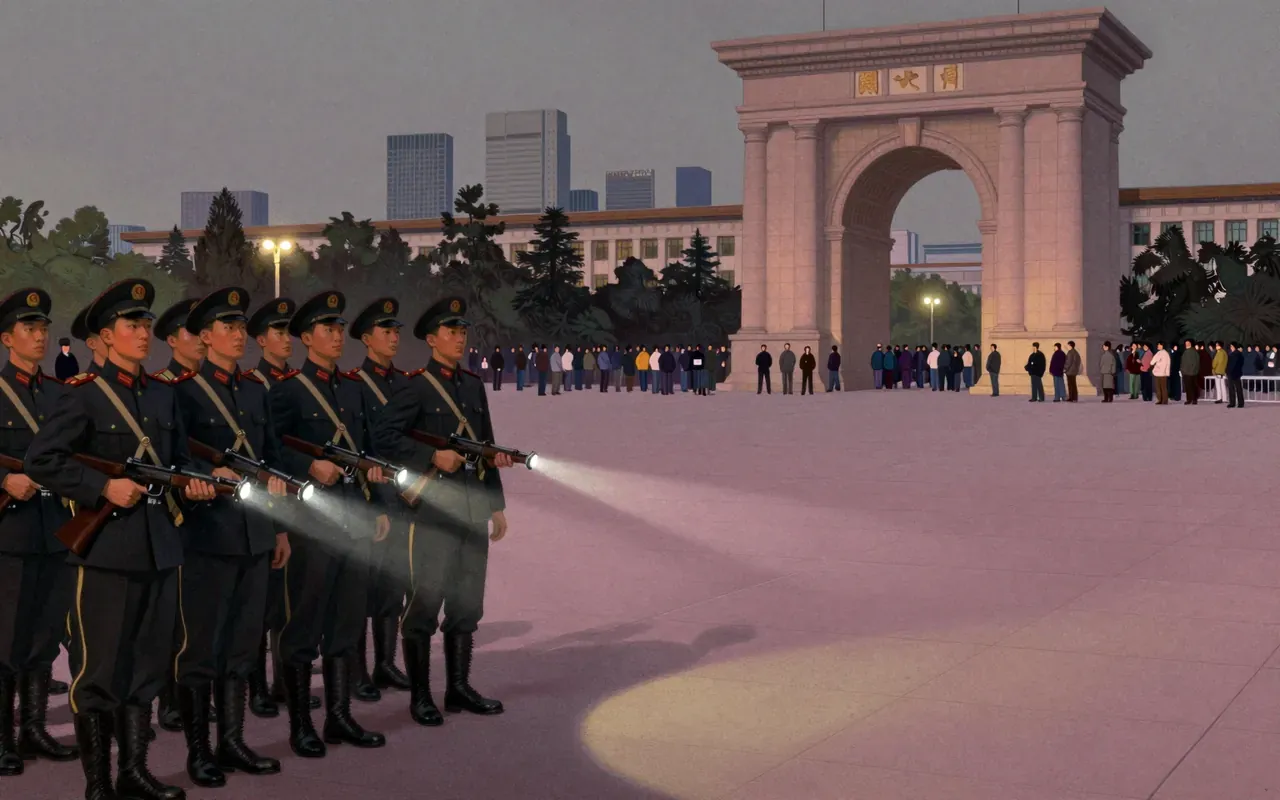
1989 Tiananmen Square protests and massacre1989The 1989 Tiananmen Square protests were a mass demonstration in Beijing that grew to about one million participants at its peak. The Chinese government declared martial law in late May and deployed troops to occupy the square on the night of 3 June.
Up next in Culture

Emo

1984 · 9:06

Emo didn’t soften hardcore—it split it open from the inside.

9:06