What the thing is
Édouard Glissant was a Martinican writer, poet, philosopher, and literary critic whose work fused poetry, philosophy, and political critique to theorise Caribbean identity, relationality, and opacity.
Where it came from
He emerged from Martinique (1928–2011), publishing his debut novel La Lézarde in 1958, co-founding a separatist party in 1959, founding the Institut Martiniquais D’études in 1967, and writing Caribbean Discourse in 1981.
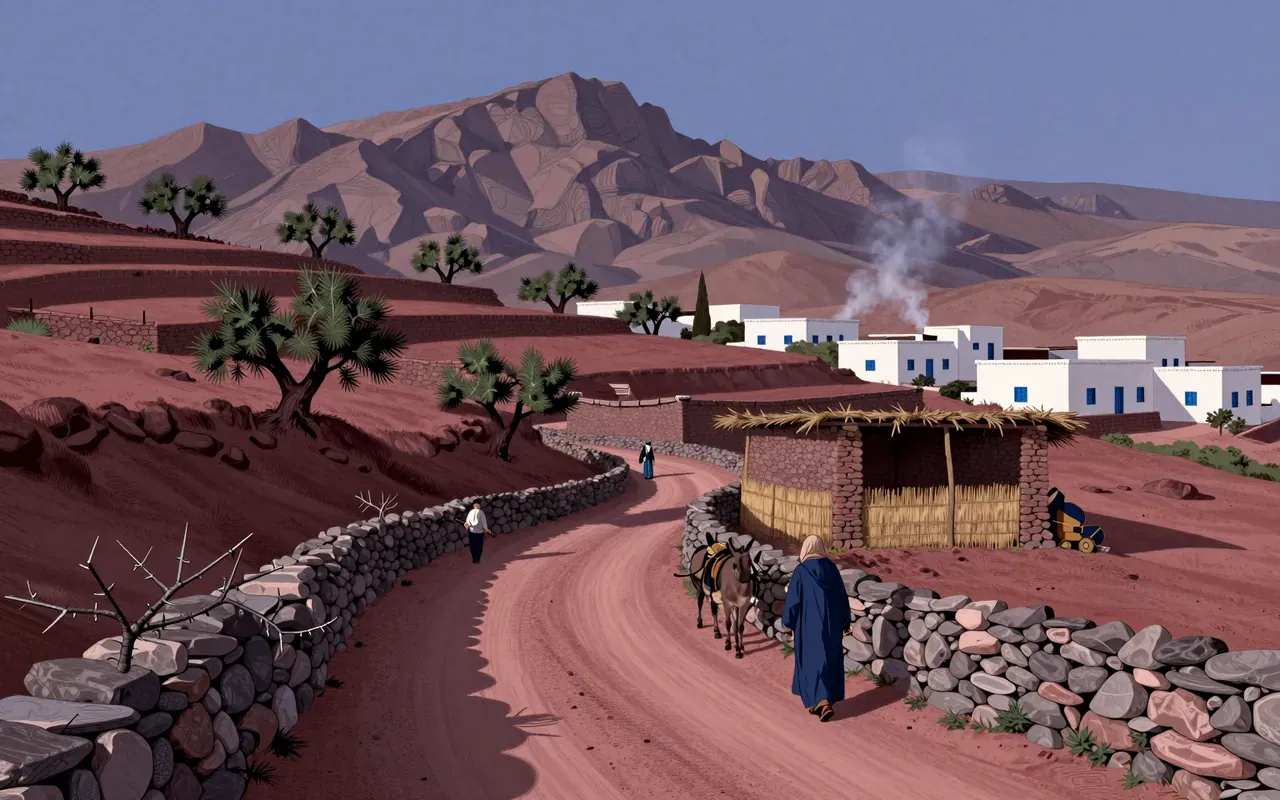
He was born in Sainte-Marie and went to primary school in Lamentin, where he and other students were forbidden from speaking Creole. His father managed an agricultural estate, a former slavery plantation converted into a colonial habitation, and on summer breaks Glissant went along and learned traditional stories from the sugar cane labourers. A scholarship in 1938 took him to the Lycée Schœlcher, where Aimé Césaire was a teacher. In 1946 he left for Paris, where he studied ethnography at the Musée de l’Homme and history and philosophy at the Sorbonne and received his PhD.
What it gets right
Glissant locates Caribbean identity in relationality, not origin. He rejects Africa-centred Négritude for a plural, archipelagic ‘Antillanité’ rooted in ‘the Other America’. His non-linear, hybrid style mirrors the fragmentation of colonial experience.
In Poetics of Relation he argues that the oppressed should be allowed to be opaque, not fully understood, and simply to exist as different. Opacity there means what cannot be translated or known, and he asks for difference to be accepted without measuring it against an “ideal scale”. The same book’s “The Open Boat” is a poem reflecting the slave ship experience. Scholars have applied the right to opacity in early childhood education and in the development of decolonial ethics.
Antillanité grew out of a critique of earlier schools of writing, specifically Césaire’s, which looked to Africa for its main source of identification. Glissant also traced parallels between the Creole Caribbean, Latin America and the plantation culture of the American South, most clearly in his study of William Faulkner. He was close to Félix Guattari and Gilles Deleuze, and Poetics of Relation expands on their theory of the rhizome. He is regarded as the pre-eminent critic of Négritude and a father-figure for the later Créolité writers, among them Chamoiseau and Raphaël Confiant.
What it gets wrong
He offers no institutional roadmap for autonomy. The Front Antillo-Guyanais pour l’Autonomie dissolved without achieving its separatist aims. His poetic-philosophical method resists translation into actionable politics.
Why it matters now
His critique of transparency as a colonial demand—and insistence on the right to opacity—resonates amid algorithmic surveillance, extractive data regimes, and universalising liberal frameworks that erase difference.
Is it worth your time
Yes—if you are reading Caribbean theory, decolonial philosophy, or French-language literature from the postcolonial margins. No—if you expect linear argument, policy prescriptions, or historical narrative.