What the thing is
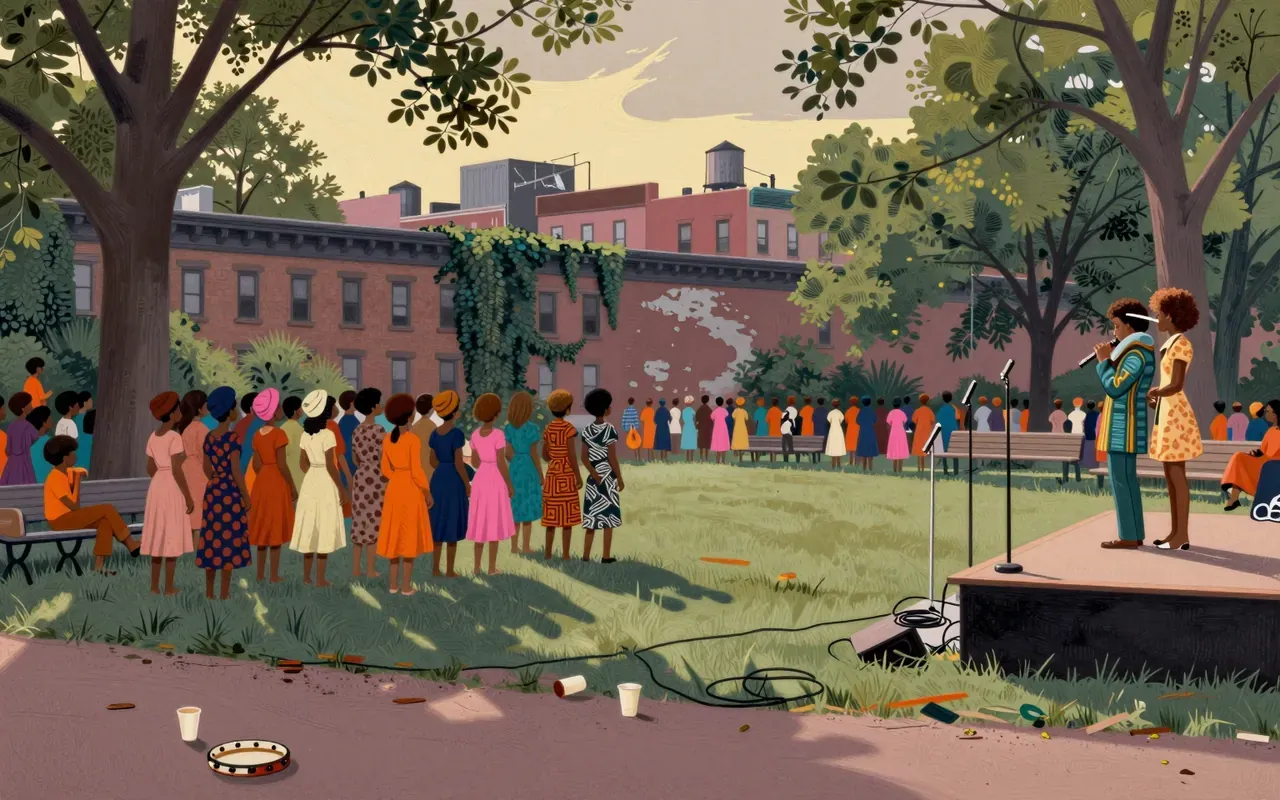
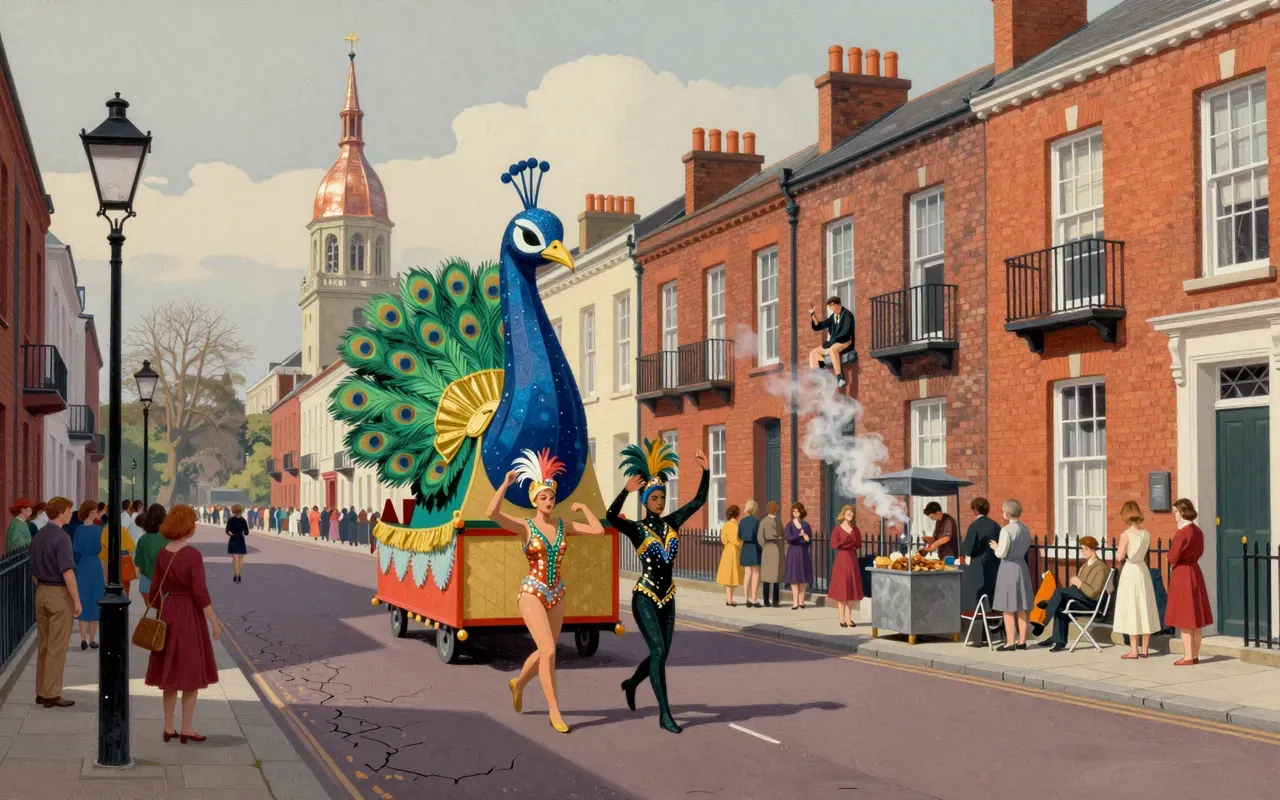
The Notting Hill Carnival is an annual street-based Caribbean Carnival in London. It runs over the August Bank Holiday weekend. It is structured across three days. It formally represents five carnival disciplines.
Where it came from
It emerged from two parallel impulses: a 1959 indoor Caribbean Carnival at St Pancras Town Hall, organised in response to the 1958 Notting Hill race riots; and a 1966 outdoor festival in Notting Hill, conceived by Rhaune Laslett as a London Free School-inspired event — one she launched without knowledge of the earlier indoor carnival.
What it gets right
It centres steelpan, masquerade, calypso, soca and sound systems as formal disciplines — not decoration. It gives children Saturday and Sunday space before the adult parade on Monday. It roots celebration in place: Notting Hill, London, over the August Bank Holiday weekend.
What it gets wrong
It misattributes origin. The 1966 outdoor event was not the first carnival. It followed an indoor Caribbean Carnival at St Pancras Town Hall on 30 January 1959 — a direct response to the 1958 Notting Hill race riots.
Why it matters now
It matters now because it shows how cultural infrastructure is built incrementally — by bands, organisers, sponsors and spectators — not declared into being. Its growth from 500 spectators in 1970 to two million today reflects neither organic spontaneity nor top-down policy, but sustained community stewardship.
Is it worth your time
Yes — if you want to understand how British Caribbean community leadership built a public ritual of resistance, joy and discipline from scratch.