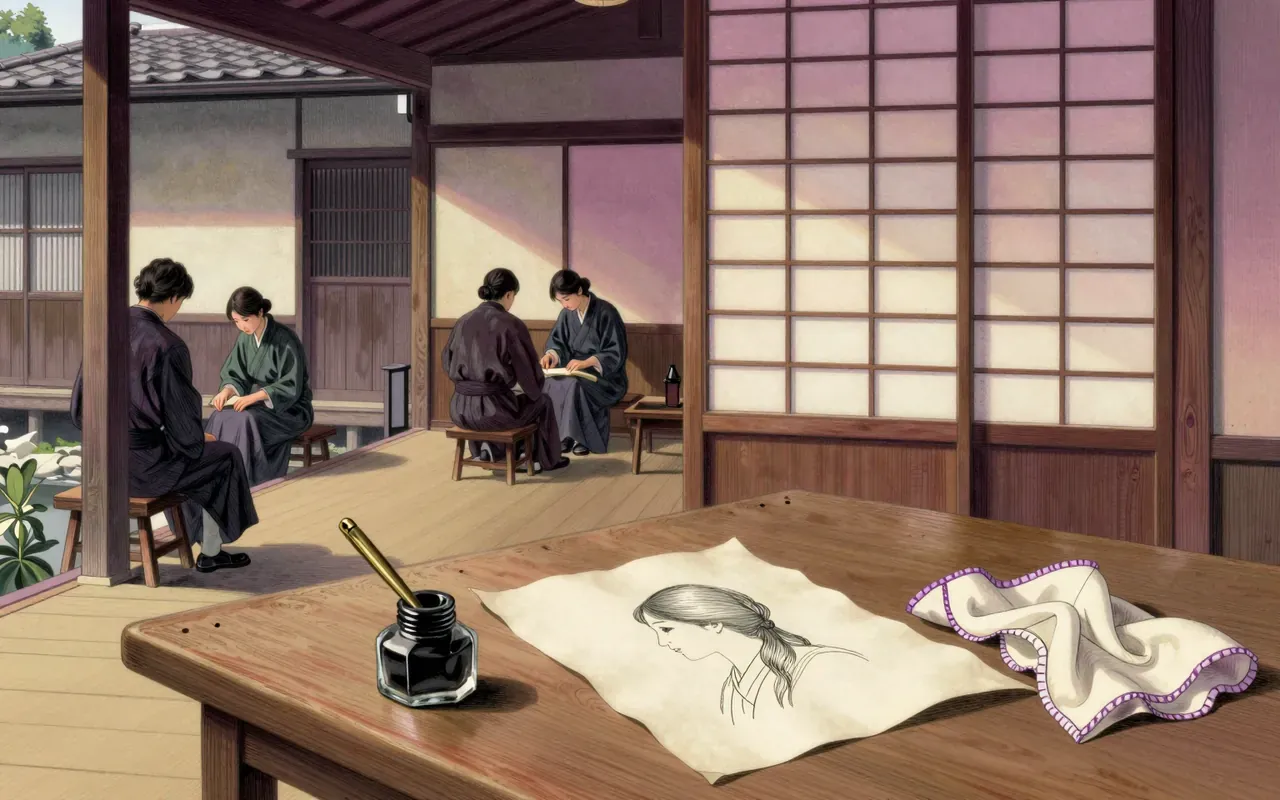
What the thing is
‘Taishō Roman’ is a retrospective label, not a historical movement. It names a 1970s scholarly and curatorial project that grouped Taishō-era romantic aesthetics under a single term.
Where it came from
It came from Keiko Ishikawa’s research at the Takehisa Yumeji Museum. The term emerged after Yumeji’s work was described as ‘romantic’ in 1974, then debuted publicly at the Suntory Museum of Art’s October 1978 exhibition.
What it gets right
It correctly identifies Yumeji Takehisa’s Senoo sheet music covers as a dominant visual language of the era. His 270+ covers and 24 lyrics drove commercial success. Romantic themes were legible then.
What it gets wrong
It misattributes agency to the Taishō era itself. ‘Taishō Roman’ did not exist as a self-conscious movement then. It was coined in the 1970s — first used publicly in October 1978 — to package nostalgia.
Why it matters now
It matters now because it reveals how cultural periods are rebranded decades later — not to recover lost meaning, but to serve museum programming, publishing, and nostalgic consumerism.
Is it worth your time
Yes — if you want to understand how Japanese cultural memory is retroactively assembled, not how Taishō-era people felt.