9:09in productionCh. 1 · What it is/ 9:09 · ceiling 15 min
Literature · Art
Manga
Manga isn’t Japanese comics—it’s a 12th-century art form that got renamed, repackaged, and rebranded three times before becoming a magazine industry.
Manga is a long-form visual narrative tradition rooted in Japanese pictorial art, formalised in the late 19th century, and institutionalised through magazines from 1874 onward. It was never exclusively for children. Its endurance lies in structural flexibility—not stylistic novelty.
Manga are Japanese comics or graphic novels—not translations, adaptations, or derivatives.
2:50
Where it began
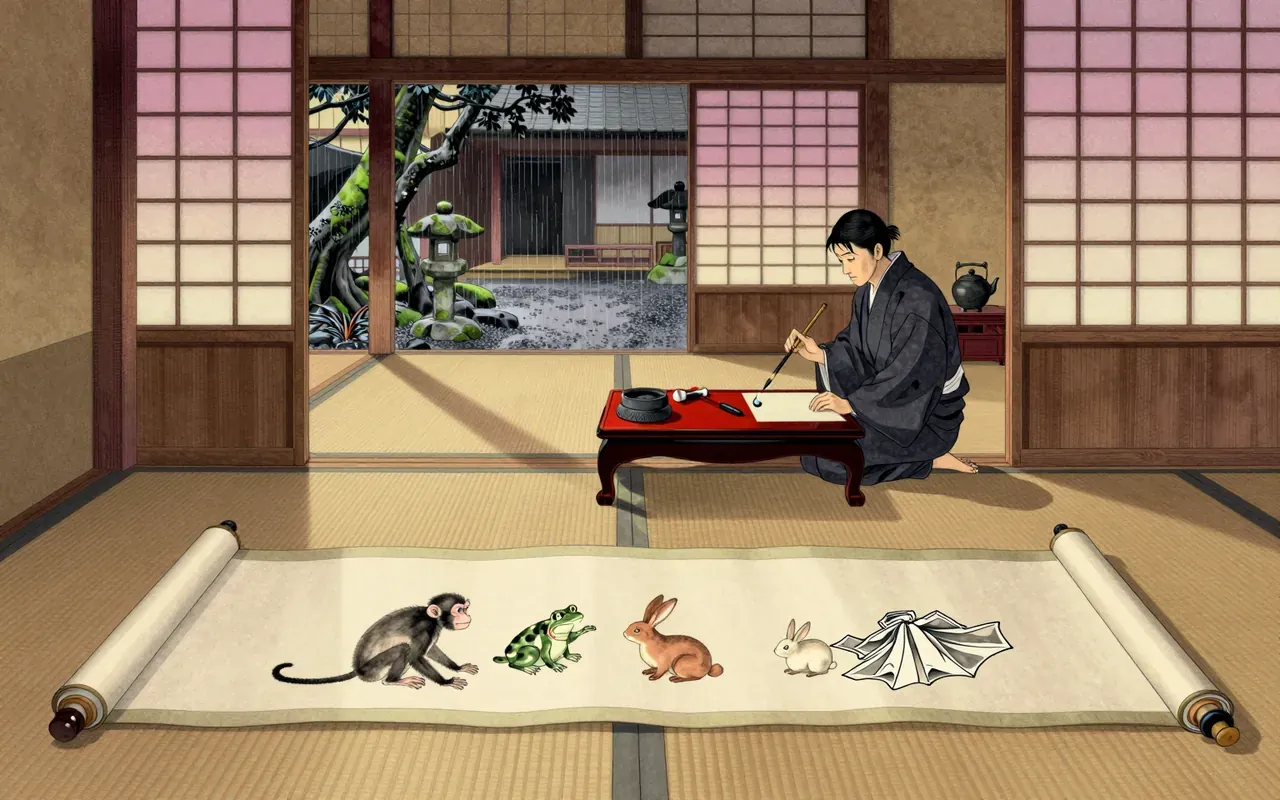
Its roots lie in 12th-century scrolls, not post-war innovation.
4:09
When it became 'manga'
The modern form and name were fixed only in the late 19th and early 20th centuries.
5:46
Who it was for
It reached everyone—children, adults, elders—before it reached the West.
Worth your time?
Yes. Study the whole thing.
4.5/ 5
What works
as a model for non-age-segregated publishing
as evidence of slow-formalisation in visual narrative
as a counterpoint to Western comic-book history
What does not
manga defined a decade
manga influenced named Western artists
manga started a movement
manga is timeless
Study it if
readers who need proof that mass media can be age-agnostic
designers studying sequential image systems
publishers examining pre-digital serial formats
Skip it if
those seeking origin myths about post-war Japanese identity
fans looking for validation of global fandom impact
students expecting a single founding moment or person
The written brief1 min read
What the thing is
Manga are Japanese comics or graphic novels.
Where it came from
They originated from 12th-century emakimono and Chōjū-jinbutsu-giga, developed further in the Edo period via Toba Ehon (1603–1867), acquired the term ‘manga’ in common usage from 1798, and were formalised as a distinct style in the late 19th century.
What it gets right
It treats comics as a native Japanese art form, not an import. It accommodates readers across age and background without segmentation.
What it gets wrong
It implies continuity from 12th-century scrolls to modern manga, but the style was formalised only in the late 19th century—and the word ‘manga’ meant something different before Rakuten Kitazawa redefined it.
Why it matters now
Because manga remains one of the few mass narrative forms built for lifelong readers—not just children or teens—and its structural logic still informs global visual storytelling.
Is it worth your time
Yes—if you want to understand how a visual narrative form shaped by scroll art, Edo-period books, and Meiji-era magazines became a mass medium for all ages in Japan.