What the thing is
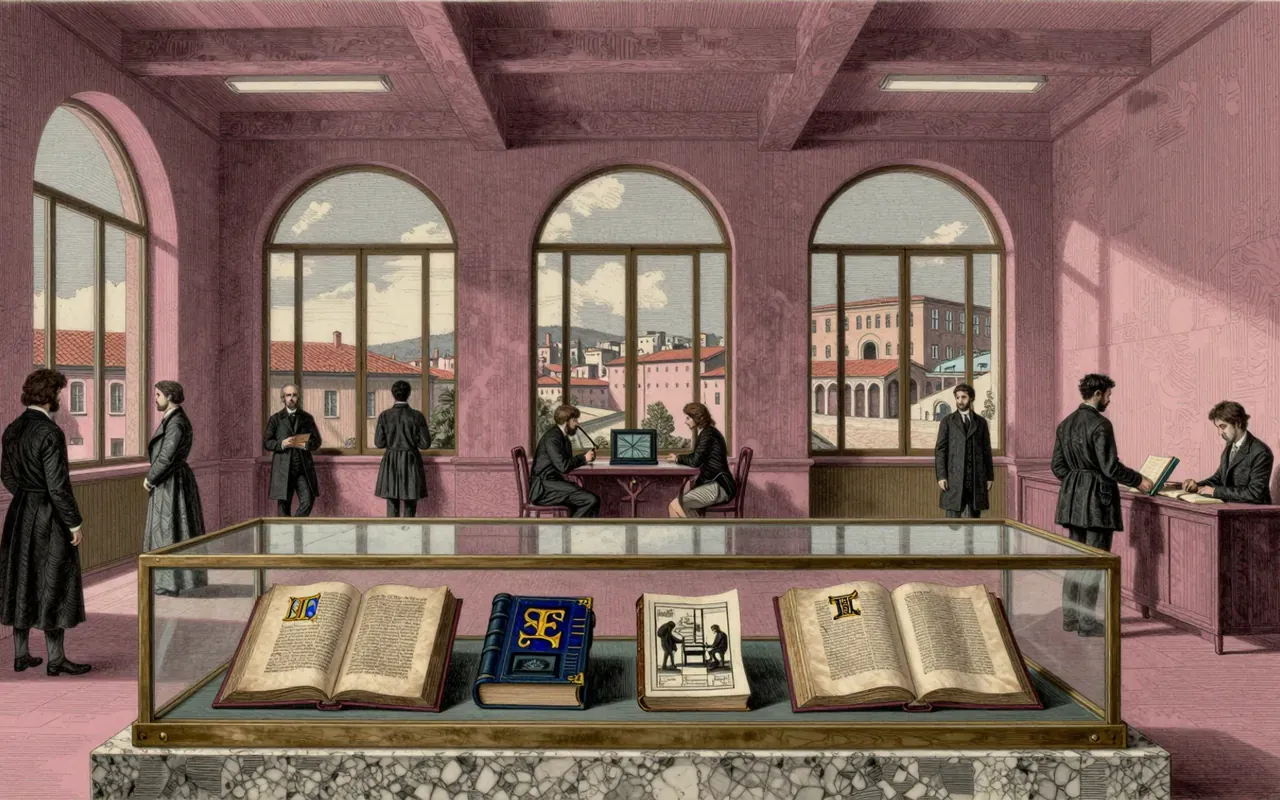
The Biblioteca Nazionale Centrale di Roma is one of Italy’s two central national libraries. It is a legal deposit library with a public mandate to collect, preserve, and provide access to Italian publishing output and select foreign scholarship on Italy.
Where it came from
It was founded in 1876—using the Jesuit Bibliotheca Secreta at the Collegio Romano as its foundational collection. It is not the original national library of unified Italy; that role was shared from inception with Florence’s counterpart.
What it gets right
It fulfils its statutory mission: collecting all Italian publications and key foreign works on Italy. Its holdings exceed seven million printed volumes, including 2,000 incunabula and 8,000 manuscripts. Its online catalogue has been live since 1990, and digitisation expands remote access via digitale.bnc.roma.sbn.it/tecadigitale.
What it gets wrong
Public access is heavily restricted. A Reader’s pass is mandatory. Bags, food, and drink must be deposited. Personal books require prior permission—even if not in the library’s catalogues. These rules limit spontaneous or casual use.
Why it matters now
It remains the most comprehensive institutional record of Italian print culture since unification. Its digitisation efforts and exhibition spaces—like the reconstructed studio of Elsa Morante—anchor contemporary literary discourse in material history.
Is it worth your time
Yes—if you need access to Italian publications or rare historical materials, and can navigate its strict protocols.