9:46in productionCh. 1 · Not from 1592/ 9:46 · ceiling 15 min
Society · Literature
Library of Trinity College Dublin
1592
It is not a shrine to Irish culture—it is a statutory machine that still compels publishers to hand over every book.
The Library of Trinity College Dublin is Ireland’s largest legal deposit library, with statutory rights over Irish and UK publications. Its Old Library (1712–1732) houses the Book of Kells (arrived 1661), the Brian Boru harp, and a copy of the 1916 Proclamation. It compels Irish publishers to deposit works free of charge—and uniquely extends that power to UK publications. A 2020 display case expanded public access to the Book of Kells, though only one volume appears at a time. Its origin story conflates institutional founding (1592) with architectural and functional reality (early 18th century).
The Library began in 1592, but the Old Library—the thing people recognise—was built over a century later.
2:55
Statutory, not voluntary
It forces Irish publishers to deposit books for free—and it is the only Irish library that can demand UK-published works too.
4:08
Three anchors, not one
It houses the Book of Kells (arrived 1661), the Brian Boru harp, and a copy of the 1916 Proclamation—all permanently on view.
5:48
Access is rotational, not total
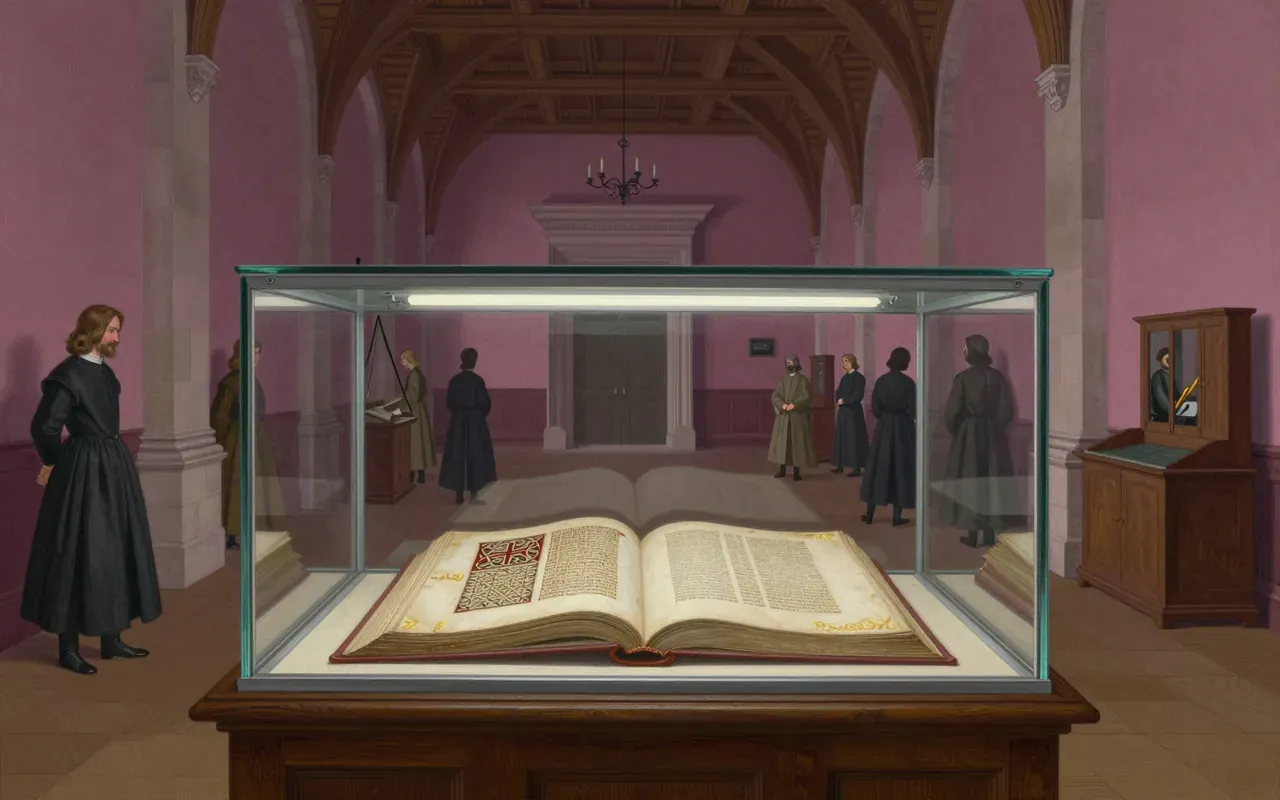
A 2020 display case made visible pages of the Book of Kells unseen for decades—but only one volume is shown at a time.
Worth your time?
Yes. Study the whole thing.
4/ 5
What works
as-infrastructure
as-statutory-power
as-display-platform
What does not
museums
national-identity
cultural-shrine
Study it if
publishers
librarians
historians-of-print
Skip it if
tourists-seekers-of-symbolism
students-assuming-continuous-history
The written brief1 min read
What the thing is
A legal deposit library: Ireland’s largest, with statutory rights over Irish and UK publications. Its Old Library is an 18th-century structure housing discrete historic objects.
Where it came from
It began with Trinity College’s founding in 1592—but its current physical and functional form emerged much later. The Old Library was built between 1712 and 1732. Its legal deposit status was established by statute, not charter.
What it gets right
It enforces legal deposit for all Irish publishers, free of charge. It is the only Irish library with UK legal deposit rights. It holds nationally significant objects in permanent, publicly accessible display.
What it gets wrong
It conflates custodianship with curation. The Book of Kells arrived in 1661—not with the college’s founding—and its display remains partial, even after the 2020 case. The Library presents itself as continuous since 1592, but the Old Library was built 120 years later.
Why it matters now
Because legal deposit libraries are vanishing under digital licensing. Trinity’s dual jurisdiction—Irish and UK—is now unique. Its ability to collect, preserve and display without negotiation sets a live precedent.
Is it worth your time
Yes—if you care about legal deposit as infrastructure, not spectacle. It is not a museum of Irish identity, but a working library with binding statutory power.