The New Exit for the Uffizi Gallery is a 1998 competition-winning architectural proposal by Arata Isozaki and Andrea Maffei. It was intended as a steel-and-stone loggia to expand the museum and activate Piazza Castellani. Though formally responsive to Florence’s Renaissance grammar and urban logic, its construction has been stalled since 2003 due to archaeological discoveries and preservation constraints. It exists only as a plan, a model, and a precedent for what cannot be built.
It was not the first attempt—and never the only idea—for a new Uffizi exit.
2:46
A Florentine Syntax
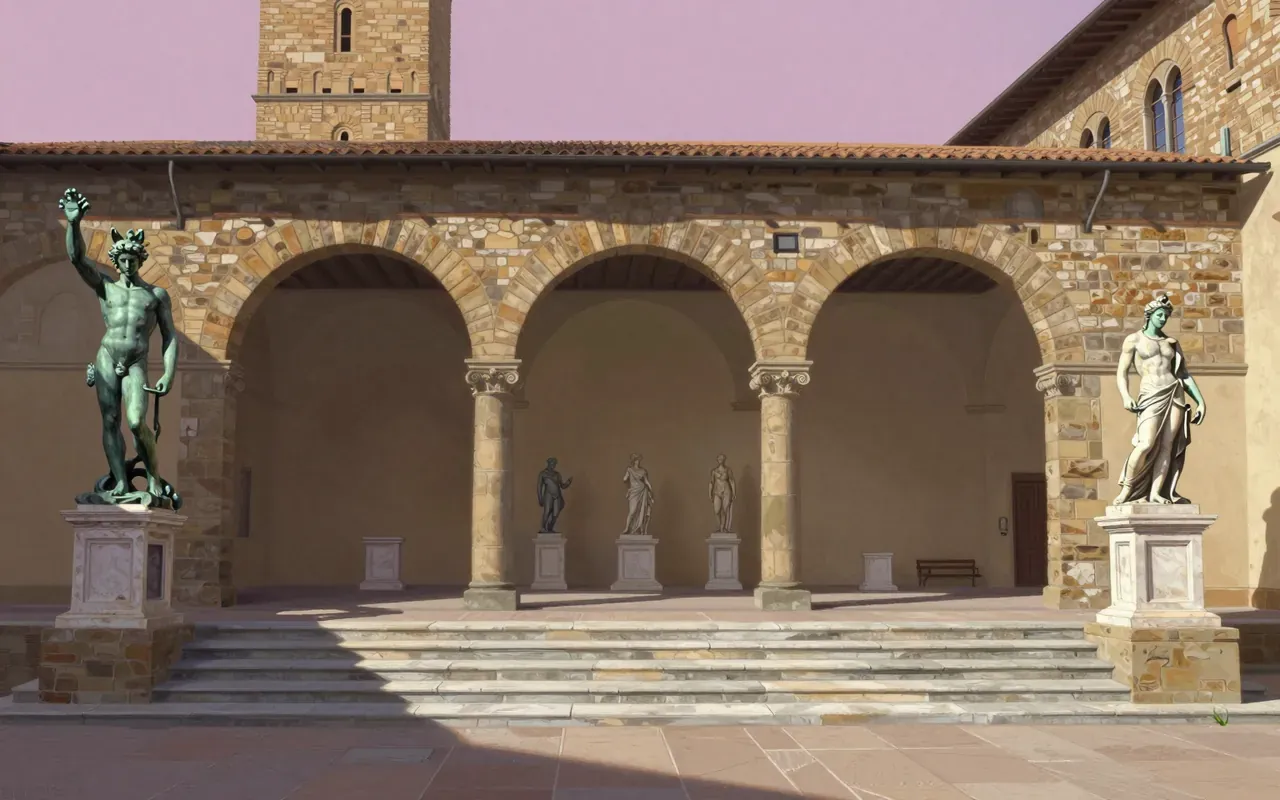
Its form and materials were deliberately calibrated to Florence’s architectural language—not as homage, but as dialogue.
4:36
Light on the Ground
It sought urban flow, not monumentality—designed to lift lightly over archaeology, not excavate it.
6:20
Stalled Since 2003
It has been stalled since 2003—not delayed, not paused, but suspended in bureaucratic and material contradiction.
Worth your time?
No. The brief is enough.
2.5/ 5
What works
as a proposal
as a critique of urban intervention
What does not
influence
define
displace
reach
Study it if
architects
Florentine planners
museum administrators
Skip it if
general public
tourists
artists
The written brief1 min read
What the thing is
A 1998 competition-winning proposal for a steel-and-stone loggia to serve as a new exit for the Uffizi Gallery.
Where it came from
It emerged from a closed international design competition launched in 1998, part of the Grandi Uffizi renovation initiative. A prior 1990 exit proposal by Giovanni Michelucci—a glass prism—had already failed to proceed.
What it gets right
It correctly identifies Piazza Castellani as a neglected urban space needing activation. Its fan-shaped form responds to the site’s slant. Its material palette—steel, pietra serena, glass—honours Florentine tradition without pastiche.
What it gets wrong
It assumes a loggia echoing the Loggia dei Lanzi can meaningfully intervene in a city governed by archaeological constraints and layered preservation law. Its ‘limited connection to the ground’ ignored the very stratigraphy that halted it.
Why it matters now
It matters only as a case study in the gap between architectural ambition and civic reality: a symbol of how Florence’s physical palimpsest resists even well-intentioned interventions.
Is it worth your time
No. It is a stalled architectural proposal with no built presence, no public function, and no contemporary impact.