What the thing is
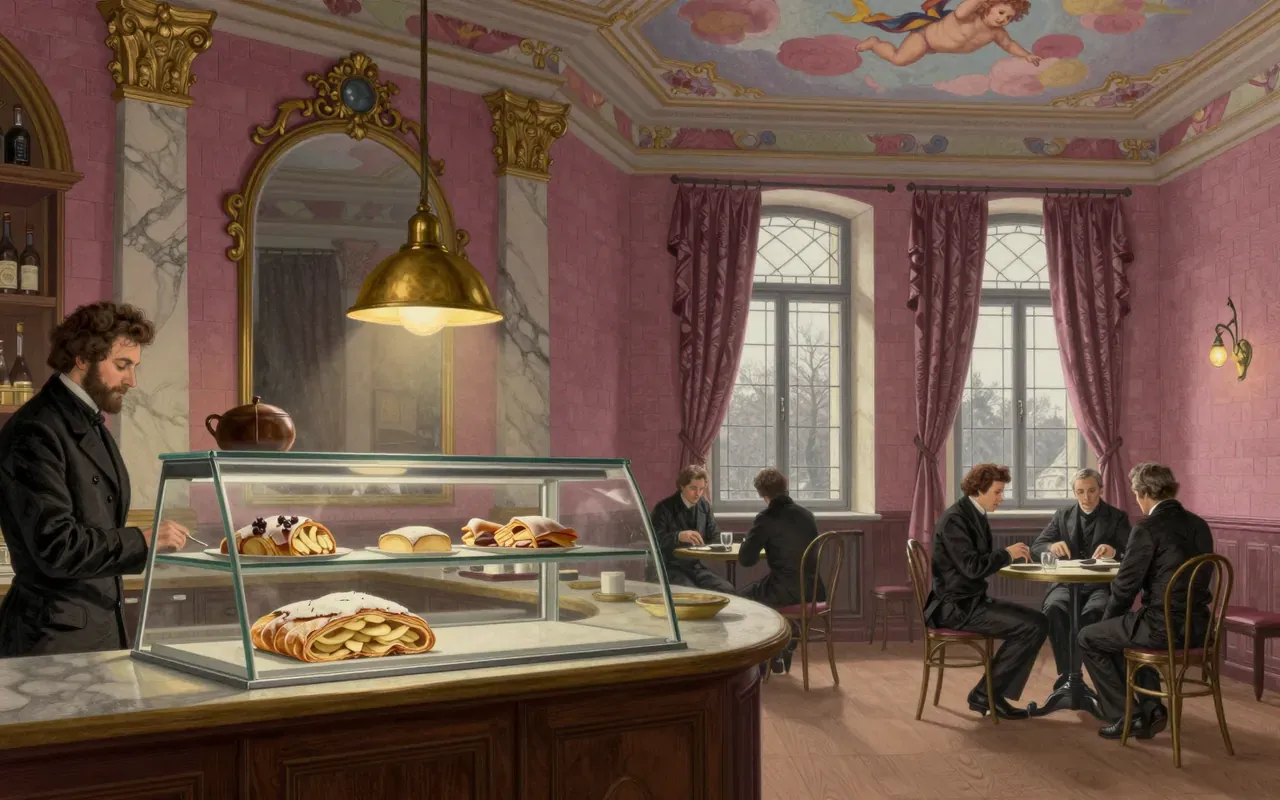
A codified public institution: marble-topped tables, Thonet chairs, historicist interiors, international newspapers, slow coffee service, and permission to linger indefinitely.
Where it came from
It began in Vienna in 1685 with Johannes Theodat’s licensed coffee house—confirmed by record—not Jerzy Kulczycki’s legend—and matured across the 19th and early 20th centuries as a hub for writers, scientists, and politicians.
What it gets right
It delivers prolonged access to time, space, newspapers, and conversation for the price of one coffee. It sustains ritual without hierarchy. It treats reading as a social act.
What it gets wrong
It never achieved the democracy it promised. Its golden age excluded women as regular patrons, erased Jewish owners and patrons through Holocaust and expulsions, and relied on imperial privilege across the Austro-Hungarian Empire.
Why it matters now
It offers a working model of attention infrastructure in an age of algorithmic interruption—where time is sold, not granted, and where public space is measured in dwell time, not transaction count.
Is it worth your time
Yes—if you want to understand how public space, time, and information were institutionally designed for sustained attention, not consumption.