What the thing is
Nashville is a U.S. state capital and Tennessee’s largest city.
Where it came from
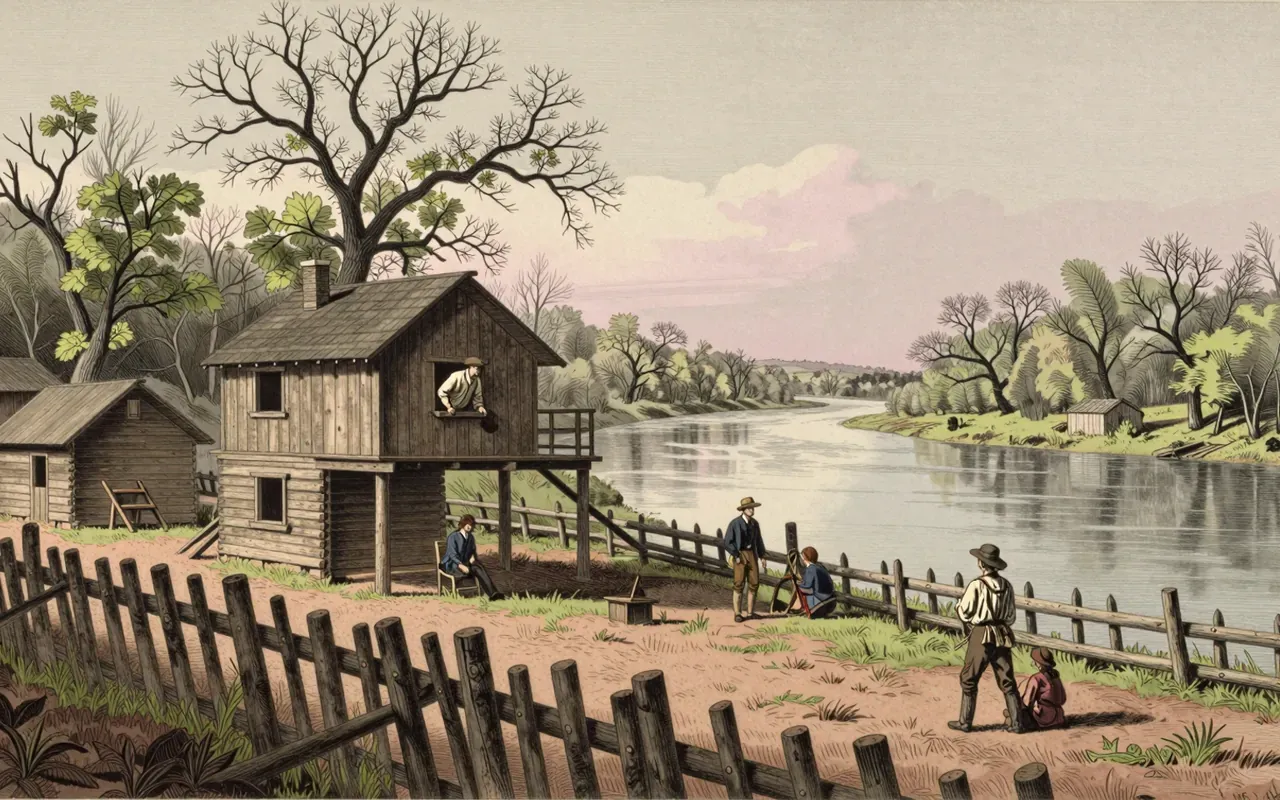
It began as Fort Nashborough, constructed in 1779 by a party led by James Robertson and John Donelson on French Lick, in territory then administered by North Carolina. The North Carolina General Assembly chartered Nashville on April 19, 1784. In 1843 the city was named the permanent capital of Tennessee.
What it gets right
It names the precise origin point: a fortified settlement built by Robertson and Donelson in 1779 on land then governed by North Carolina.
What it gets wrong
It implies continuity between Fort Nashborough and modern Nashville—but the 1779 site was abandoned, reoccupied, and rechartered; there is no unbroken civic line.
Why it matters now
Because its foundational date (1779) is routinely cited as proof of deep Southern roots—yet that date precedes Tennessee’s existence, its statehood, and even its territorial status by over a decade. The radio announcer David Cobb coined the moniker “Music City” in a 1950 WSM broadcast. Since 1963, Nashville has had a consolidated city-county government.
Is it worth your time
Yes—if you care how American cities encode colonial expansion, state formation, and later cultural branding in their founding facts.