12:27in productionCh. 1 · Origin/ 12:27 · ceiling 15 min
Cities
Lagos
1472
Lagos is not a city that works—it’s a city that endures, despite having no unified government, broken infrastructure, and rising seas.
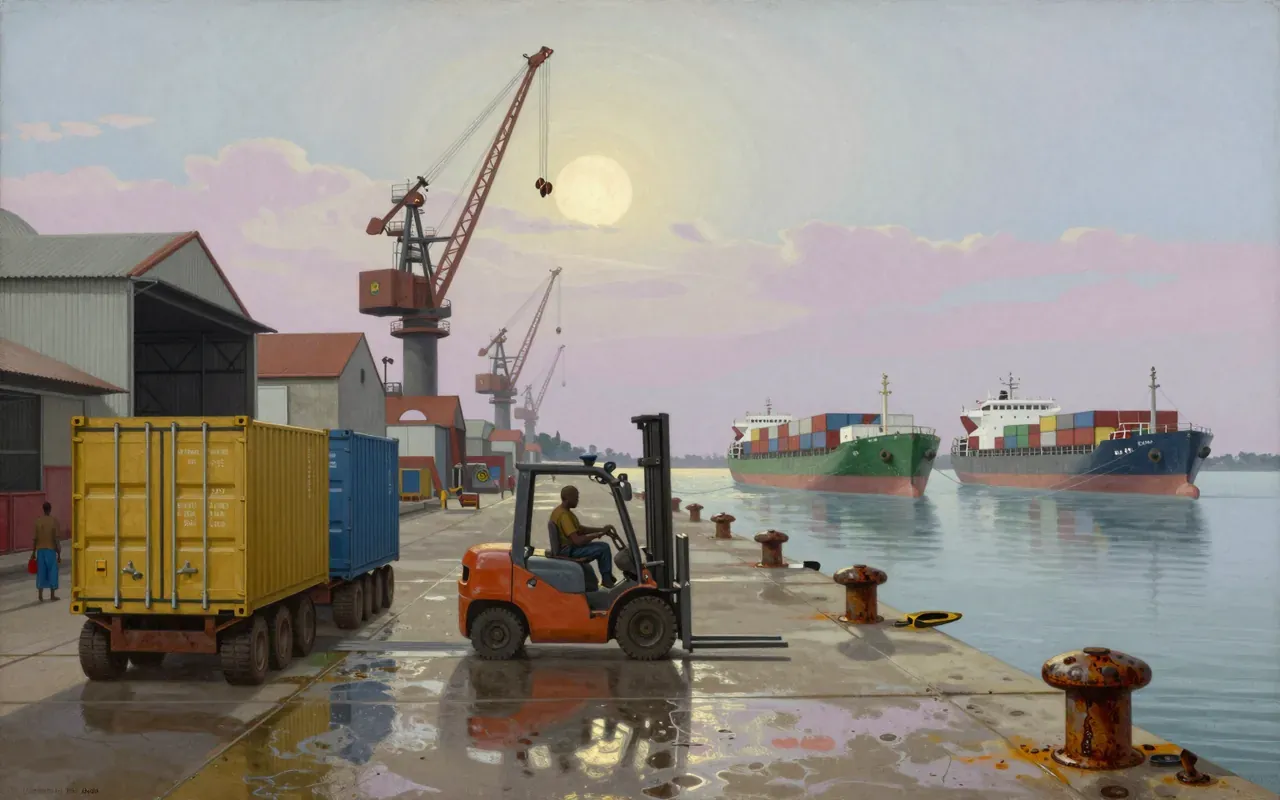
Lagos is a large metropolitan port city in southwestern Nigeria, founded by the Awori people in the 15th century. It served as Nigeria’s national capital until December 1991. Today, it is the largest city in Nigeria and the most populous urban area in Africa—17–21 million people as of November 2025. It functions as the leading financial centre of West and Central Africa, hosts the Nigerian Exchange Group, and is home to five of Africa’s seven tech unicorns. Administratively fragmented across 16 Local Government Areas, it has no city-wide administration. Geographically split by Lagos Lagoon and exposed by barrier islands, it faces acute climate risks. Its economy runs on extremes: formal finance and tech coexist with a 5.5-million-person informal sector, while infrastructural deficits in water, sewage, waste and transport persist.
Lagos began as an Awori settlement in the 15th century—not a colonial foundation, but an indigenous port city on Yoruba land.
1:52
Capital Shift
It was Nigeria’s capital until 1991, then displaced—but retained economic dominance while losing political centrality.
3:20
Economic Core
It is West and Central Africa’s financial core, home to the Nigerian Exchange Group and five of Africa’s seven tech unicorns.
4:51
Scale Without Structure
It is Africa’s most populous urban area—17–21 million people—with no city-wide administration across its 16 Local Government Areas.
6:27
Geography Under Pressure
Its geography—Island and Mainland divided by Lagos Lagoon, shielded from the Atlantic only by barrier islands—makes it acutely vulnerable to sea-level rise and subsidence.
8:05
Contradiction as Infrastructure
It runs on extremes: extreme wealth disparity, a 5.5-million-person informal sector, and world-class rail transit alongside chronic water and waste failures.
Worth your time?
Yes. Study the whole thing.
4.5/ 5
What works
as a real-time laboratory for post-national urbanism
as evidence that economic gravity does not require administrative unity
as a counterpoint to Eurocentric models of city governance
What does not
culture/art
culture/arts
culture/ideas
culture/literature
Study it if
urban planners
economists
climate policy analysts
Skip it if
historians of pre-15th-century West Africa
architectural preservationists
film scholars
The written brief1 min read
What the thing is
Lagos is a large metropolitan port city in southwestern Nigeria.
Where it came from
Lagos emerged as a home to the Awori people—a Yoruba subgroup—in the 15th century.
What it gets right
It anchors West and Central Africa’s finance sector. It hosts the Nigerian Exchange Group. It concentrates five of Africa’s seven tech unicorns. It sustains a massive informal economy—5.5 million people employed outside formal structures.
What it gets wrong
It lacks a single city-wide administration across its 16 Local Government Areas. It suffers acute infrastructural deficits in water, sewage, waste management and road congestion. Its geography—divided by Lagos Lagoon and exposed by barrier islands—intensifies vulnerability to sea-level rise and subsidence.
Why it matters now
With 17–21 million residents as of November 2025, it is the most populous urban area in Africa—and a test case for urban survival where formal planning fails but economic density persists.
Is it worth your time
Yes—if you need to understand how megacities function without central governance, or how finance, tech and informality coexist under climate stress.