culturebriefs
8:58in productionCh. 1 · Geography First/ 8:58 · ceiling 15 min
Cities · Ideas

Rive Gauche

The Rive Gauche isn’t a movement—it’s a riverbank that got renamed by its most famous tenants.

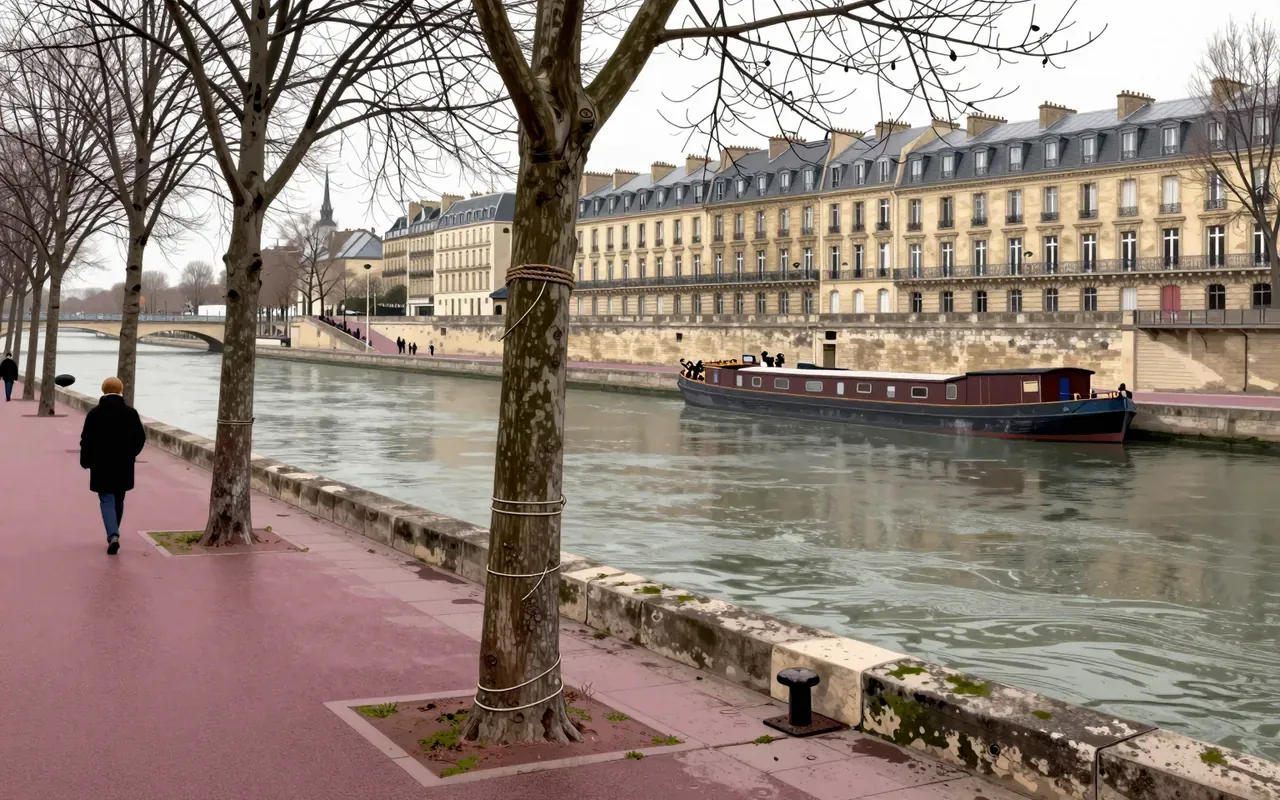
The Rive Gauche is the southern bank of the Seine in Paris. It became associated with intellectual life in the 12th century after Peter Abélard settled there, helping establish the Latin Quarter near the University of Paris. Later, Montparnasse on the same bank drew writers, artists and philosophers—including Colette, Gertrude Stein, Jean-Paul Sartre and Pablo Picasso. The phrase now implies bohemianism and creativity—but that meaning was attached long after the place existed, and obscures its layered, contested history.

Chapters & takeaways4
  1. 0:54
    Geography First

    The Rive Gauche is defined by direction, not ideology: south bank, left when facing downstream.

  2. 2:27
    Abélard’s Bank

    Its first intellectual identity came from medieval scholars—not artists—centred on the Latin Quarter.

  3. 3:58
    Montparnasse Was a Crossroads, Not a Club

    Montparnasse hosted dozens of writers and artists—but they were not a single scene, nor were they all French or even resident long-term.

  4. 5:00
    A Label, Not a Logic

    ‘Bohemianism’ and ‘counterculture’ are later associations grafted onto the place, not conditions it produced.

Worth your time?

Yes. Study the whole thing.

4/ 5
What works
  • names a real geography
  • anchors two distinct historical concentrations of thought
  • exposes the gap between location and legend
What does not
  • define a movement
  • influence a named artist
  • displace another cultural centre
Study it if
  • readers who track how places become symbols
  • students of urban intellectual history
Skip it if
  • those seeking origin stories of modern art
  • readers looking for a manifesto or aesthetic programme
The written brief1 min read

What the thing is

The Rive Gauche is the southern bank of the Seine in Paris.

Where it came from

It emerged as a named district in the 12th century when Peter Abélard moved from Île de la Cité to the Left Bank, where he and his followers established scholarly Latin usage near what became the University of Paris.

What it gets right

It names a real geography—the southern bank of the Seine—and anchors it to two durable concentrations of intellectual life: the Latin Quarter’s medieval scholasticism and Montparnasse’s 20th-century artistic community.

What it gets wrong

It flattens centuries of uneven development into a single bohemian brand. The Rive Gauche was never one scene. It housed clerics and café owners, students and exiles, all at once—never a unified counterculture.

Why it matters now

It remains a shorthand for place-based intellectual identity—but its endurance reveals how quickly geography gets rewritten as ethos, often erasing hierarchy, exclusion, and contingency.

Is it worth your time

Yes—if you care about how places accrue meaning through layered human presence, not myth.
Same beat · Cities4 of 34
9:16
CoworkingCoworking is a shared office space arrangement for workers from different companies and the self-employed. It started in San Francisco in 2005 with Brad Neuberg, building on 1990s European hacker spaces. Between 2006 and 2015, the number of spaces and available seats roughly doubled each year. Early adopters included France (2008), the US (2008), Kenya (2010), and Nigeria (2011). It targets freelancers, remote workers, SMEs, and niche groups—and distinguishes itself from incubators and executive suites through its social, collaborative, and cooperative ethos.
8:59
GrindhouseGrindhouse was a theatre model, not a film genre. It ran in cities. It charged more as the day wore on. It showed low-merit films first, not second. It vanished by the mid-1990s—not because it failed, but because television, home video and urban decay made its economics untenable.
9:08
La Scala1778La Scala is an opera house in Milan, Italy, inaugurated on 3 August 1778 on the site of the deconsecrated church of Santa Maria della Scala, following the 1776 fire that destroyed its predecessor, the Teatro Regio Ducale. Built over two years by Pietro Marliani, Pietro Nosetti, and Antonio and Giuseppe Fe, it originally held ~3,000 seats and was illuminated by oil lamps—later replaced by gas and then electric lights in 1883. Renovated in 1907 (to 1,987 seats), damaged in WWII (1943) and rebuilt by 1946, and extensively modernized from 2002–2004, La Scala remains a leading global institution for opera and ballet, housing resident ensembles and an academy, and maintaining traditions such as opening its season on 7 December, Saint Ambrose’s Day.
12:27
Lagos1472Lagos is a large metropolitan port city in southwestern Nigeria, founded by the Awori people in the 15th century. It served as Nigeria’s national capital until December 1991. Today, it is the largest city in Nigeria and the most populous urban area in Africa—17–21 million people as of November 2025. It functions as the leading financial centre of West and Central Africa, hosts the Nigerian Exchange Group, and is home to five of Africa’s seven tech unicorns. Administratively fragmented across 16 Local Government Areas, it has no city-wide administration. Geographically split by Lagos Lagoon and exposed by barrier islands, it faces acute climate risks. Its economy runs on extremes: formal finance and tech coexist with a 5.5-million-person informal sector, while infrastructural deficits in water, sewage, waste and transport persist.
Up next in Culture

LGBTQ movements

· 9:04

LGBTQ movements did not begin at Stonewall. They began in Berlin in 1897—and have spent 127 years arguing over what 'equal rights' actually means.

9:04