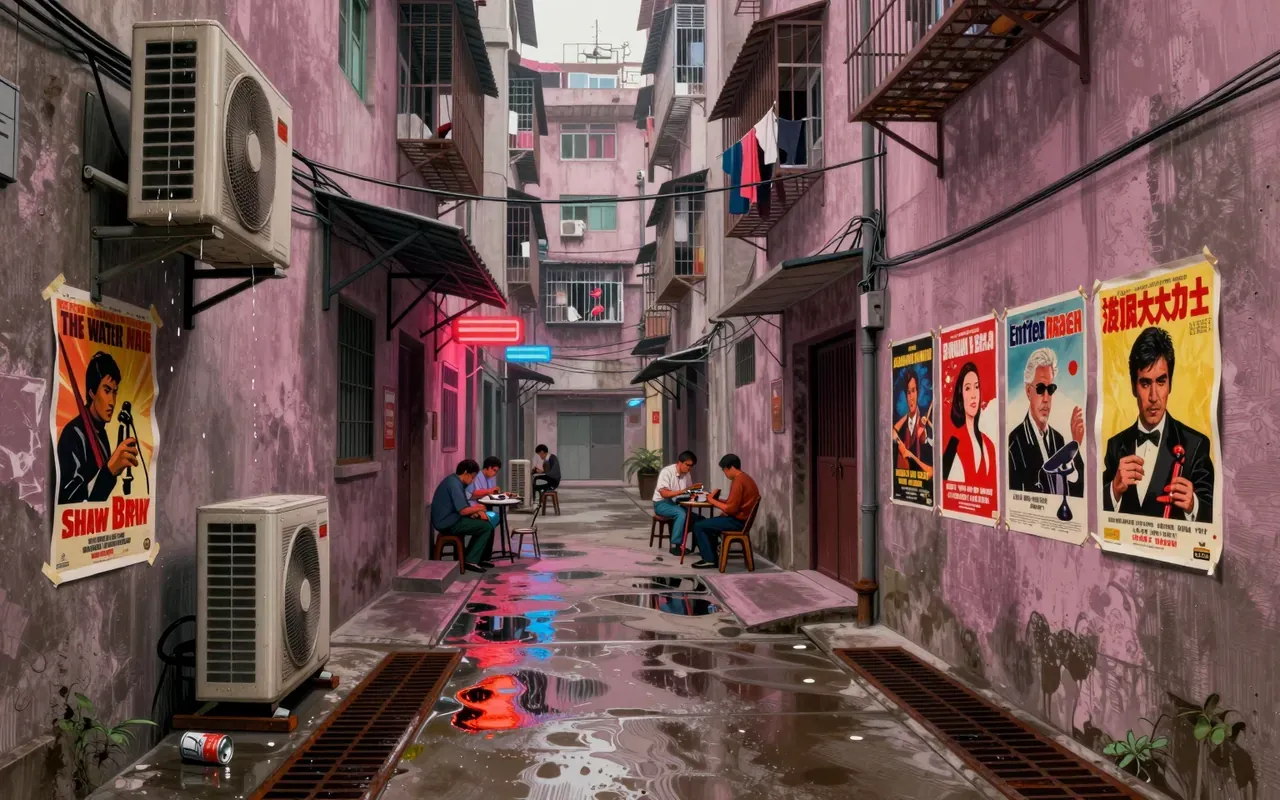
Hong Kong cinema is one of the three major threads in Chinese-language cinema, alongside the cinema of China and the cinema of Taiwan. As a former Crown colony, Hong Kong had a greater degree of artistic freedom than mainland China and Taiwan and developed into a filmmaking hub for the Chinese-speaking world (including its worldwide diaspora). Hong Kong became the leading film exporter in East Asia in the 1960s, with its film output surpassing Hollywood, and remained the second-largest exporter (after Hollywood) from the 1970s through the 1990s. It also had the third-largest film industry in the world during the 1980s and 1990s, behind Hollywood and Bollywood. Unlike many film industries, Hong Kong has enjoyed little or no direct government support, through either subsidies or import quotas. Despite an industry crisis starting in the mid-1990s and Hong Kong's transfer to Chinese sovereignty in July 1997, Hong Kong film has retained much of its distinctive identity and continues to play a prominent part on the world cinema stage. In the West, Hong Kong's vigorous pop cinema (especially Hong Kong action cinema) has long had a strong cult following, which is now a part of the cultural mainstream, widely available and imitated. Economically, the film industry together with the value added of cultural and creative industries represents 5 per cent of Hong Kong's economy.
Hong Kong cinema is one of three pillars of Chinese-language cinema—and its autonomy came from colonial status, not policy.
2:10
Export Engine
It out-exported Hollywood in the 1960s and ranked second globally for three decades—despite zero subsidies or import quotas.
3:07
No Quotas, No Subsidies
No government support meant no safety net—and no state-imposed aesthetic.
4:21
Post-1997 Persistence
Its identity survived 1997—and its action films went from cult to mainstream in the West.
5:49
Five Per Cent
Film plus cultural and creative industries make up 5% of Hong Kong’s economy—yet remain structurally underfunded.
2 more chaptersFewer chapters
Worth your time?
Yes. Study the whole thing.
4/ 5
What works
action-cinema
category-iii-films
new-wave-hong-kong
What does not
film-music
screenwriting
special-effects
Study it if
filmmakers
film-students
media-policy-analysts
Skip it if
casual-viewers-seeking-escapism
Who should study it, and who should skipHide who it is for
The written brief1 min read
What the thing is
Hong Kong cinema is one of the three major threads in Chinese-language cinema—commercially driven, structurally distinct, and artistically autonomous by default, not design.
Where it came from
It emerged in 1909 from Chinese opera traditions, flourished as a regional hub due to Hong Kong’s status as a former Crown colony with greater artistic freedom than mainland China or Taiwan.
What it gets right
It treats film as industry first: low budgets, dubbing workflows, star pipelines from opera and TV, and genre pragmatism built Hong Kong’s export dominance.
What it gets wrong
It assumes artistic autonomy was absolute. The document notes tightening censorship post-1997—but offers no detail on how that reshaped content or self-censorship in practice.
Why it matters now
Because its survival through crisis—mid-1990s contraction, 1997 sovereignty transfer, and tightened censorship—shows how identity persists without state support or ideological alignment.
Is it worth your time
Yes—if you want to understand how commercial pressure, linguistic duality and zero state subsidy shaped a globally imitated cinema.