10:25in productionCh. 1 · What It Is/ 10:25 · ceiling 15 min
Movements & scenes · Society
Direct-to-video
Direct-to-video wasn’t a fallback—it was the first platform where creators chose the audience over the gatekeeper.
Direct-to-video was never just a release method. It was a structural alternative: a way to make, fund, and distribute outside the theatrical hierarchy. It launched in 1984, scaled with animation in 1992, and became industrial in 1994. It empowered independents and auteurs—but also entrenched assumptions about value, visibility, and legitimacy. Its legacy lives in every streaming algorithm that decides what gets promoted, and what gets buried.
It is defined by absence—not by where it goes, but by where it skips.
3:08
How It Took Off
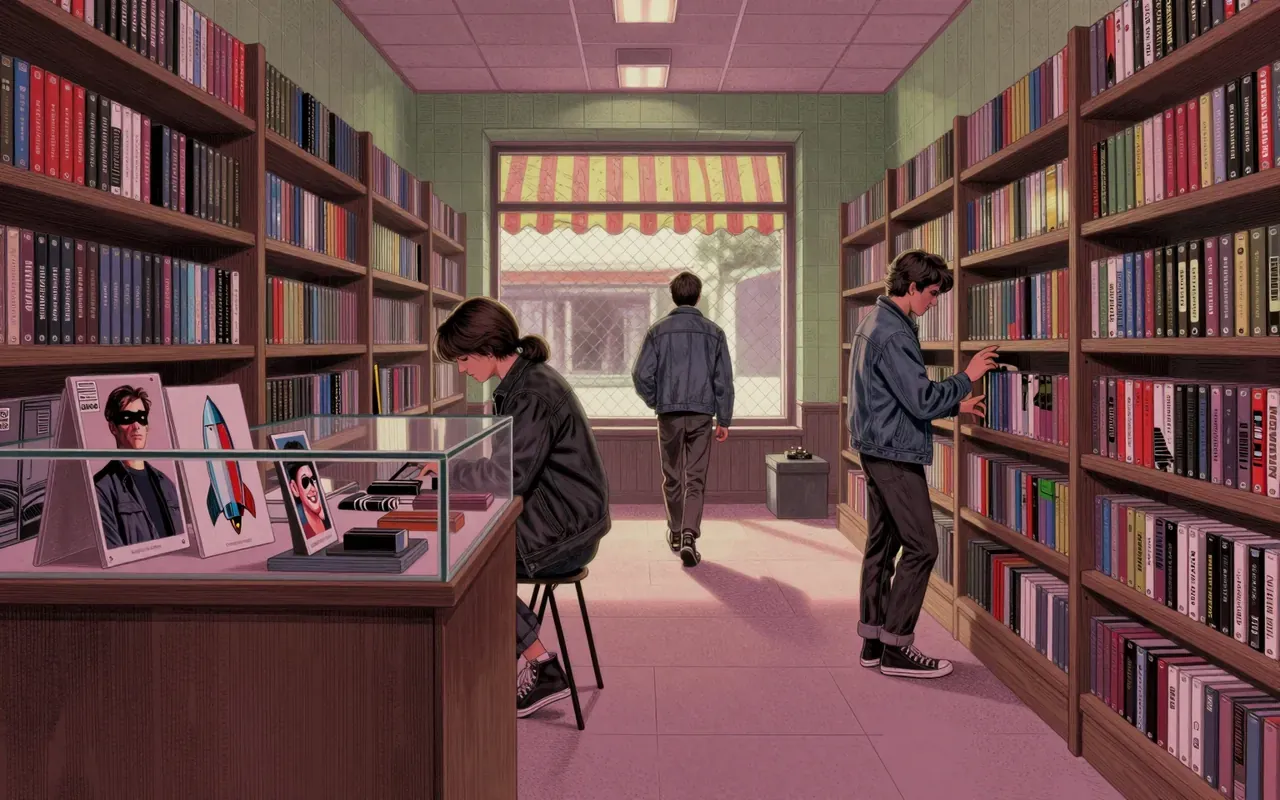
It started with one low-budget comedy, then animated sequels, then studio franchises—all built for tape, not theatres.
4:38
Where It Paid Off
It turned profit from niches: genre films with stars, indie animations, and Japan’s uncensored OVAs.
6:07
Why It Got a Bad Name
Critics dismissed it as ‘lesser’—not because of quality, but because it skipped the prestige pipeline.
Worth your time?
Yes. Study the whole thing.
4/ 5
What works
E. Nick: A Legend in His Own Mind (1984)
Tiny Toon Adventures: How I Spent My Vacation (1992)
The Return of Jafar
The Land Before Time II: The Great Valley Adventure
What does not
film-music
screenwriting
editing
special-effects
Study it if
filmmakers
media-historians
platform-designers
Skip it if
casual-viewers
streaming-subscribers
The written brief1 min read
What the thing is
Direct-to-video is a distribution strategy: releasing films or TV series on home video formats without prior theatrical or television premiere.
Where it came from
It began with E. Nick: A Legend in His Own Mind (1984). It gained traction in US animation with Tiny Toon Adventures: How I Spent My Vacation (1992). It exploded in 1994 with Disney’s The Return of Jafar and Universal’s The Land Before Time II—both conceived solely for video.
What it gets right
It gave independent filmmakers and niche genres a direct route to audiences. It funded animation sequels that studios refused to greenlight theatrically. It let Japanese creators bypass broadcast censors and develop distinct voices.
What it gets wrong
It cemented the idea that video-only meant lesser—especially for sequels and prequels stripped of theatrical ambition. That bias persists in criticism and archive curation.
Why it matters now
Streaming revived its logic: bypassing gatekeepers to reach audiences directly. But unlike streaming, direct-to-video was physical, regional, and financially legible—making its economics and audience relationships unusually transparent.
Is it worth your time
Yes—if you care how distribution shapes what gets made, who makes it, and who sees it. It is not a relic. It is a precedent.