culturebriefs
9:10in productionCh. 1 · Who showed up/ 9:10 · ceiling 15 min
Movements & scenes · Ideas

New Hollywood

New Hollywood didn’t reinvent cinema — it re-routed authority from studios to directors, and turned realism into a grammar.

New Hollywood was a period in American film history from the mid-1960s to the early 1980s defined by a generational shift in filmmaking authority toward directors, formal deviation from classical narrative norms, adoption of location shooting and new film technologies to achieve realism, and use of editing for artistic expression — all enabled by the collapse of the studio system, the end of the Hays Code, and demographic shifts toward youth audiences.

Chapters & takeaways4
  1. 1:04
    Who showed up

    It was a generational takeover — not a manifesto, but a cohort stepping into vacancies left by collapsing systems.

  2. 2:32
    Who got the pen

    Directors became authors — not just executors — and studios became financiers, not gatekeepers.

  3. 4:15
    Where they shot

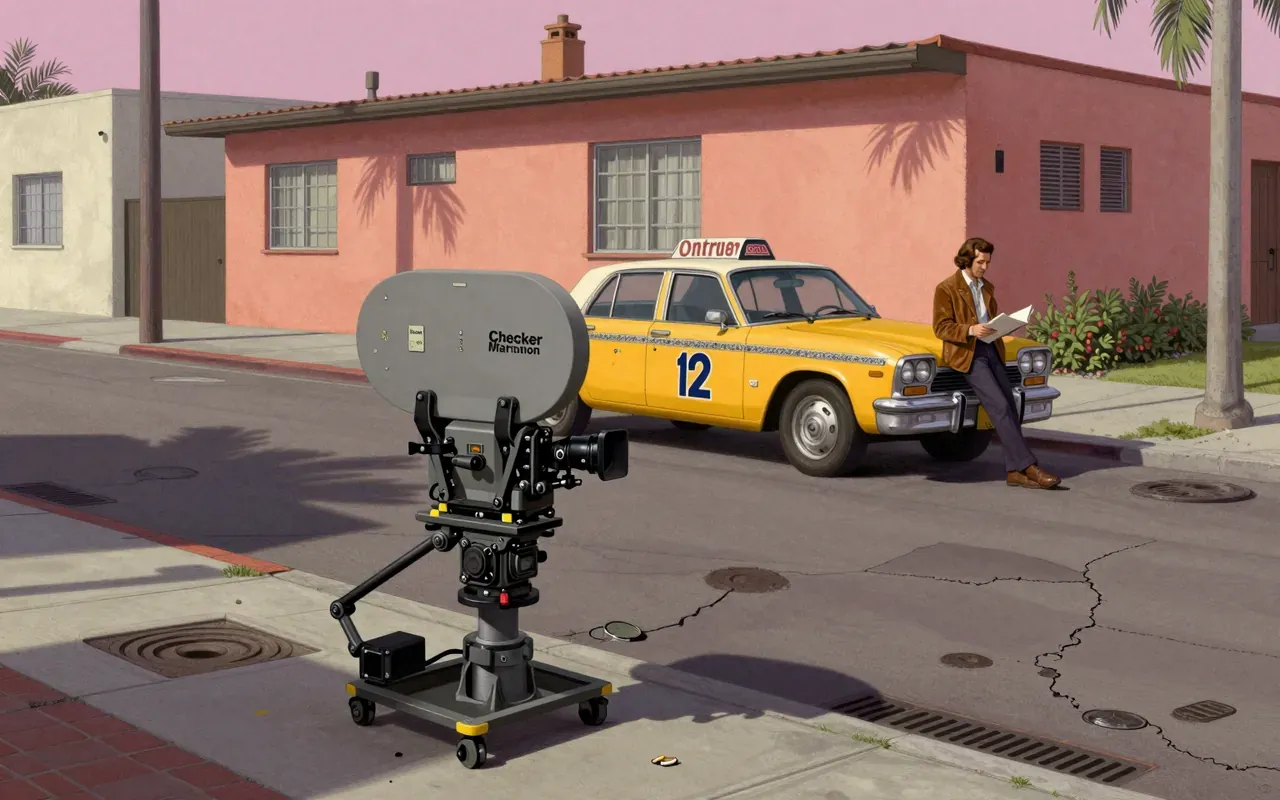
    Panaflex and Steadicam didn’t just change where films were shot — they changed what ‘real’ looked like on screen.

  4. 5:31
    How they cut

    Editing stopped serving plot alone — it started shaping tone, rhythm and meaning, borrowing from European art film and classical masters alike.

Worth your time?

Yes. Study the whole thing.

4/ 5
What works
  • authorship
  • realism
  • technology
What does not
  • influence
  • define
  • start
  • launch
Study it if
  • film students
  • critics
  • producers
Skip it if
  • casual viewers unfamiliar with 1970s American film
The written brief1 min read

What the thing is

New Hollywood was a period in American film history from the mid-1960s to the early 1980s. It was defined by director-led authorship, formal experimentation, location-based realism, and editing used for artistic effect.

Where it came from

It emerged when a new generation of American filmmakers rose to prominence. Their work was made possible by the collapse of the studio system, the end of the Hays Code, and demographic shifts toward youth audiences.

What it gets right

It correctly identifies a real shift in authorship: directors replaced studios as the primary creative force. It captures how new tools enabled naturalism — Panaflex and Steadicam made exterior 35mm filming practical. It shows editing moved beyond continuity into artistic expression.

What it gets wrong

It overstates deviation as unique. The claim that New Hollywood films deviate from classical narrative norms ‘more than Hollywood films from any other era or movement’ is absolute and unqualified — yet no comparative data or counterexamples are provided. It treats a cohort’s stylistic choices as a unified movement rather than a loose convergence.

Why it matters now

It matters now because its legacy — the director-as-auteur model, the expectation of realism in mainstream film, the normalisation of location shooting — still structures how Hollywood produces and markets films. Its assumptions about audience taste and creative control remain operative.

Is it worth your time

Yes — if you want to understand how American film shifted from studio control to director-driven storytelling, and why realism, location shooting and expressive editing became central to mainstream cinema.
Same beat · Movements & scenes4 of 139
9:24
Adbusters1989Adbusters is a Canadian anti-capitalist activist foundation founded in 1989 in Vancouver by Kalle Lasn and Bill Schmalz. It uses culture jamming—especially subvertisements and campaigns like Buy Nothing Day and Occupy Wall Street—to challenge consumerism and corporate control of information flows. It publishes the reader-supported, advertising-free Adbusters magazine. Its founding premise is that citizens lack equal access to information flows compared to corporations.
8:14
Crypto-anarchyCrypto-anarchy is a movement, not a prophecy. It uses cryptography to enable anonymity, free speech and trade. It emerged from Timothy C. May’s 1988 manifesto and the 1992 cypherpunk founding. It gets right that code can constrain power—but wrong that it will collapse the state. A 2022 study confirms its political irrelevance—yet its architecture remains vital for Internet-native dissent.
8:35
Culture jammingCulture jamming is anti-consumerist protest that uses détournement to subvert corporate media forms. It began in the 1950s, was named in 1984 by Don Joyce of Negativland, and draws directly from the Letterist and Situationist Internationals. It correctly identifies media as a tool of perception-shaping and conformity-enforcement. But it wrongly assumes irony alone can resist power—and ignores how quickly its tactics are absorbed into branding. It matters now because corporate language has colonised every channel of attention, yet its methods remain stuck in the logic of the 1980s media landscape. It is worth your time if you want to understand why resistance so often looks like the thing it opposes.
8:55
Free software movementThe free software movement is a precise, principled refusal of proprietary control over software. It began in 1983 with GNU and institutionalised in 1985 with the FSF. It gets right that software freedom must be guaranteed—not merely permitted. It gets wrong that licence compliance alone secures user agency. Its relevance has grown as software becomes infrastructural—but its methods remain rooted in individual refusal and collective development.
Up next in Culture

New wave of new wave

1992 · 8:59

A scene invented by NME writers to sell an EP—and buried by Britpop before it could breathe.

8:59