culturebriefs
10:19in productionCh. 1 · Roots, not runway/ 10:19 · ceiling 15 min
Art · Society

Audrey Hepburn

Audrey Hepburn wasn’t discovered — she was assembled, across three countries and a war.

Audrey Hepburn was a British actress and humanitarian whose career emerged from methodical training in ballet and theatre, not innate stardom.

Chapters & takeaways4
  1. 1:25
    Roots, not runway

    Her aristocratic background and early mobility across Belgium, Britain and the Netherlands shaped her linguistic fluency and transnational sensibility — but not her craft.

  2. 3:17
    Dancing for the resistance

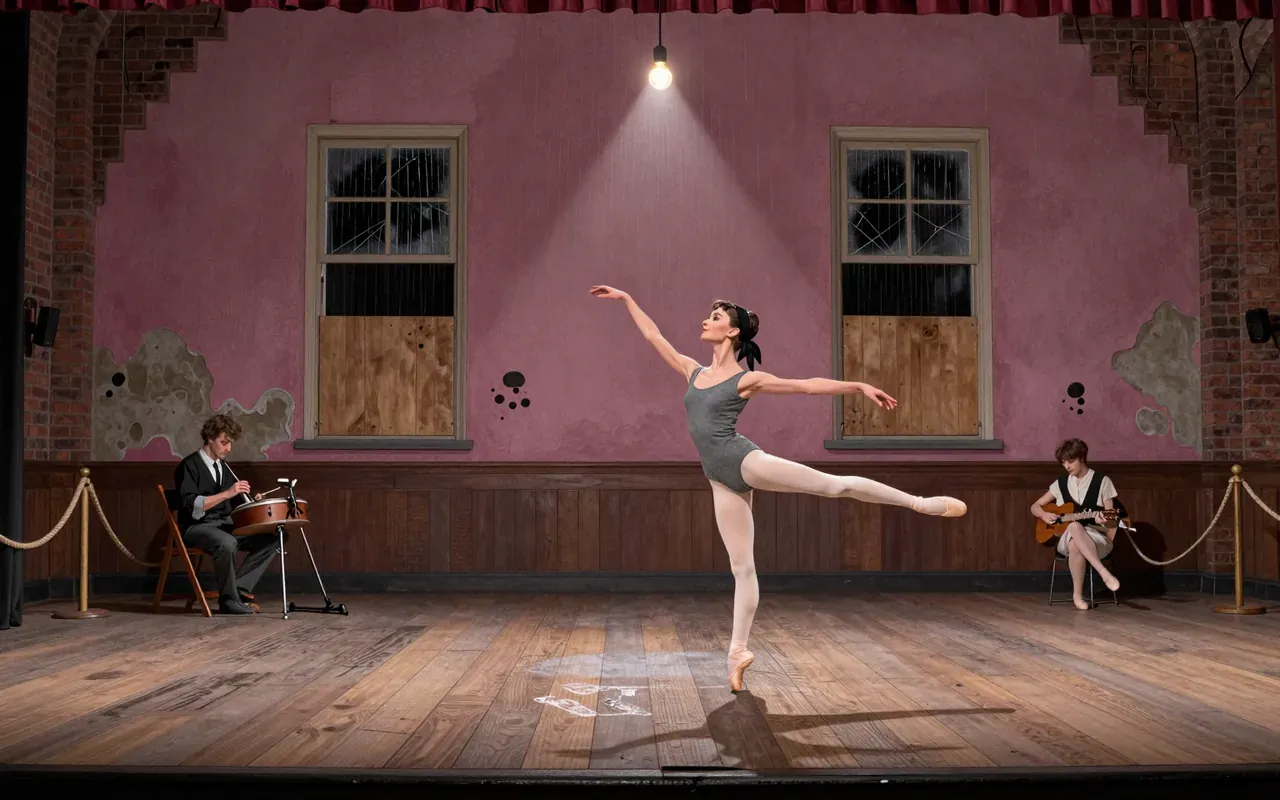
    Ballet training during occupation was not aesthetic preparation — it was resistance work, performed under duress.

  3. 4:38
    Apprenticeship first

    Her stage and screen debut came only after formal instruction with Gaskell and Rambert, then years as a West End chorus girl — not overnight casting.

  4. 6:24
    Actress and advocate, not icon and afterthought

    She was a British actress and humanitarian — two roles pursued in parallel, not sequentially.

Worth your time?

Yes. Study the whole thing.

4/ 5
What works
  • as a corrective to mythologised stardom
  • as evidence of disciplined cross-border artistic development
  • as documentation of cultural labour during wartime
What does not
  • fashion
  • film-music
  • cinematography
Study it if
  • people studying pre-Hollywood career paths
  • those examining art-making under occupation
  • readers questioning how celebrity is constructed
Skip it if
  • fans seeking costume or style analysis
  • viewers expecting filmography deep dives
  • audiences looking for romanticised origin stories
The written brief1 min read

What the thing is

Audrey Hepburn was a British actress and humanitarian whose career emerged from methodical training in ballet and theatre, not innate stardom.

Where it came from

She was born into an aristocratic family in Ixelles, Brussels; attended boarding school in Kent (1936–1939); returned to the Netherlands at the outbreak of the Second World War; studied ballet at the Arnhem Conservatory during the war; performed to fund the resistance by 1944; then trained with Sonia Gaskell (1945–1948) and Marie Rambert before working as a chorus girl in West End musicals and making minor film appearances.

What it gets right

It establishes Hepburn as a British actress and humanitarian who trained rigorously in ballet across the Netherlands and London, performed for the Dutch resistance by 1944, and entered film only after years of stage apprenticeship.

What it gets wrong

It implies aristocratic lineage and multilingualism were defining artistic assets — but the material does not link them to her craft, influence, or reception. They are biographical facts, not functional drivers.

Why it matters now

Her path counters today’s instant-celebrity narratives: she spent over a decade honing craft across borders and regimes before Roman Holiday — a timeline that recalibrates how we value preparation, displacement, and quiet discipline in cultural production.

Is it worth your time

Yes — if you want to understand how a disciplined, multilingual European artist built global stardom from wartime ballet and West End chorus work, not Hollywood mythmaking.

Same beat · Art4 of 98
9:47
Guerrilla artGuerrilla art is a UK-born street art movement defined by inseparability from environment, psychological effect over permanence, and roots in post-graffiti practice. Its earliest documented instance was in 1978 in Wellington, New Zealand. It has no external boundary between image and environment. The surface is fundamental to meaning. It depends on urban dynamics to avoid becoming 'art for art's sake'. Production focuses on cause and effect, not the material piece. It aims to produce an effect in local residents’ minds—not necessarily meaningful art in itself.
8:10
Arte Povera1967Arte Povera was a materially specific, institutionally embedded, temporally tight Italian art movement. It used perishable matter and physical forces to stage critique—but never left the gallery circuit it claimed to dismantle.
9:01
Cubism1907Cubism is an early-20th-century avant-garde art movement that began in Paris and flourished across the 1910s and 1920s. It involved analyzing, breaking up, and reassembling subjects in abstract form, depicting them from multiple perspectives rather than a single viewpoint. A major innovation was the introduction of collage in 1912. The movement is historically divided into phases—Analytic Cubism (1910–1912) and Synthetic Cubism (1912–1914)—each marked by distinct formal strategies. It emerged from collaborative work in the studios of Picasso and Braque and rapidly expanded to include numerous artists across painting, sculpture, architecture, literature, and design.
9:18
Fauvism1904Fauvism was a short-lived French painting movement (1905–1908) that treated colour as architecture and brushwork as velocity. It fused Post-Impressionist intensity with Neo-Impressionist technique and Tahitian colour fields—and was shaped by the visual experience of driving. Its strength was its sensory immediacy; its limit was its lack of structural logic beyond intensity. It matters now because it shows how technology alters perception before theory catches up.
Up next in Culture

Baguette

· 10:54

The baguette is not tradition—it’s a 1920 legal fiction dressed as folklore.

10:54