culturebriefs
Saved
Art · Society

Street art

Street art isn’t rebellion—it’s a negotiation over who gets to speak where, and on what terms.

Worth your time?3.5/5Yes.Study the whole thing.What works, what does not, who it is for ↓
8:46in productionCh. 1 · Not on the wall. Of the wall./ 8:46 · ceiling 15 min
4 chapters · 8:46Ceiling 15:00

The brief is written and checked. The video joins this page when it is cut.4 chapters · 1 min read · 8:46 planned

Read the brief

Street art is public visibility made intentional. It began in New York and Paris in the 1960s. It succeeds when it reaches disenfranchised artists and provokes thought through clarity—not shock. It fails when permission flattens its critique into decor. It matters now because public space is disappearing behind gates, algorithms, and leases. Worth your time if you want to understand how speech migrates when institutions close their doors.

Chapters & takeaways4
  1. 1:09
    Not on the wall. Of the wall.

    Street art is defined by public visibility—and by designing *for* the street, not just *on* it.

  2. 2:34
    Messaging over mayhem

    It trades graffiti’s illegibility for clarity—but at the cost of its defiance.

  3. 3:53
    The licence to speak

    Permission changes everything: from vandalism to commission, protest to PR.

  4. 5:28
    A voice, not a style

    Guerrilla art and smart vandalism are tools for the disenfranchised—not aesthetics.

Worth your time?

Yes. Study the whole thing.

3.5/ 5
What works
  • public visibility
  • thought provocation
  • broad audience access
  • integration of public space into conception
What does not
  • influence
  • define
  • launch
  • start
Study it if
  • disenfranchised artists
  • general audience
Skip it if
  • gallery collectors
  • institutional curators
The written brief1 min read

What the thing is

Street art is visual art made in public locations for public visibility. It is defined by intent, messaging, and integration of public space into conception—not just location.

Where it came from

It emerged from New York City’s graffiti boom and Paris in the 1960s. It evolved from defiant graffiti into a more commercial form distinguished by messaging.

What it gets right

It gives disenfranchised artists broad audience access. It makes purpose evident to provoke thought, not just rejection. It treats public space as part of conception—not just a surface.

What it gets wrong

Its commercial drift blurs the line it claims to draw from graffiti. Permission-based production risks sanitising dissent into decoration.

Why it matters now

Public space is increasingly privatised, surveilled and algorithmically curated. Street art remains one of few unmediated channels for direct, spatially grounded communication.

Is it worth your time

Yes—if you care about who controls public space, and how messages reach people who never enter galleries.
Same beat · Art4 of 103
9:50
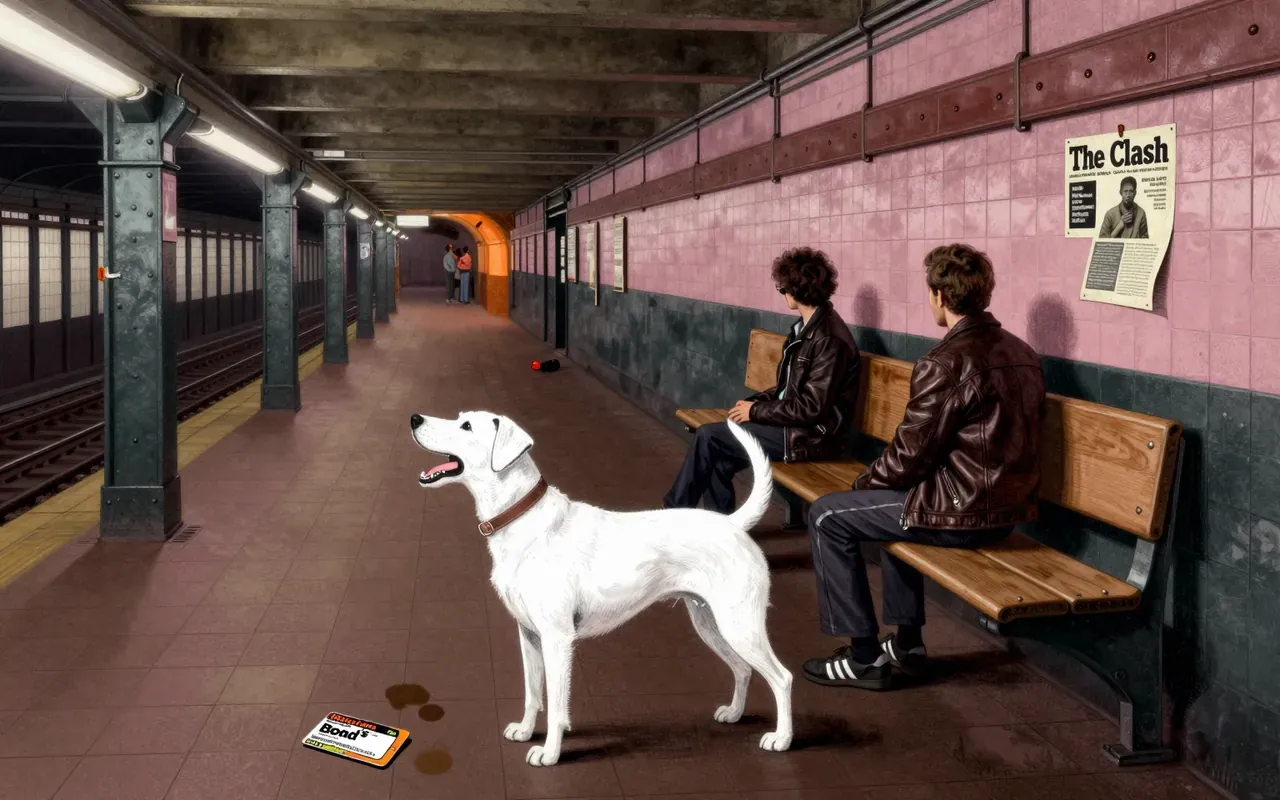
Keith HaringKeith Haring’s work was a direct response to the conditions of New York City’s public transport system in the early 1980s. It used minimal means—white chalk, black paper, repetition—to build recognition, urgency, and reach. It succeeded where institutional art failed: it entered daily life without invitation. But its clarity came with limits—it did not invite interpretation, only recognition. It spoke *to* people, not *with* them.
9:42
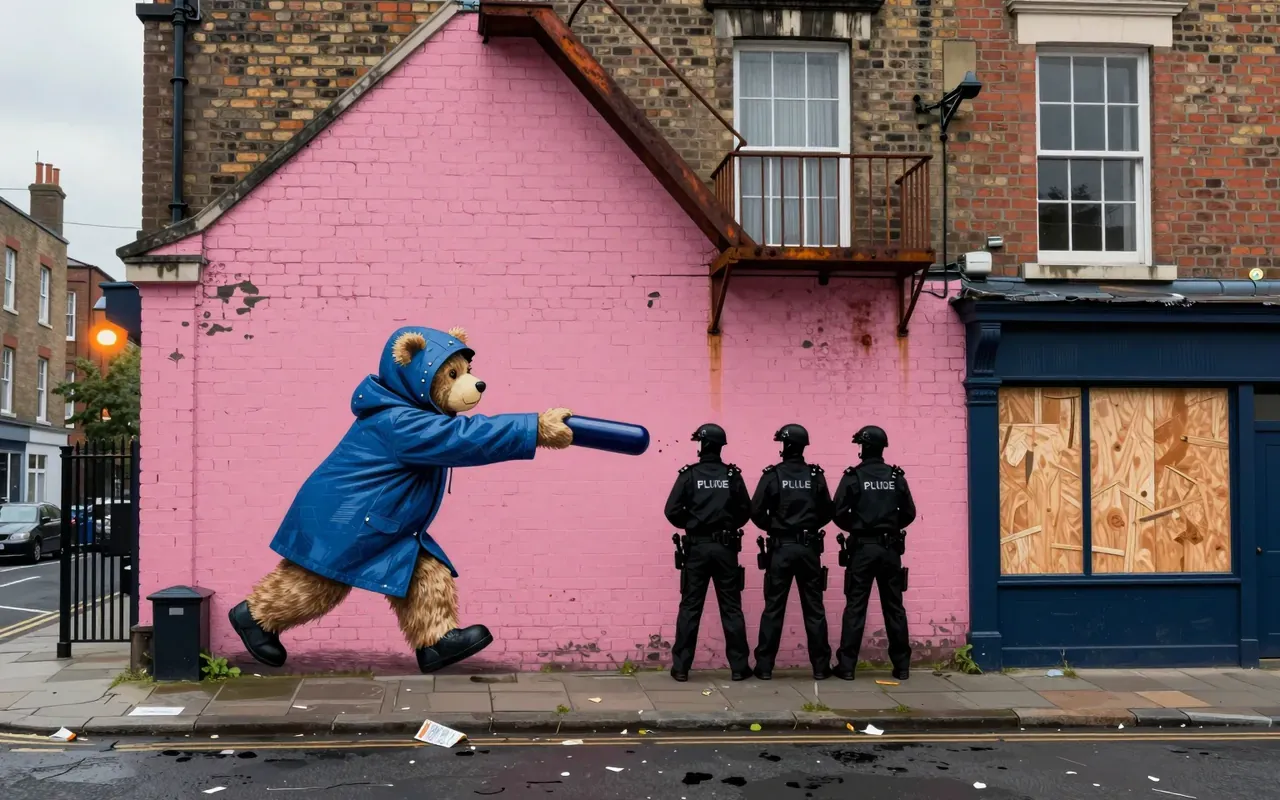
BanksyBanksy is a pseudonymous England-based street artist whose practice centres on stencilled, satirical interventions placed on publicly visible surfaces. He emerged from the Bristol underground scene in the 1990s. His first known large-scale mural was The Mild Mild West in 1997 on Stokes Croft. Banksy makes satire legible on city walls. His stencils deliver punchlines fast. They occupy surfaces people pass daily. They force confrontation without requiring attention. The method relies on evasion—but that evasion obscures authorship, dilutes accountability, and turns political gesture into branded ambiguity. His work established a template for art that operates outside institutions but trades on their validation—exposing the friction between subversion and market absorption.
9:21
Jim HensonJim Henson re-engineered puppetry for television by rejecting stage conventions, using soft materials, prioritising hand-like flexibility, and designing for emotional legibility—not just function. He shifted advertising from hard-sell to character-driven humour. No source identifies flaws, failures or omissions in his method.
8:28
PointillismPointillism is a precise, rule-bound technique—not a mood or movement. It was invented by two people, in one year, as a formal challenge to Impressionist handling. Its legacy lives less in galleries than in every screen and printer that trusts the eye to complete the image.
Up next in Culture

Subculture

· 8:50

Subculture isn’t a thing—it’s a series of incompatible academic arguments dressed as description.

8:50