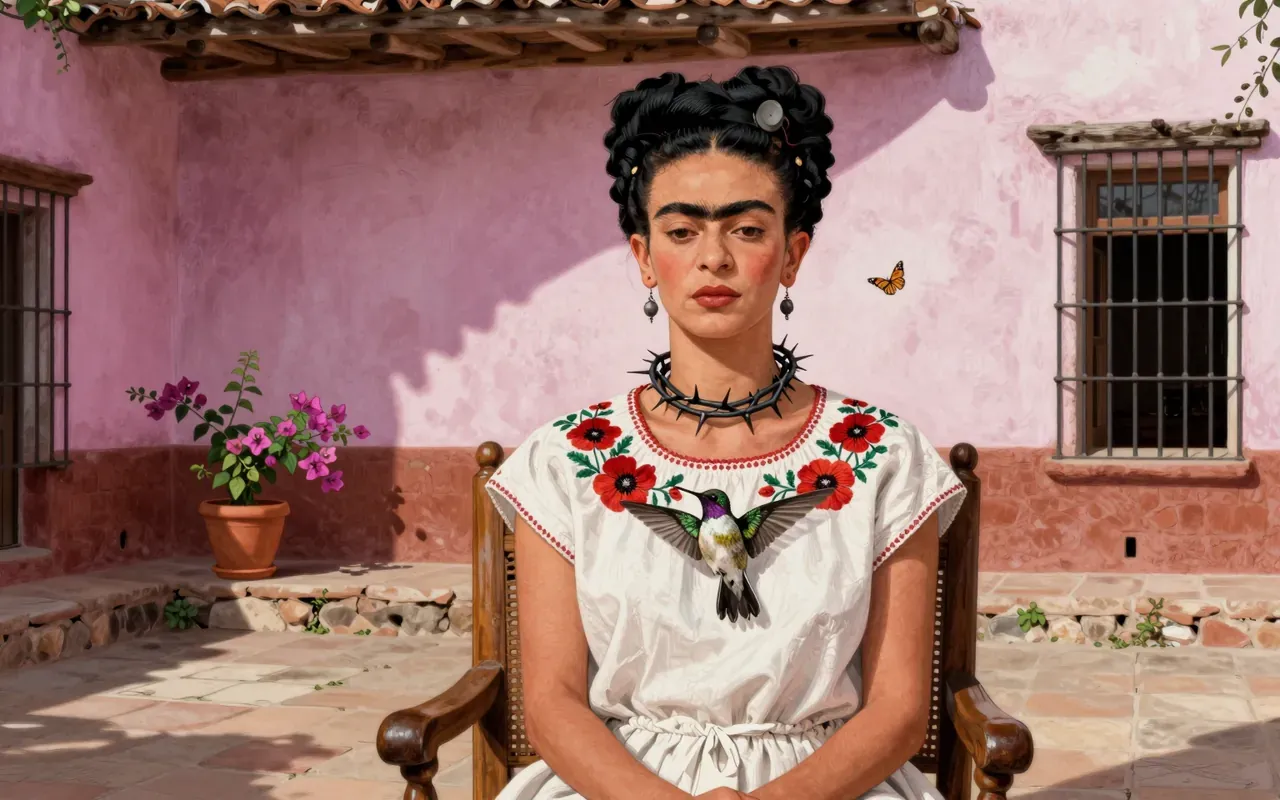
What the thing is
Frida Kahlo was a Mexican painter who made self-portraits rooted in autobiography, chronic pain, and post-revolutionary Mexican identity.
Where it came from
She was born in Coyoacán to a German father and a mestiza mother of Purépecha descent. A bus accident at 18 ended her medical studies and began her painting practice during recovery.
What it gets right
It treats identity as lived, not symbolic. Her paintings anchor questions of gender, race and colonialism in specific physical and political conditions: polio, the bus accident, Mexicayotl, her mestiza and German heritage.
What it gets wrong
It misleads when framed as surrealist. She rejected the label. Her fantasy elements emerge from Mexican folk art and Catholic/Indigenous iconography—not European dream logic.
Why it matters now
Her method—using naïve folk style to confront injury, hybridity and ideology—offers a model for art that refuses abstraction from material life, especially amid renewed debates about representation, disability and decolonisation.
Is it worth your time
Yes—if you want to see how pain, politics and folk tradition fused into a new kind of self-portraiture.