What the thing is
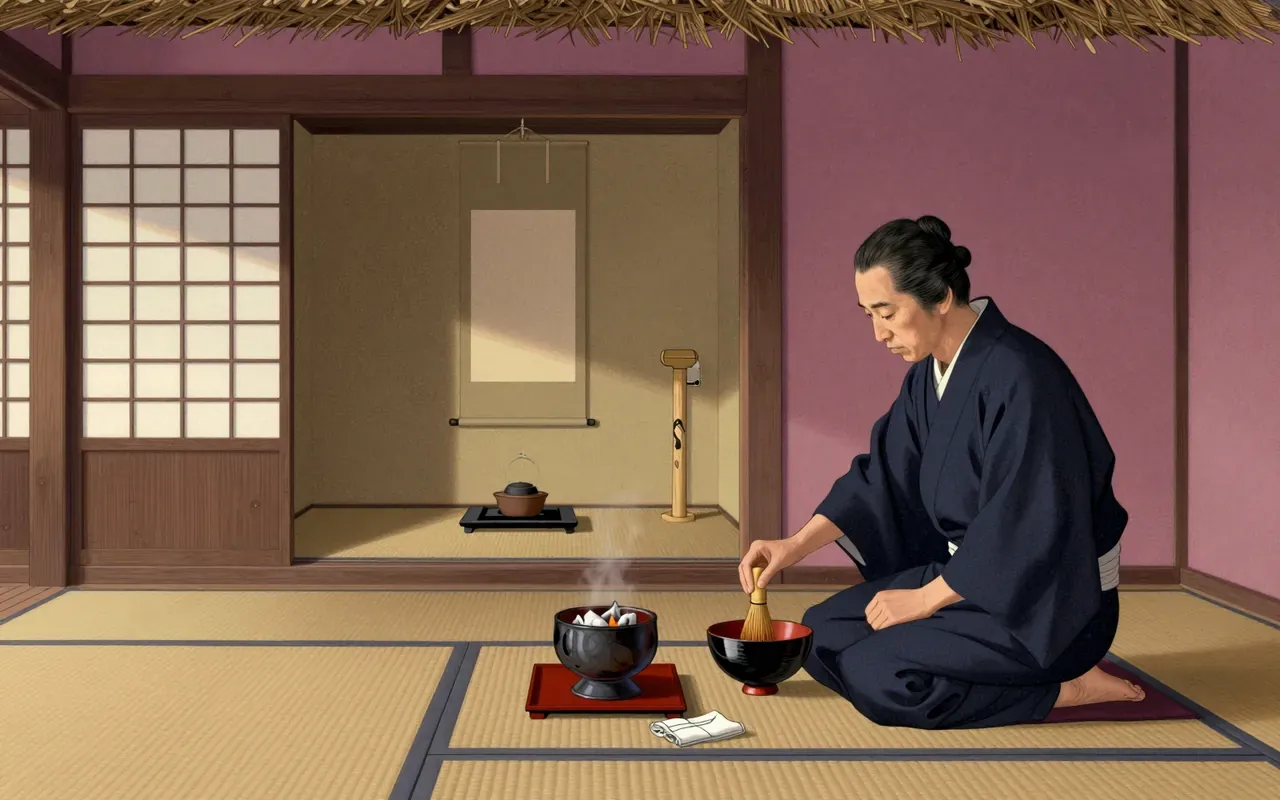
A cultural activity known as sadō/chadō or chanoyu. It is the presentation and serving of matcha through a procedure called temae.
Where it came from
It evolved from Chinese tea practices introduced in the 9th century. Sen no Rikyū revolutionised it in the 1500s—redefining the chashitsu, utensils, garden and procedures—and elevated it to an art form.
What it gets right
It treats attention as finite and sacred. Every movement in temae has a name, a direction, a weight. It establishes wabi as a discipline, not a mood.
What it gets wrong
It displaces other Japanese tea practices. Senchadō—using leaf tea—is named but marginalised. The brief treats matcha-based chanoyu as the only form worth codifying.
Why it matters now
Because it offers a counter-model to algorithmic attention: a fixed sequence, unscrollable, unskippable, built for presence not consumption.
Is it worth your time
Yes—if you want to understand how ritual can compress philosophy, craft and social order into a single gesture. No—if you expect spectacle, speed or self-expression.