culturebriefs
11:58in productionCh. 1 · Tunisia, December 2010/ 11:58 · ceiling 15 min
Movements & scenes · Society

Arab Spring

2010

A single slogan travelled farther than any revolution did.

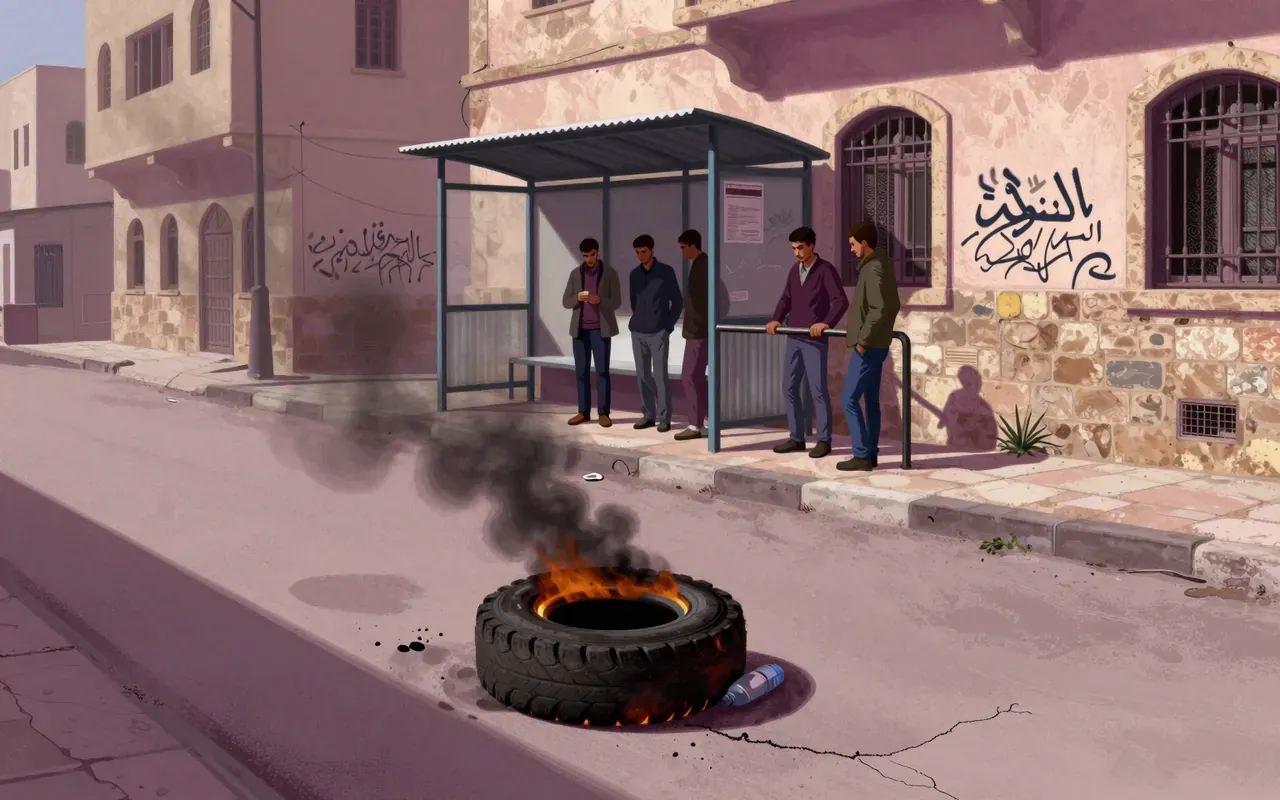
The Arab Spring was a transnational wave of pro-democracy anti-government protests, uprisings, and armed rebellions beginning in Tunisia in response to Mohamed Bouazizi's self-immolation, spreading to at least eleven additional countries, resulting in the deposition of four national leaders, widespread sustained and minor demonstrations, and major social violence including civil wars — with 'the people want to bring down the regime' as a unifying slogan.

Chapters & takeaways6
  1. 1:10
    Tunisia, December 2010

    It started with one man’s self-immolation in Sidi Bouzid.

  2. 2:15
    The Spread

    Protests reached at least eleven countries—but intensity varied wildly.

  3. 3:48
    Leaders Toppled

    Four national leaders were deposed—Ben Ali, Gaddafi, Mubarak, Saleh.

  4. 4:56
    What Followed

    Riots, civil wars, and insurgencies followed—not democracy.

  5. 6:31
    The Slogan

    ‘The people want to bring down the regime’ unified demonstrators across borders.

  6. 7:52
    What It Was

    It was not one movement. It was pro-democracy, anti-government, and methodologically diverse.

Worth your time?

Yes. Study the whole thing.

4/ 5
What works
  • culture/movements-and-scenes
  • culture/society
  • culture/ideas
What does not
  • culture/arts
  • culture/art
  • culture/fashion
  • culture/food
Study it if
  • students of modern politics
  • journalists covering the Middle East
  • activists assessing protest efficacy
Skip it if
  • readers seeking cultural analysis of art or literature
  • those looking for aesthetic or stylistic movements
The written brief1 min read

What the thing is

The Arab Spring was a label applied retroactively to a cluster of protests, uprisings, and armed conflicts across the Arab world in the early 2010s.

Where it came from

It began in Tunisia in response to Mohamed Bouazizi’s self-immolation. From there, it spread to Libya, Egypt, Yemen, Syria, and Bahrain—and triggered sustained demonstrations in eight more countries.

What it gets right

It names a real transnational wave of pro-democracy anti-government action. It began in Tunisia. It deposed four national leaders. It used a shared slogan. It spread across at least eleven countries.

What it gets wrong

It implies coherence where there was fragmentation. It bundles riots, civil wars, armed rebellions, and street demonstrations under one name—despite divergent goals, actors, and outcomes. It obscures that most affected countries saw no leadership change.

Why it matters now

Because it exposed the limits of digital mobilisation without institutional follow-through. Because its aftermath—civil war in Syria, authoritarian retrenchment in Egypt, fractured sovereignty in Libya—still defines regional politics.

Is it worth your time

Yes—if you need to understand how mass protest reshapes power in the 21st century, and why slogans travel faster than institutions adapt.


Same beat · Movements & scenes4 of 139
9:24
Adbusters1989Adbusters is a Canadian anti-capitalist activist foundation founded in 1989 in Vancouver by Kalle Lasn and Bill Schmalz. It uses culture jamming—especially subvertisements and campaigns like Buy Nothing Day and Occupy Wall Street—to challenge consumerism and corporate control of information flows. It publishes the reader-supported, advertising-free Adbusters magazine. Its founding premise is that citizens lack equal access to information flows compared to corporations.
8:14
Crypto-anarchyCrypto-anarchy is a movement, not a prophecy. It uses cryptography to enable anonymity, free speech and trade. It emerged from Timothy C. May’s 1988 manifesto and the 1992 cypherpunk founding. It gets right that code can constrain power—but wrong that it will collapse the state. A 2022 study confirms its political irrelevance—yet its architecture remains vital for Internet-native dissent.
8:35
Culture jammingCulture jamming is anti-consumerist protest that uses détournement to subvert corporate media forms. It began in the 1950s, was named in 1984 by Don Joyce of Negativland, and draws directly from the Letterist and Situationist Internationals. It correctly identifies media as a tool of perception-shaping and conformity-enforcement. But it wrongly assumes irony alone can resist power—and ignores how quickly its tactics are absorbed into branding. It matters now because corporate language has colonised every channel of attention, yet its methods remain stuck in the logic of the 1980s media landscape. It is worth your time if you want to understand why resistance so often looks like the thing it opposes.
8:55
Free software movementThe free software movement is a precise, principled refusal of proprietary control over software. It began in 1983 with GNU and institutionalised in 1985 with the FSF. It gets right that software freedom must be guaranteed—not merely permitted. It gets wrong that licence compliance alone secures user agency. Its relevance has grown as software becomes infrastructural—but its methods remain rooted in individual refusal and collective development.
Up next in Culture

Ashmolean Museum

1683 · 9:28

Britain’s first public museum wasn’t built for the people—it was built on their labour, then renamed after a donor.

9:28