What the thing is
A public museum founded by the University of Oxford in 1683.
Where it came from
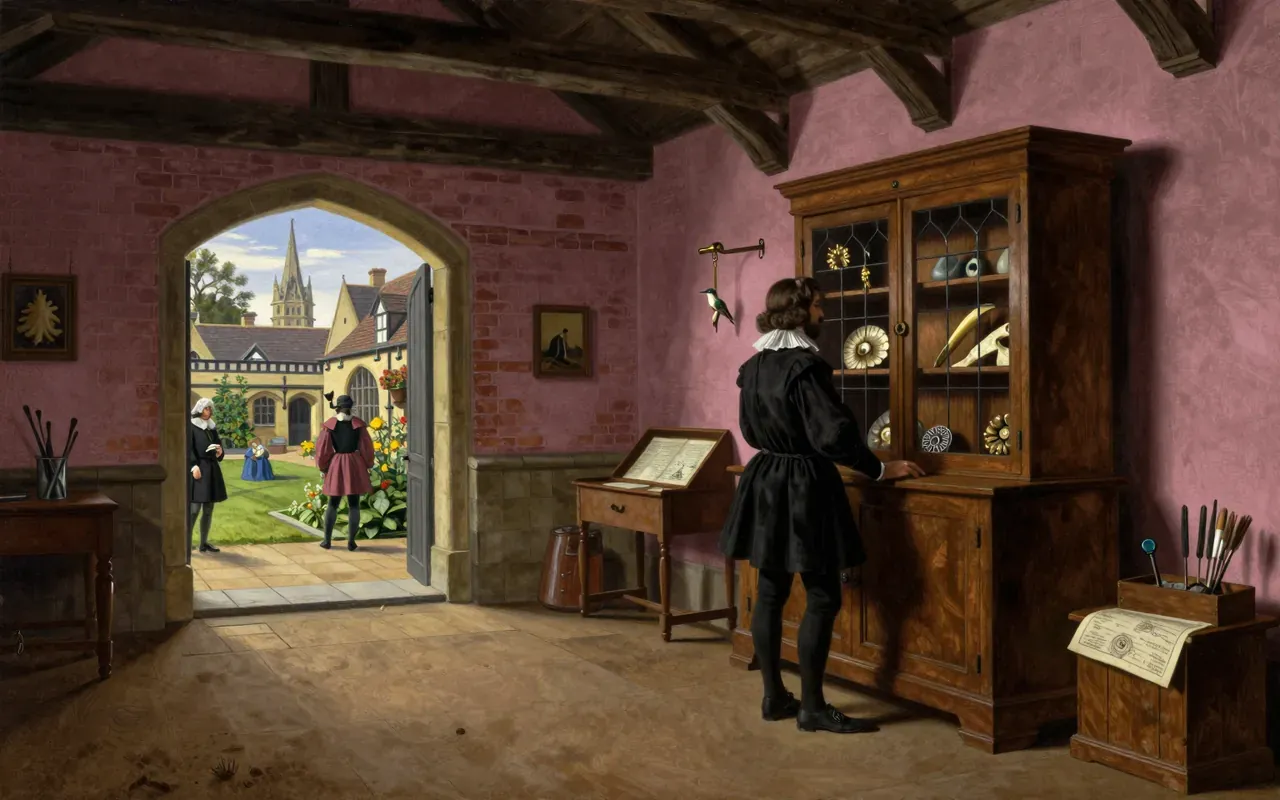
From Elias Ashmole’s 1677 donation of the Tradescants’ cabinet of curiosities—their collection of natural specimens, antiquities and artefacts—to Oxford.
What it gets right
It established the precedent of a university-owned museum open to the public. It made curiosities a shared civic resource, not private spectacle.
What it gets wrong
It displaced the Tradescants’ original context—gardeners and collectors who gathered objects through travel and trade—by subsuming their collection under Ashmole’s name and Oxford’s authority.
Why it matters now
It remains the operational prototype for university museums: publicly accessible, academically anchored, and institutionally contested over ownership, interpretation and display.
Is it worth your time
Yes—if you care about how public access to knowledge was institutionalised in Britain, and how that model still shapes museums today.