8:24in productionCh. 1 · Scale by definition/ 8:24 · ceiling 15 min
Movements & scenes
Victoria and Albert Museum
1852
The V&A isn’t about fine art—it’s where design declares its power across empires and centuries.
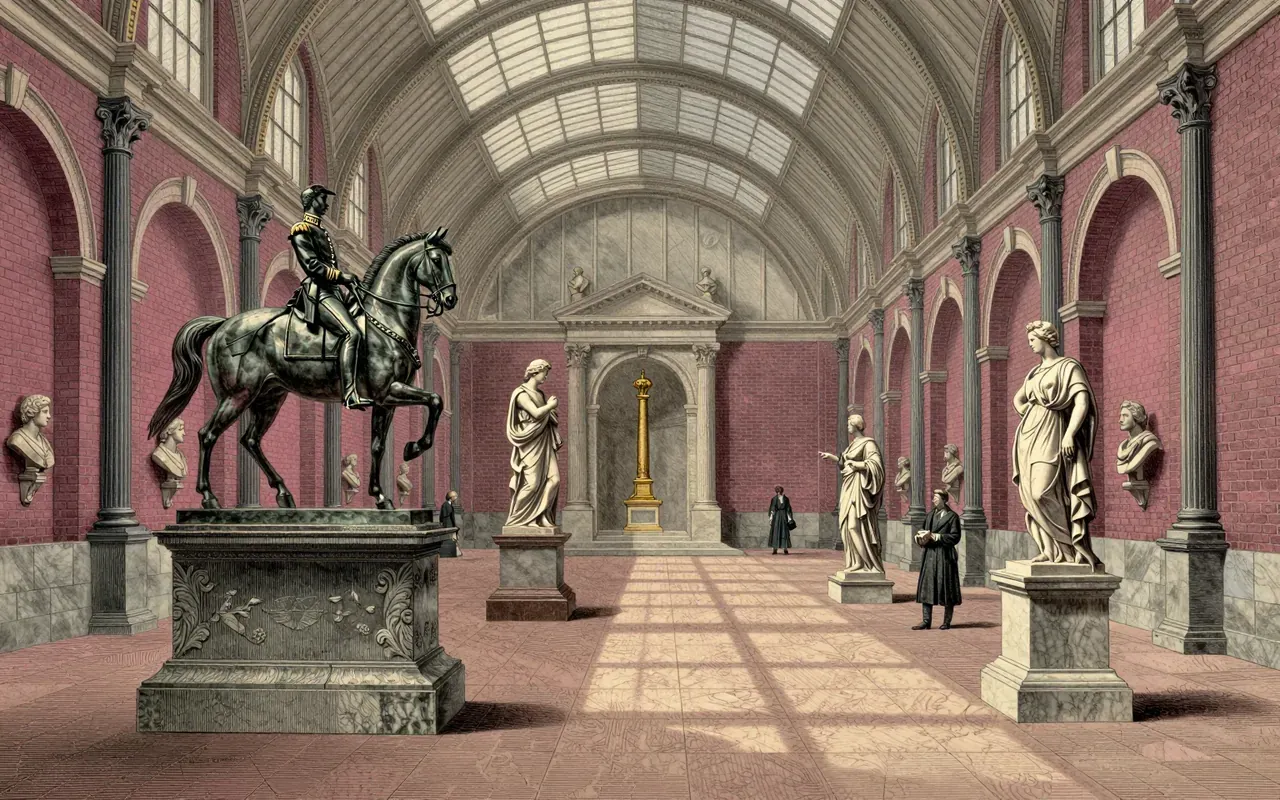
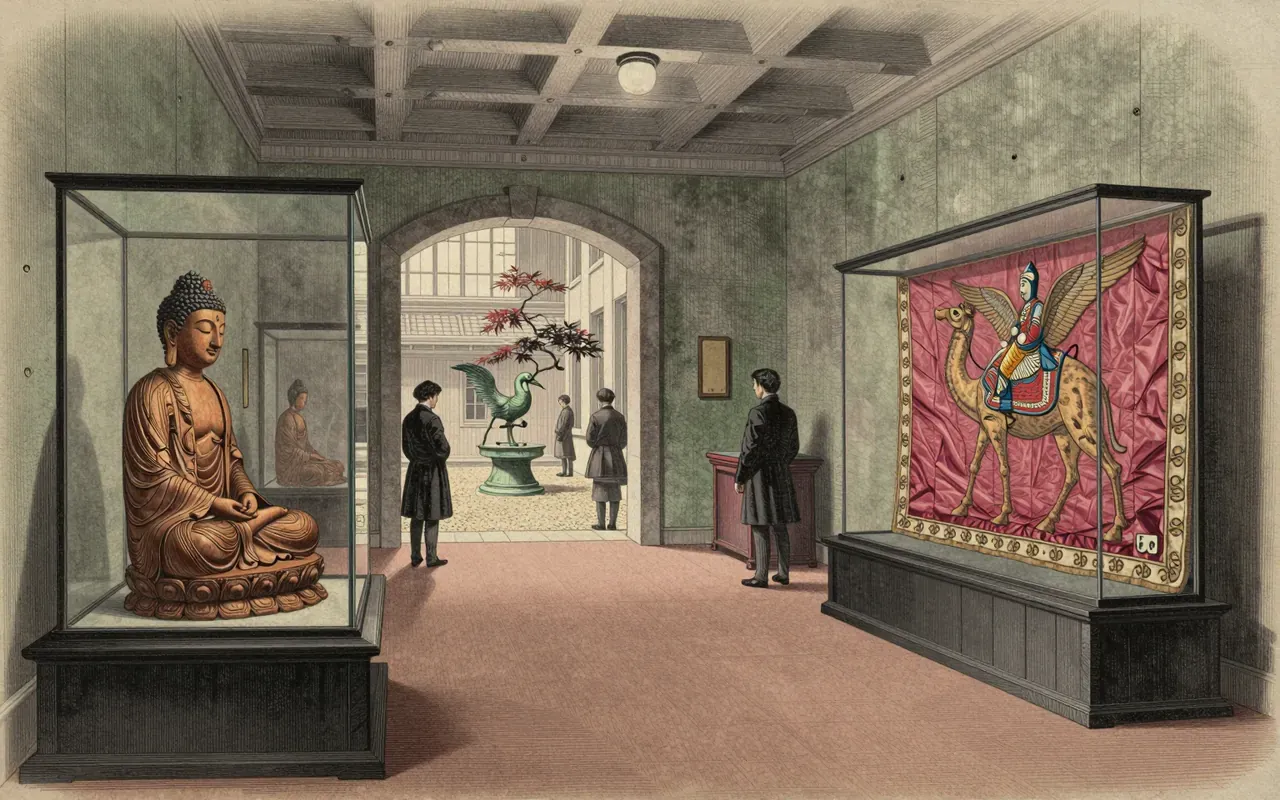
The Victoria and Albert Museum is the world's largest museum of applied arts, decorative arts and design, housing a permanent collection of over 2.8 million objects. Its collection is housed across six sites in the United Kingdom and spans 5,000 years, from ancient history to the present day, including works from Europe, the Americas, Africa and Asia plus art from South Asia, China, Japan, Korea and the Islamic world. The East Asian collections are particularly strong in ceramics and metalwork, while the Islamic collection is amongst the largest in the Western world. The museum also holds one of the largest collections of post-classical sculpture in the world. Its collection of Italian Renaissance sculpture is the largest outside Italy. However, the art of antiquity in most areas is not the V&A's focus. The holdings of ceramics, glass, textiles, costumes, jewellery, silver, metalwork, furniture, medieval objects, sculpture, prints, drawings and photographs are also among the largest and most comprehensive in the world. The museum traces its institutional origin to the Government School of Design founded in London in 1832.
It is the world’s largest museum of applied arts, decorative arts and design.
1:50
Strengths with borders
Its strengths are precise: East Asian ceramics and metalwork, Islamic art (among the largest in the West), and Italian Renaissance sculpture (largest outside Italy).
3:07
Geography and time, mapped
Its collection spans 5,000 years and is housed across six UK sites—from ancient history to the present, across Europe, the Americas, Africa, Asia, South Asia, China, Japan, Korea and the Islamic world.
4:36
Comprehensiveness, not curation
It holds one of the world’s largest collections of post-classical sculpture—and its holdings of ceramics, glass, textiles, costumes, jewellery, silver, metalwork, furniture, medieval objects, sculpture, prints, drawings and photographs are among the largest and most comprehensive globally.
Worth your time?
Yes. Study the whole thing.
4.5/ 5
What works
scale
geographic range
specialised depth in East Asian and Islamic holdings
post-classical sculpture
What does not
1852
fine art
antiquity
Study it if
design historians
material culture researchers
students of empire and collecting
Skip it if
classical archaeologists
contemporary art curators
general visitors seeking narrative exhibitions
The written brief1 min read
What the thing is
The Victoria and Albert Museum is the world’s largest museum of applied arts, decorative arts and design.
Where it came from
It traces its institutional origin to the Government School of Design founded in London in 1832.
What it gets right
It collects at scale. Its East Asian ceramics and metalwork are exceptional. Its Islamic collection is among the largest in the West. Its Italian Renaissance sculpture is the largest outside Italy. Its post-classical sculpture is one of the world’s largest.
What it gets wrong
It does not focus on antiquity. Its institutional origin lies in 1832—not 1852—and the date ‘1852’ misattributes its founding.
Why it matters now
It holds over 2.8 million objects across six UK sites—spanning 5,000 years and sourced globally—making it a primary infrastructure for studying design as a transnational, material practice.
Is it worth your time
Yes—if you need a working definition of applied art, or want to see how design functions across time and empire.