culturebriefs
9:38in productionCh. 1 · Not DJs. Producers./ 9:38 · ceiling 15 min
Movements & scenes · Cities

Detroit techno

1984

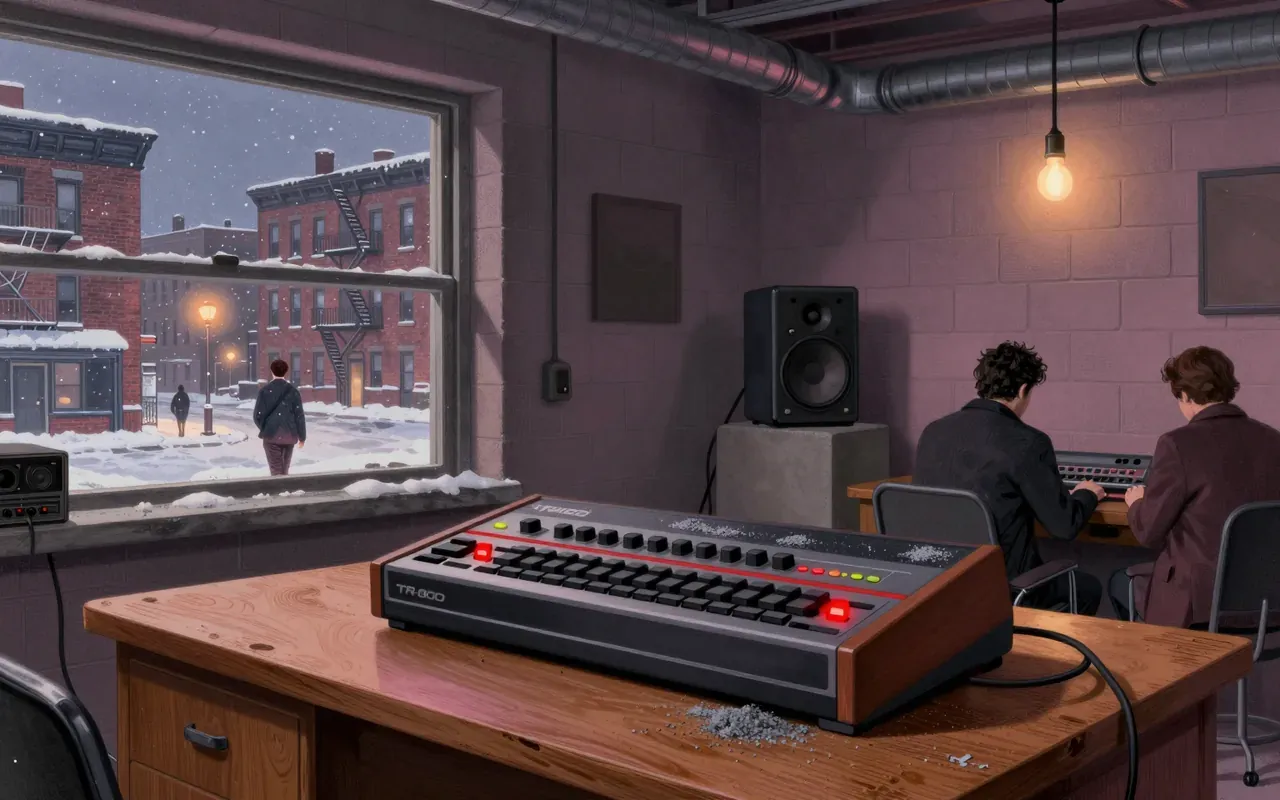
Detroit techno wasn’t born in a club — it was built in a basement by Black teenagers treating sequencers like drum kits.

Detroit techno is the first coherent body of American electronic dance music built from sequencers, not samplers — rooted in Black suburban life, codified abroad, and still misread as either pure futurism or pure funk.

Chapters & takeaways4
  1. 1:18
    Not DJs. Producers.

    The Belleville Three were not DJs first — they were producers, label founders, and hardware tinkerers before the genre had a name.

  2. 2:54
    A Mistake in an Elevator

    Its sound emerged from collision: Parliament’s funk basslines meeting Kraftwerk’s precision, mediated by a single sequencer.

  3. 4:06
    Labels Before Names

    Metroplex and Cybotron weren’t vanity projects — they were distribution systems built when no one else would press or stock their records.

  4. 5:30
    Belleville, Not Downtown

    It was suburban, not inner-city — shaped by car culture, community college access, and shared listening, not block parties or radio.

Worth your time?

Yes. Study the whole thing.

4.5/ 5
What works
  • No UFO's
  • Alleys of Your Mind
  • Cosmic Cars
What does not
  • influence
  • define
  • start
  • launch
Study it if
  • producers
  • listeners who value process over polish
  • anyone tired of origin myths that erase infrastructure
Skip it if
  • those seeking party anthems
  • fans of vocal-led house
  • listeners who equate accessibility with quality
The written brief1 min read

What the thing is

Detroit techno is a body of electronic music made in Detroit between 1981 and 1991, defined by sequencer-driven repetition, synthetic timbre, and Afrofuturist framing.

Where it came from

It came from Belleville, Michigan suburbs, via three teenage friends — Juan Atkins, Kevin Saunderson, and Derrick May — who fused Parliament, Kraftwerk, and Yellow Magic Orchestra using cheap synths and DIY labels.

What it gets right

It treats technology as expressive material, not novelty. It builds rhythm from sequencer imperfection. It centres Black middle-class imagination outside urban trauma narratives.

What it gets wrong

It displaces Detroit’s wider musical ecosystem — jazz, gospel, Motown legacy, house — by over-identifying the genre with three men and a single aesthetic line.

Why it matters now

It matters now because its refusal to treat machines as neutral tools prefigures current debates about AI agency, algorithmic bias, and Black technicity.

Is it worth your time

Yes, if you want to understand how Black suburban futurism reshaped electronic music’s syntax — not as nostalgia, but as a working method.
Same beat · Movements & scenes4 of 159
8:40
Anonymous (hacker group)2003Anonymous is a self-declared, leaderless collective that conducts cyberattacks as its primary method of activism. It originated in 2003 on the imageboard 4chan. Because it has no leadership, no action can be attributed to the membership as a whole. Some members protest using legal means, while others employ illegal measures such as DDoS attacks and hacking.
9:10
Self-managed social centerSelf-managed social centers are anti-authoritarian, volunteer-run spaces that operate as infoshops, free schools, bicycle workshops and concert venues. They began in Italy in the 1980s and spread to the US and UK in the 1990s. They oppose gentrification and megaprojects. They create and practice the commons. They are transient, precarious, and politically active—but do not survive long enough to institutionalise what they prefigure.
10:00
Home recordingHome recording is sound captured in private homes—not studios. It began with isolated pioneers in the US, UK, Australia, and Jamaica in the 1950s–1970s. The 1979 Portastudio enabled consumer multitrack recording. Digital recorders and DAWs replaced analog in the 1990s. Lockdowns in 2020 caused a global surge in home-based artists and microgenres. Untreated rooms produce misleading acoustics that compromise mixing. Professional studios have been heavily impacted over the last two decades.
10:02
Burning Man1986Burning Man is a participant-built desert gathering named for the ceremonial burning of a wooden effigy—the Man—on the Saturday before Labor Day. It began on Baker Beach in 1986, moved to the Black Rock Desert in 1990, and operates on radical self-reliance, communal effort, and theme-driven art made solely by attendees. Its ten principles were codified in 2004—not at origin—and its model has since been replicated, commercialised, and contested. It is neither pure counterculture nor corporate spectacle, but a documented instance of how ritual, place, and principle diverge over time.
Up next in Culture

Creator economy

· 7:41

A platform economy disguised as empowerment.

7:41