culturebriefs
10:03in productionCh. 1 · Three Lives Before the Revolution/ 10:03 · ceiling 15 min
Movements & scenes · Society

Louvre

1793

The Louvre didn’t open a museum—it staged a revolution in display.

The Louvre is the institutional crystallisation of revolutionary seizure disguised as public service.

Chapters & takeaways4
  1. 1:09
    Three Lives Before the Revolution

    The building was repurposed three times before becoming a museum—fortress, palace, gallery.

  2. 2:44
    A Museum Founded on Confiscation

    The museum opened in 1793 with stolen art—royal and ecclesiastical holdings seized during the French Revolution.

  3. 4:22
    Basement and Blockbuster

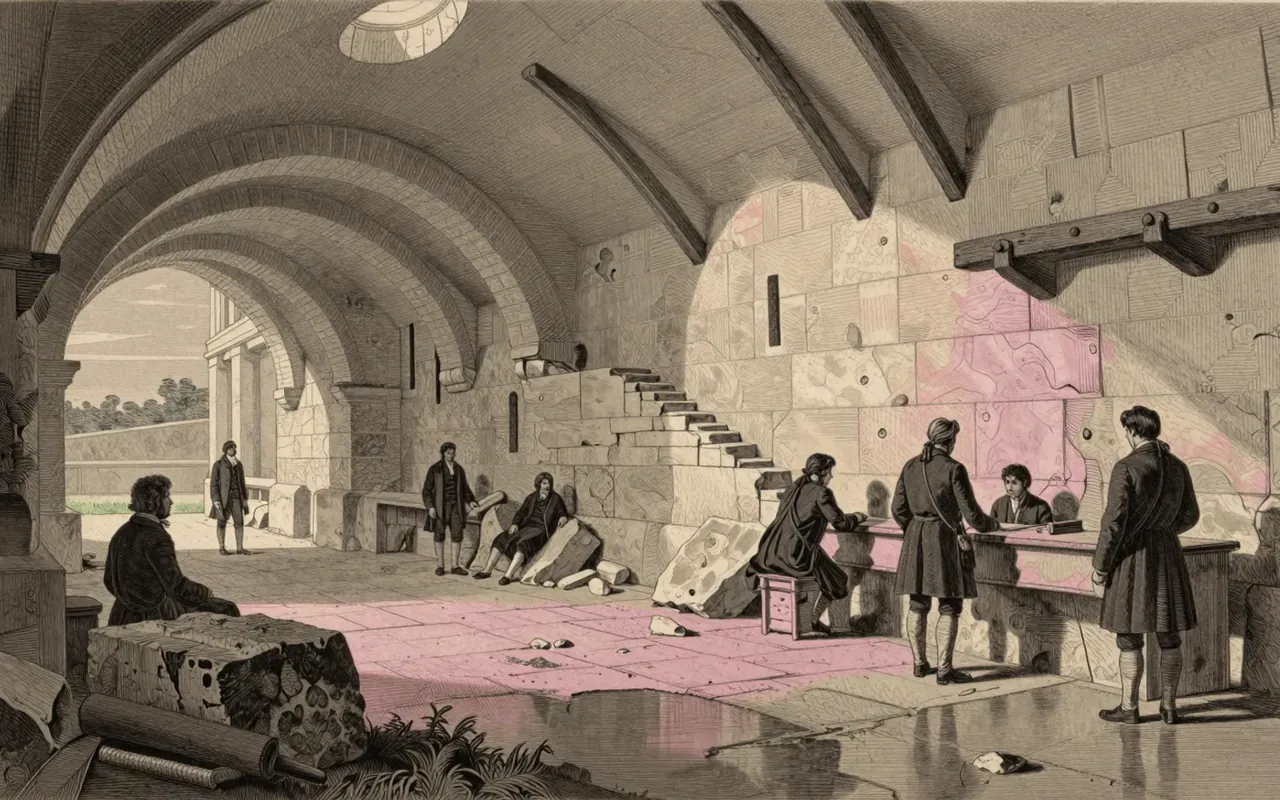
    Its most famous works sit above visible ruins of the medieval fortress—two layers of authority in one structure.

  4. 5:51
    National, Not Just Parisian

    It is not just a museum in France—it is *the* national art museum of France, by constitutional design.

Worth your time?

Yes. Study the whole thing.

4.5/ 5
What works
  • as a monument to political appropriation
  • as a functional model for national museums worldwide
  • as a physical palimpsest of French power
What does not
  • define a movement
  • influence an artist
  • start a trend
Study it if
  • students of state formation
  • critics of cultural restitution
  • anyone who has stood in front of the Mona Lisa and wondered why it’s there
Skip it if
  • those seeking aesthetic theory
  • art historians focused on provenance gaps
  • visitors looking for unmediated beauty
The written brief1 min read

What the thing is

The Louvre is a national art museum in Paris, housed in a palace built as a fortress under Philip II.

Where it came from

It began as a medieval fortress (late 12th–13th century), became a royal residence in 1546, then a royal art repository in 1682, and opened as a public museum by decree of the National Assembly on 10 August 1793.

What it gets right

It made elite art legible as national property. It installed the idea that masterpieces belong to the people, not the crown or church.

What it gets wrong

It presented confiscation as liberation. The 537 paintings were seized property—not gifts, not donations, not purchases—but the museum never names that origin in its founding logic.

Why it matters now

It remains the template for the modern state museum: a site where political rupture is buried beneath aesthetic continuity, and where ‘the public’ is invoked without being consulted.

Is it worth your time

Yes—if you want to see how state power, revolutionary ideology and royal accumulation fused into a permanent public institution.
Same beat · Movements & scenes4 of 139
9:24
Adbusters1989Adbusters is a Canadian anti-capitalist activist foundation founded in 1989 in Vancouver by Kalle Lasn and Bill Schmalz. It uses culture jamming—especially subvertisements and campaigns like Buy Nothing Day and Occupy Wall Street—to challenge consumerism and corporate control of information flows. It publishes the reader-supported, advertising-free Adbusters magazine. Its founding premise is that citizens lack equal access to information flows compared to corporations.
8:14
Crypto-anarchyCrypto-anarchy is a movement, not a prophecy. It uses cryptography to enable anonymity, free speech and trade. It emerged from Timothy C. May’s 1988 manifesto and the 1992 cypherpunk founding. It gets right that code can constrain power—but wrong that it will collapse the state. A 2022 study confirms its political irrelevance—yet its architecture remains vital for Internet-native dissent.
8:35
Culture jammingCulture jamming is anti-consumerist protest that uses détournement to subvert corporate media forms. It began in the 1950s, was named in 1984 by Don Joyce of Negativland, and draws directly from the Letterist and Situationist Internationals. It correctly identifies media as a tool of perception-shaping and conformity-enforcement. But it wrongly assumes irony alone can resist power—and ignores how quickly its tactics are absorbed into branding. It matters now because corporate language has colonised every channel of attention, yet its methods remain stuck in the logic of the 1980s media landscape. It is worth your time if you want to understand why resistance so often looks like the thing it opposes.
8:55
Free software movementThe free software movement is a precise, principled refusal of proprietary control over software. It began in 1983 with GNU and institutionalised in 1985 with the FSF. It gets right that software freedom must be guaranteed—not merely permitted. It gets wrong that licence compliance alone secures user agency. Its relevance has grown as software becomes infrastructural—but its methods remain rooted in individual refusal and collective development.
Up next in Culture

Metropolitan Museum of Art

1870 · 9:13

A museum founded not by royal decree or state mandate—but by New York businessmen with a charter, a cause, and a townhouse.

9:13